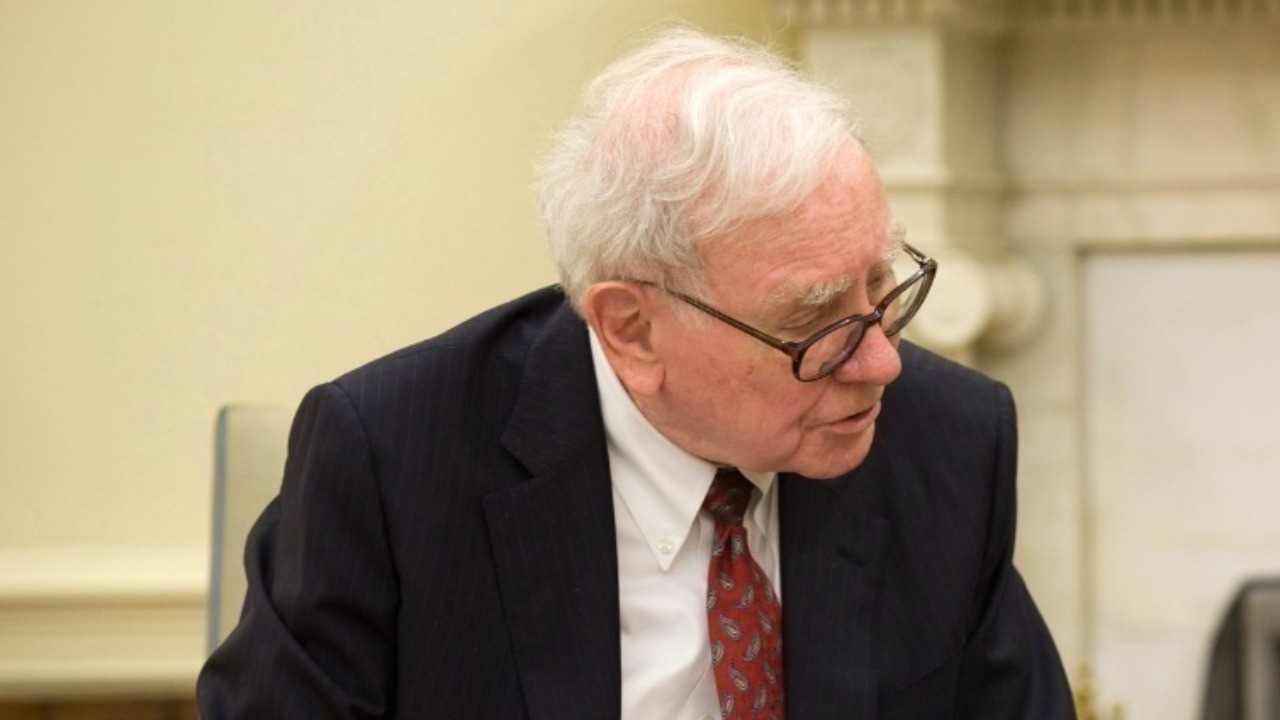
When Warren Buffett told shareholders that America’s “incredible period” was winding down, he was not calling for collapse so much as a comedown from extraordinary tailwinds. His warning landed in a moment of high inflation, rising rates and stretched stock valuations, raising a sharper question: was the country’s long run of easy gains already behind it, or was the Oracle of Omaha simply resetting expectations.
Three years on from that message, the answer looks more nuanced than the headline suggests. Growth has cooled, markets have become more fragile and corporate profits are under pressure, yet the underlying dynamism of the U.S. economy has hardly disappeared. To judge whether Buffett “nailed it,” I have to separate what has actually changed from what was always unsustainable.
What Buffett really meant in Omaha
At Berkshire’s annual gathering in Omaha, Nebraska, Warren Buffett framed his concern in characteristically plain language. After an era of cheap money and surging asset prices, he told investors that the “incredible period” for America’s economy was coming to an end, and that the environment ahead would be tougher than the one that had lifted corporate earnings and stock portfolios for more than a decade. He was speaking as the chair of Berkshire, a conglomerate that had just reported an almost 13% gain, yet he still cautioned that the backdrop that made such results routine was fading, a point later echoed in detailed coverage of his economic outlook.
Buffett’s message was not that America was finished, but that investors should stop extrapolating the post‑financial‑crisis boom. He pointed to a mix of higher inflation, rising interest costs and slower demand as reasons to expect more modest growth and more frequent disappointments. In Omaha, Nebraska, he underlined that even Berkshire’s own businesses would not be immune, a sober reminder that the tide which had lifted almost every sector was ebbing. Later analysis of his remarks highlighted how he linked that “incredible period” to specific conditions, and how he stressed that those conditions were now drawing to an end.
Evidence from Berkshire’s own portfolio
If Buffett was right, the first proof should show up inside Berkshire itself. At the 2023 shareholder meeting, Warren acknowledged that the majority of Berkshire’s businesses would report lower earnings that year than the year before, even though the group had just posted that almost 13% gain. He described a climate that was “different” from the one that had prevailed when money was cheaper and customers were flush, and he warned that many of Berkshire’s industrial and consumer‑facing subsidiaries were already seeing orders slow and pricing power weaken, a pattern later summarized in a detailed note on the 2023 Berkshire Hathaway meeting.
That internal data matters because Berkshire spans railroads, utilities, insurers, manufacturers and retailers, giving Buffett a cross‑section of the real economy. When he says the majority of those operations are earning less than a year earlier, he is effectively confirming that the broad profit boom has cooled. He also told shareholders that his only real prediction was a natural disaster at some point, a way of underscoring how reluctant he is to make sweeping macro calls. The fact that he still chose to flag lower earnings and a tougher climate suggests he saw the end of the “incredible period” not as a headline‑grabbing soundbite, but as a practical adjustment in how Berkshire itself would perform.
Has America’s boom actually ended?
To test whether America’s golden run is truly over, I have to look beyond Berkshire to the wider economy. Growth has slowed from the breakneck rebound that followed the pandemic, and inflation has eaten into real wage gains, but the country has not fallen into the deep recession many feared when rates began to rise. A later analysis of Buffett’s comments framed the question directly, noting that Warren Buffett said America’s “incredible period” was coming to an end and asking bluntly, “Was he right,” before walking through how the U.S. has continued to expand even as some sectors have stalled, a debate captured in a Moneywise and Yahoo breakdown.
That same question has been echoed elsewhere, with another piece revisiting how Warren Buffett said America’s “incredible period” was coming to an end and again asking, “Was he right,” while pointing out that headline growth has held up better than many expected even as markets have become more volatile. That assessment, carried through a separate Moneywise and Yahoo treatment, suggests that the “end” Buffett described looks less like a cliff and more like a plateau. The U.S. still leads in technology, still attracts global capital and still generates new companies from Tesla to Stripe, but the easy combination of low rates, low inflation and ever‑rising margins that defined the previous decade has clearly faded.
Buffett’s market alarm and the valuation problem
Buffett’s warning about the broader economy has been accompanied by a more specific alarm about stock prices. He has long tracked the ratio of total market capitalization to gross domestic product, a gauge that compares the value of all publicly traded companies to the size of the economy that supports them. When that ratio climbs too high, he has argued, future returns are likely to be poor. More recently, Buffett has warned that crossing a ratio of 200% (meaning stocks, measured by market cap, are worth twice as much as the underlying economy) is a sign that investors are paying far more for earnings than history would justify, a threshold that one analysis said had his alarm “going off with deafening volume” as it examined his warning to Wall.
That valuation concern dovetails with his claim that the “incredible period” is ending. If stocks are priced for perfection at a time when growth is slowing and costs are rising, then even a mild deceleration can translate into painful market corrections. I see this as the heart of Buffett’s message: not that America’s productive capacity is spent, but that investors have been paying prices that assume the good times will roll on indefinitely. By highlighting the 200% ratio and tying it to a deafening alarm, he is effectively telling shareholders that the next decade is unlikely to look like the last one for index‑fund buyers, even if the underlying economy continues to innovate and expand.
What Buffett wants investors to do now
For individual investors, the more important question is how to behave if the era of effortless gains is over. During Berkshire Hathaway’s annual meeting, Buffett stressed that the end of the “incredible period” did not invalidate long‑term investing in productive businesses, and he reiterated his preference for simple, low‑cost exposure to the U.S. economy through broad index funds. He also reminded shareholders that owning strong companies with durable advantages can protect purchasing power even during periods of inflation, a point later distilled in a piece on Buffett’s advice to investors.
In practice, that means leaning into the habits Buffett has preached for decades rather than chasing whatever worked in the last bull market. He has urged investors to ignore short‑term forecasts, keep costs low, avoid leverage and focus on businesses that generate real cash, whether that is a railroad, an insurer or a software platform with loyal users. When I weigh his comments about America’s “incredible period” against the data, I see less of a call to retreat and more of a reminder that compounding works best when expectations are reasonable. The boom that followed the financial crisis may be over, but for patient investors who heed his warnings on earnings, valuations and risk, the next chapter of America’s story still looks investable rather than exhausted.
More From TheDailyOverview
*This article was researched with the help of AI, with human editors creating the final content.

Grant Mercer covers market dynamics, business trends, and the economic forces driving growth across industries. His analysis connects macro movements with real-world implications for investors, entrepreneurs, and professionals. Through his work at The Daily Overview, Grant helps readers understand how markets function and where opportunities may emerge.