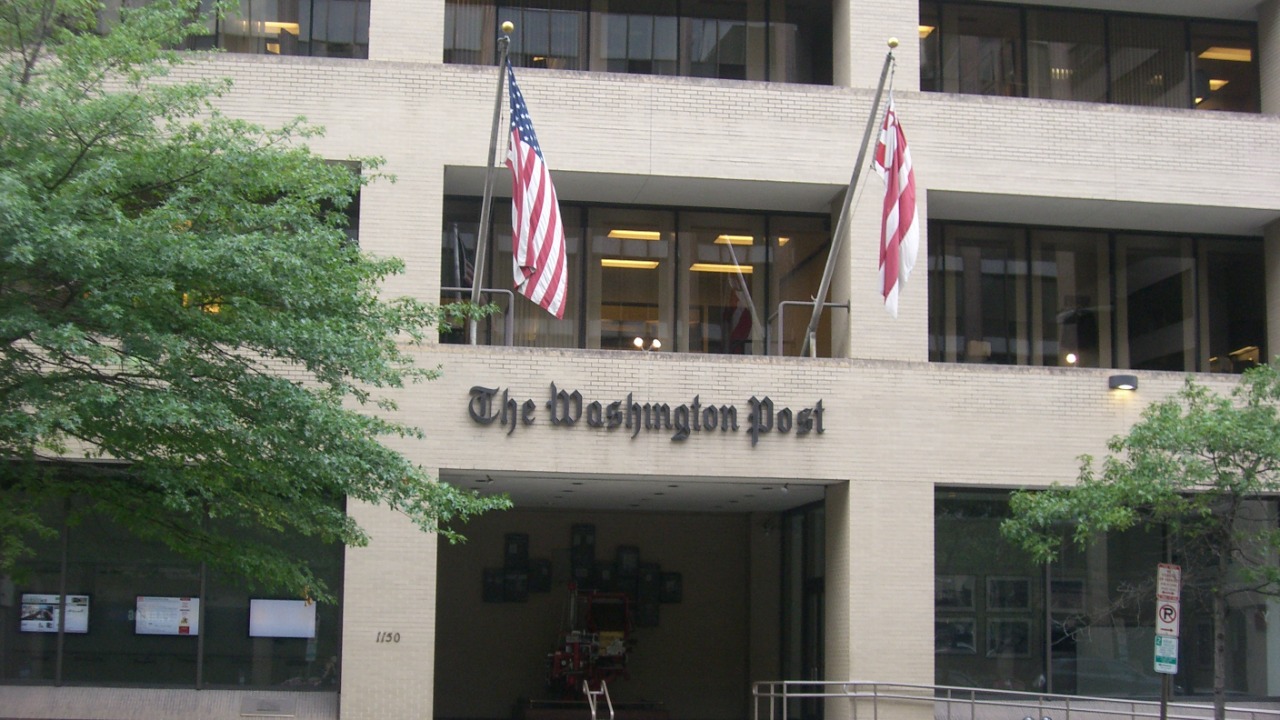
The Washington Post has moved to cut roughly one third of its workforce, a sweeping reduction that guts core parts of its newsroom and reshapes one of the country’s most influential media institutions. The decision, framed internally as a reset, instantly turned a storied brand into a case study in how even marquee outlets are struggling to reconcile ambitious journalism with a broken business model.
The scale and speed of the layoffs, which affect more than 300 journalists and shutter entire sections, have stunned staff and alarmed press freedom advocates who see the cuts as a direct hit to accountability reporting in Washington and far beyond. What is unfolding inside the Post is not just a corporate restructuring, but a test of whether “Democracy Dies in Darkness” can survive with far fewer people to keep the lights on.
The scale of the cuts and what exactly was eliminated
The Washington Post has confirmed that it is eliminating more than 300 journalists, roughly one third of its 800-person newsroom, in what leadership has described as a painful but necessary contraction. In internal messaging, executives cast the move as a strategic reset designed to stabilize finances after years of investment that did not translate into sustained subscriber growth. The scale of the reduction, however, goes far beyond trimming around the edges and instead rewrites the organization’s capacity to cover politics, culture, and the world.
According to a detailed internal account, the cuts hit virtually every corner of the operation, from metro and national politics to photo, graphics, and digital teams, and they are part of a broader plan in which the Washington Post cuts a third of staff in a blow to its own legacy as a capital institution that has long warned that Democracy Dies in Darkness. A spokesperson has acknowledged that about one third of the newsroom is affected, with sport and international coverage described as “largely gutted,” a characterization that underscores how much of the paper’s traditional reporting muscle is being stripped away in a single stroke of corporate decision making.
Sports, Book World, and foreign bureaus wiped off the map
Beyond the headline number, the most jarring element of the restructuring is the decision to eliminate entire desks that once defined the Post’s identity. The Brief shared with staff explained that The Washington Post laid off about one third of its staff and, in the process, shut down its standalone sports section, its long running Book World franchise, and several foreign bureaus that had anchored its global reporting footprint, including operations in the Middle East and Ukraine. Those closures mean fewer reporters in stadium press boxes, fewer critics chronicling the country’s literary life, and fewer correspondents on the ground in conflict zones that shape U.S. foreign policy.
Executives have argued that some of this coverage will be folded into other desks or handled by wire services, but the loss of dedicated teams is hard to square with the paper’s historic ambitions. The decision to erase Book World, in particular, severs a direct line to the Post’s role in shaping national conversations about literature and ideas, while the shuttering of foreign bureaus in places like the Middle East and Ukraine, confirmed in a video briefing that detailed how The Washington Post is cutting a third of its staff and closing those outposts, signals a retreat from on the ground international reporting at a time when wars and authoritarian crackdowns demand more scrutiny, not less.
How staff learned the news and the human toll
Inside the building, the process of delivering the news has been described by staff as chaotic and brutal, with some employees learning their fate in short video calls and others through abrupt calendar invites that signaled they were being let go. One internal account characterized the scene as an “absolute bloodbath,” language that captured both the volume of departures and the emotional shock of seeing colleagues escorted out after years of service. Former and current staffers have said privately that the way the cuts were rolled out compounded the trauma, turning a financial crisis into a crisis of trust between newsroom and leadership.
The human cost became visible on the streets of Washington when Laid off Washington Post staff rallied outside the company’s D.C. headquarters, holding signs and sharing stories of careers cut short and beats abandoned. Organizers said the demonstration was meant not only to protest the layoffs but also to warn the public about what is lost when a major paper slashes its reporting ranks so dramatically, a message captured in coverage that described how Laid off staff gathered in front of the Washington Post building and invoked the number 202 as a reminder of the city’s area code and the community they feel is being abandoned.
Jeff Bezos, Trump, and accusations of political calculus
Because the Washington Post is owned by Jeff Bezos, every major strategic decision is inevitably read through a political lens, and these layoffs are no exception. Critics inside and outside the newsroom have questioned whether the depth of the cuts reflects purely financial pressures or whether there is also a desire by Bezos to recalibrate the paper’s posture in an era when Donald Trump is back in the White House and frequently attacks the press. One Former Post executive editor went so far as to blast Jeff Bezos’s “sickening efforts to curry favor” with Trump, a charge that suggests at least some veterans of the institution see the layoffs as part of a broader attempt to soften coverage of the current president rather than simply a balance sheet exercise.
Bezos has not publicly embraced that characterization, and people close to him have framed the decision as a response to declining traffic and advertising revenue, not a bid for political leverage. Yet the perception that the owner is making “deep job cuts” at The Washington Post at the very moment when Trump is again the central figure in American politics has fueled suspicion among staff and media watchers who note that the paper has been a frequent target of presidential ire. A detailed audio report on how The Washington Post is making deep cuts to every department, including a dramatically smaller international desk, underscores how much power Bezos wields over the institution’s priorities and how little recourse staff have when his vision diverges from their own.
The financial story behind the “strategic reset”
On paper, the rationale for the layoffs is straightforward: the Post has been losing money, and leadership believes it has grown too large for the current revenue base. Internal briefings have described the move as a “strategic reset” that will shrink the newsroom to a size executives think is sustainable while they experiment with new products and formats. A concise industry note captured how The Washington Post has announced widespread layoffs affecting one third of the organization’s staff across departments as part of a reset, and placed that decision in the context of other media companies that have attempted to realign their businesses after overexpansion, a pattern that suggests the Post is not alone in misjudging the digital news economy.
At the same time, the scale of the contraction raises questions about whether management is cutting into the very journalism that could help rebuild the audience. A spokesperson has said the cuts apply to about one third of the newsroom and acknowledged that sport and international coverage are largely gutted, even as leadership insists that core political and investigative reporting will remain strong. That tension is evident in coverage that notes how the Spokesperson defended the decision even as outside observers labeled it baffling and irresponsible, arguing that hollowing out coverage areas that differentiate the Post from competitors could make it harder, not easier, to regain financial footing.
How the layoffs fit into a broader media industry crisis
What is happening at the Washington Post is part of a wider pattern of contraction across the news industry, where even high profile brands are shedding staff as advertising dollars migrate to platforms and subscription growth slows. A concise industry roundup noted that The Washington Post has announced layoffs affecting one third of its staff as part of a strategic reset, placing it alongside other outlets that have recently cut newsrooms in half or shuttered entire verticals. That context matters because it shows that the Post’s crisis is not an isolated failure of management but a symptom of a business model that no longer reliably supports large, labor intensive reporting operations.
Yet the Post’s situation is also distinct because it is owned by one of the world’s richest individuals and has long been seen as a flagship of American journalism. When a company with that backing still chooses to cut a third of its staff, it sends a chilling signal to smaller outlets that lack a Jeff Bezos safety net. A detailed business analysis of how Brian Stelter and Liam Reilly described the Jeff Bezos owned Washington Post conducting widespread layoffs and gutting a third of its staff, while also noting his ownership of the Blue Origin rocket company, underscores the paradox of a billionaire backed newsroom pleading poverty. It raises uncomfortable questions about how much loss a civic institution should be willing to absorb before its owner decides that the cost of robust journalism is simply too high.
What remains of the Post’s mission after the bloodletting
For readers, the most important question is what kind of Washington Post will emerge on the other side of this upheaval. Leadership insists that the core mission remains intact and that the paper will continue to hold power to account in the capital and beyond, even with fewer reporters. Internal communications have emphasized that political coverage, investigative projects, and key digital initiatives will be protected, and that the reset is meant to position the Post for long term sustainability rather than signal retreat. A corporate note that described how Washington Post cuts a third of its staff in a blow to a legendary news brand, and a related brief that explained how The Brief said The Washington Post laid off about one third of its staff while eliminating its sports section and Book World, both highlight the tension between the rhetoric of renewal and the reality of diminished capacity.
From the outside, it is hard to see how a newsroom that has lost more than 300 journalists, including entire desks and foreign bureaus, can maintain the same breadth and depth of coverage that made the Post a global reference point. Industry observers have pointed out that the paper has been the leading newspaper in the nation’s capital for decades, and that Now it is making deep cuts to every department, with the international desk set to shrink dramatically, a shift documented in coverage of how Now the organization is reconfiguring itself. As I weigh the evidence, I see a paper trying to convince its audience that it can do more with less at the very moment when the stakes for independent, aggressive reporting on Washington, Trump, and the world could not be higher.
More From The Daily Overview
*This article was researched with the help of AI, with human editors creating the final content.

Grant Mercer covers market dynamics, business trends, and the economic forces driving growth across industries. His analysis connects macro movements with real-world implications for investors, entrepreneurs, and professionals. Through his work at The Daily Overview, Grant helps readers understand how markets function and where opportunities may emerge.

