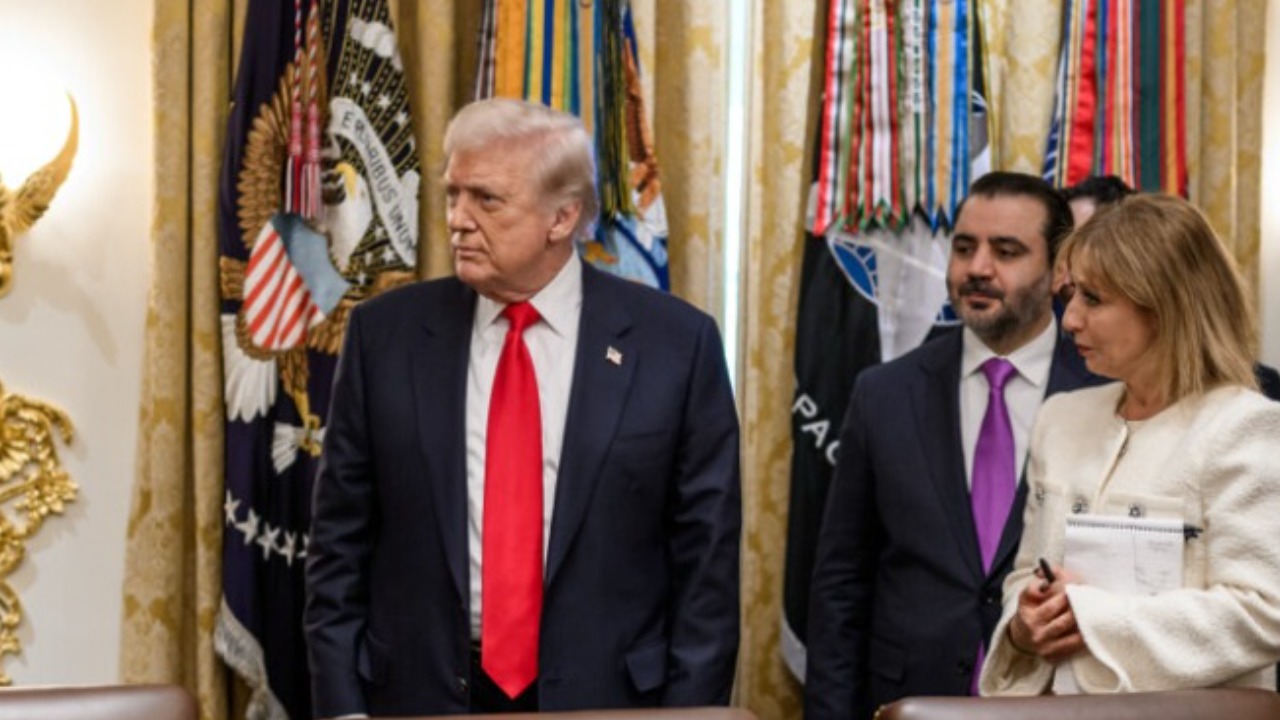
Donald Trump is now confronting a new kind of fiscal scrutiny, as a prominent watchdog warns that his favored payouts and tax breaks could ultimately carry a multitrillion dollar price tag for the federal government. The warning frames Trump’s second term agenda not just as a political fight, but as a potential $6 trillion test of how far Washington is willing to stretch the national balance sheet.
I see that estimate as more than a headline number, because it crystallizes a broader question about who benefits from Trump’s economic promises and who will be left to cover the bill once the checks go out. The watchdog’s analysis suggests that the president’s mix of tax cuts, tariffs, and targeted relief would shift enormous costs onto future budgets, even as it delivers immediate gains to favored constituencies.
The watchdog’s $6 trillion warning, explained
The core claim from the watchdog is stark: if Trump’s preferred tax and spending agenda is enacted in full, the cumulative cost over a decade could reach roughly $6 trillion, a figure that would significantly deepen projected federal deficits. I read that estimate as an attempt to translate campaign-style promises into budget math, taking Trump’s stated goals on tax cuts, tariffs, and new subsidies and mapping them onto the existing fiscal baseline. The analysis does not assume every idea becomes law overnight, but it does treat Trump’s own proposals and public commitments as a guide to what a second term would try to deliver.
According to the watchdog’s breakdown, the largest single component of that price tag comes from extending and expanding the individual and business tax cuts first enacted during Trump’s earlier term, which are currently scheduled to expire in the coming years. The group then layers in the revenue effects of Trump’s proposed across-the-board tariffs, his calls for targeted tax relief for families and specific industries, and his support for new federal payouts tied to trade and immigration policy. Taken together, those items produce the multitrillion dollar estimate that underpins the warning about a potential $6 trillion fiscal impact, as detailed in the watchdog’s own cost analysis.
How Trump’s tax agenda drives the projected cost
When I unpack the watchdog’s estimate, the tax side of Trump’s agenda emerges as the primary driver of the long term cost. Trump has repeatedly signaled that he wants to keep the individual income tax cuts from his first term in place, rather than allowing them to expire under current law, and has floated additional reductions in rates and brackets. Extending those provisions alone would already add trillions to the deficit over a decade, because the official budget baseline assumes that the cuts lapse and revenue rises accordingly. By treating Trump’s statements as policy commitments, the watchdog effectively replaces that built in revenue increase with a permanent tax cut.
The analysis also factors in Trump’s interest in further business tax relief, including lower corporate rates and more generous expensing rules for investment. Those changes would reduce federal receipts even more, especially in the early years when companies can immediately write off large purchases. The watchdog’s report notes that these tax preferences would disproportionately benefit higher income households and large corporations, while the cost is spread across the entire federal budget. In its detailed tables on tax policy impacts, the group shows that tax provisions alone account for a majority of the projected $6 trillion increase in deficits, even before other Trump priorities are added.
Tariffs, trade payouts, and hidden fiscal risks
Trump often presents tariffs as a way to make foreign producers pay for U.S. priorities, but the watchdog’s estimate treats his tariff agenda as another source of fiscal risk. Higher tariffs can raise some revenue, yet they also tend to trigger retaliation, disrupt trade flows, and increase costs for domestic consumers and businesses. The watchdog assumes that Trump’s proposed broad based tariffs on imports would generate some additional receipts, but it also notes that the economic drag from higher trade barriers would reduce overall growth and, in turn, federal tax collections. That combination leaves the net budget effect far less favorable than Trump’s rhetoric suggests.
On top of that, the watchdog flags the likelihood of new federal payouts tied to trade conflicts, similar to the large aid packages that were created for farmers during Trump’s earlier tariff battles. Those programs, which sent billions of dollars to agricultural producers to offset lost export markets, are treated as a template for how a second round of tariff escalation could play out. The report’s section on trade related aid projects that if Trump again leans on tariffs as a central tool, the government would likely face pressure to fund additional relief for affected sectors, adding tens or even hundreds of billions to the overall cost beyond the headline tax changes.
Who benefits from the payouts, and who shoulders the bill
To understand the stakes of a potential $6 trillion cost, I look at how the benefits and burdens are distributed. The watchdog’s modeling suggests that Trump’s tax and payout agenda would deliver the largest direct gains to higher income households, investors, and specific industries that receive targeted support, such as agriculture and energy. By contrast, the fiscal burden of higher deficits would be spread across the broader population through future tax adjustments, reduced public services, or higher interest costs on the national debt. That imbalance is central to the watchdog’s warning, because it frames the agenda as a transfer from future taxpayers to current beneficiaries.
The report’s distributional tables show that extending the existing tax cuts and adding new breaks would significantly increase after tax income for the top quintile of earners, while the gains for lower income households would be comparatively modest. At the same time, the watchdog notes that higher deficits would eventually require policy responses that could include cuts to programs like Medicare and Social Security or new revenue measures that fall more heavily on wage earners. In its section on distributional impact, the group underscores that the apparent generosity of Trump’s payouts and tax relief today is inseparable from the long term obligation that future budgets will have to absorb.
How the estimate compares with Biden era fiscal choices
Trump’s allies often argue that concerns about his agenda are overstated when compared with the cost of policies enacted under former President Joe Biden, but the watchdog’s analysis draws a more nuanced contrast. The group acknowledges that Biden signed major spending packages that increased deficits, including pandemic relief and infrastructure investments, yet it also notes that some of those laws included offsetting tax increases and phased out over time. By comparison, Trump’s preferred approach centers on permanent tax cuts and open ended tariff and payout policies that do not come with built in expiration dates or dedicated funding sources.
In its comparative section on Trump and Biden fiscal impacts, the watchdog emphasizes that both presidents have supported measures that add to the debt, but the composition and trajectory of those costs differ. Biden’s agenda has leaned more on direct spending programs with defined timelines, while Trump’s proposals would lock in lower revenue levels for years to come. That distinction matters for long term sustainability, because it is generally easier for future Congresses to let temporary spending lapse than to raise taxes back to prior levels once cuts are in place. The watchdog uses that logic to argue that Trump’s second term blueprint poses a uniquely persistent challenge to the federal balance sheet.
Deficit dynamics and the long term debt outlook
The projected $6 trillion cost does not exist in a vacuum, it lands on top of an already strained fiscal outlook. Federal debt held by the public is on track to reach historically high levels relative to the size of the economy, driven by structural factors like an aging population and rising health care costs. When I layer Trump’s agenda onto that baseline, as the watchdog does, the result is a steeper debt trajectory that could push interest costs to consume a larger share of federal revenue. That dynamic would leave less room for other priorities, from defense to education, without further borrowing.
The watchdog’s long term charts on debt projections show that adding Trump’s policies to the current law baseline accelerates the point at which debt surpasses previous peaks and continues climbing. Higher debt levels, in turn, make the budget more sensitive to changes in interest rates, because even small increases in borrowing costs are applied to a larger stock of outstanding obligations. The report warns that this feedback loop could constrain policymakers in future downturns, limiting their ability to respond with aggressive fiscal support if the economy weakens, since a growing share of revenue would already be committed to servicing past decisions.
Economic growth claims versus fiscal reality
Trump and his supporters often counter deficit concerns by arguing that faster economic growth will offset the cost of tax cuts and other policies, but the watchdog’s modeling is skeptical of that claim. While pro growth effects from lower taxes and deregulation can boost output to some degree, the group finds that they are unlikely to be large enough to fully pay for the revenue losses and new spending commitments embedded in Trump’s agenda. In fact, the analysis suggests that some elements, such as broad tariffs and policy uncertainty, could weigh on growth and partially offset any gains from tax relief.
The report’s macroeconomic section on growth assumptions incorporates a range of scenarios, including more optimistic paths where investment responds strongly to lower tax rates. Even in those cases, the watchdog concludes that the net effect is still a significant increase in deficits and debt, because the revenue feedback is smaller than the upfront cost. The group also notes that higher debt itself can eventually drag on growth by crowding out private investment and raising borrowing costs, which further undermines the idea that the agenda will simply “pay for itself” through expansion alone.
Political incentives behind big ticket promises
Behind the numbers, I see a set of political incentives that help explain why Trump’s agenda leans so heavily on costly payouts and tax cuts. In a polarized environment, promising immediate financial relief to voters, businesses, and key constituencies is a powerful campaign tool, especially when the long term budget impact is abstract and distant. Trump has consistently framed his policies as a way to reward “forgotten” Americans and punish perceived adversaries, whether foreign governments or domestic elites, and that narrative makes it easier to justify expensive measures as necessary corrections rather than discretionary giveaways.
The watchdog’s narrative section on political drivers points out that many of Trump’s most expensive ideas are also among his most popular with core supporters, such as permanent tax cuts and aggressive trade actions. At the same time, the costs are largely hidden in the form of higher future deficits rather than immediate tax hikes or spending cuts, which reduces short term political resistance. That asymmetry, where benefits are concentrated and visible while costs are diffuse and delayed, is a classic recipe for fiscal expansion, and the watchdog argues that Trump’s second term platform exemplifies that pattern on a particularly large scale.
What the $6 trillion warning means for voters and policymakers
For voters, the watchdog’s $6 trillion estimate is a reminder that campaign promises about tax relief and targeted payouts come with concrete budget consequences, even if those consequences are not front and center in political messaging. I see the analysis as an invitation to weigh not only the immediate appeal of lower taxes or new subsidies, but also the trade offs that higher deficits will eventually force. Those trade offs could include pressure to trim popular programs, raise other taxes, or accept a higher level of national debt and the risks that come with it.
For policymakers, the report underscores the importance of pairing any new commitments with credible offsets or reforms that keep the long term fiscal path manageable. The watchdog does not argue that every element of Trump’s agenda is inherently unsustainable, but it does contend that enacting the full suite of proposals without adjustment would significantly worsen the debt outlook. Its concluding recommendations in the section on fiscal guardrails urge Congress to scrutinize the cost of permanent tax changes, limit open ended payout programs, and consider broader budget reforms that can accommodate policy priorities without pushing the federal ledger deeper into the red.
More From TheDailyOverview
- Dave Ramsey warns to stop 401(k) contributions
- 11 night jobs you can do from home (not exciting but steady)
- Small U.S. cities ready to boom next
- 19 things boomers should never sell no matter what

Julian Harrow specializes in taxation, IRS rules, and compliance strategy. His work helps readers navigate complex tax codes, deadlines, and reporting requirements while identifying opportunities for efficiency and risk reduction. At The Daily Overview, Julian breaks down tax-related topics with precision and clarity, making a traditionally dense subject easier to understand.