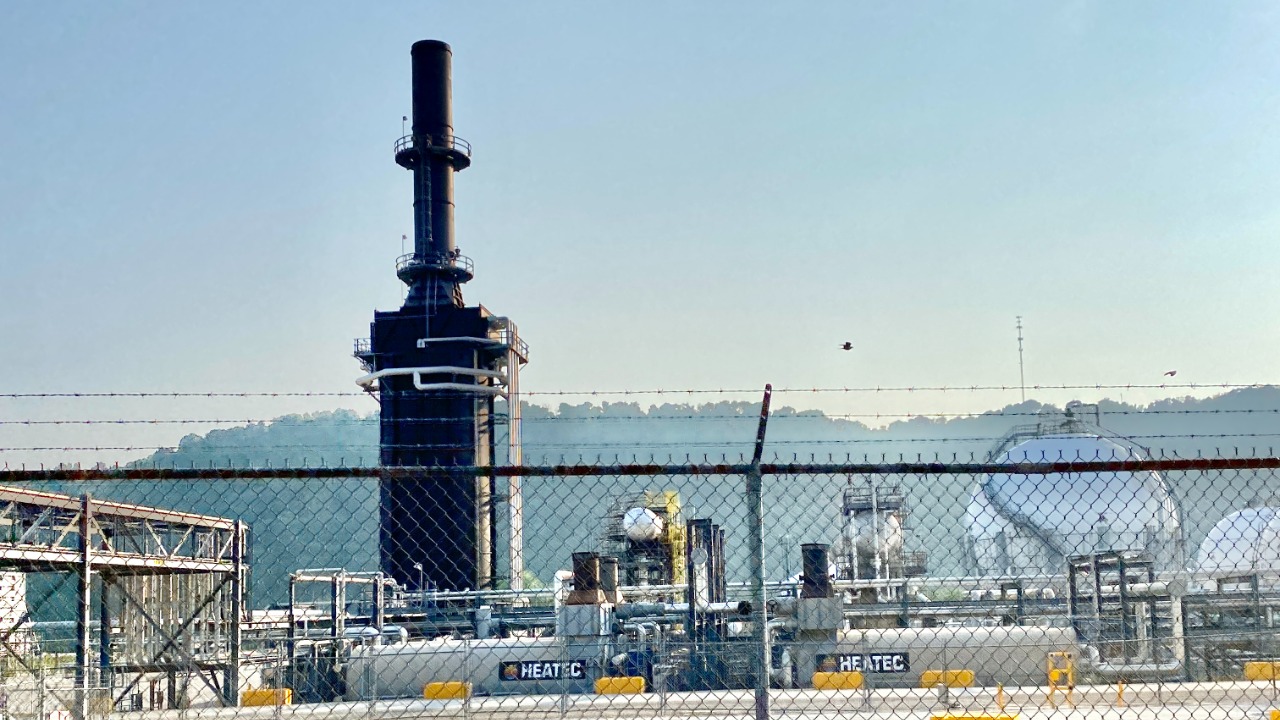
Westlake is taking a hard reset on parts of its North American chemicals footprint, moving to shut several plants and book a $415 million charge that underscores how brutal the current cycle has become for chlorovinyls and styrene. The decision folds a painful round of job cuts into a broader effort to protect margins and reorient production toward regions and products that still earn their keep.
The closures will ripple through local economies that have long depended on heavy industry, even as investors cheer the prospect of leaner operations and better pricing discipline. I see the move as part of a wider manufacturing shakeout in which older, higher cost assets are being sacrificed so that balance sheets and shareholders can survive a period of weak demand and stubborn overcapacity.
Westlake’s $415 million reset and the plants on the chopping block
Westlake has framed its latest restructuring as a “rationalization” of chlorovinyl and styrene assets in North America, but the language cannot soften the reality that entire production units are being taken offline and written down. The company has told investors it will close multiple facilities and record roughly $415 million in associated charges, a figure that reflects both the cost of shutting plants and the diminished value of equipment that no longer fits its long term strategy, according to reporting on the plan to shut several North American plants. Management is effectively admitting that some capacity built for a different demand environment cannot be justified in today’s market for vinyls and styrenics.
In a separate statement, Westlake detailed how it will rationalize certain North American chlorovinyl and styrene assets, spelling out that the affected units include polyvinyl chloride, vinyl chloride monomer and styrene operations that have struggled to earn acceptable returns. The company is not just trimming around the edges, it is permanently removing capacity that has been squeezed by weaker construction demand, higher energy costs and aggressive competition from newer plants in other regions. I read that as a clear signal that Westlake expects this downturn to be more than a passing squall.
Jobs, towns and the human cost of “rationalization”
Behind the accounting charge is a very real human toll, starting with the 295 jobs that Westlake has said will disappear as it shutters Four production units tied to PVC and VCM. Those figures, spelled out in industry coverage of the restructuring, capture only part of the story, because every lost role in a plant tends to echo through contractors, suppliers and small businesses that depend on shift workers’ paychecks. When a company calls a closure “difficult but necessary,” as Westlake has, it is acknowledging that the spreadsheet logic of cost savings collides with the livelihoods of hundreds of families.
The communities that host these plants are often deeply intertwined with the chemical industry, from the skilled trades that maintain complex equipment to the restaurants that fill up after a long shift. In places like Aberdeen, Mississippi, where manufacturing has long been a pillar of the local economy, the loss of a major industrial employer can reshape the job market for years. The same is true in Gulf Coast hubs such as Lake Charles, Louisiana, where clusters of chemical plants have historically provided some of the best paying blue collar work available. When those plants go quiet, the impact is felt far beyond the factory gate.
Global footprint: from North America to Pernis and beyond
Westlake’s decision to pare back in North America fits into a broader pattern of pruning across its global network, including Europe. Earlier moves to close the Pernis plant in the Netherlands and absorb about $190 million in pre tax costs showed that the company is willing to exit entire sites when they no longer meet its financial or strategic thresholds. That European step, focused on a facility facing high energy prices and intense competition, foreshadowed the current North American cuts and underlined how global the pressure on legacy petrochemical assets has become.
Investors have been told that the latest round of closures is designed to improve margins and free up capital for more competitive assets, a thesis echoed in analysis of how facility rationalization could support margin gains even as market headwinds persist. I see a clear throughline: Westlake is shrinking in some regions so it can defend or expand in others, particularly where feedstock advantages or proximity to growth markets offer better economics. The risk, of course, is that cutting too deeply or misjudging demand can leave the company underexposed when the cycle eventually turns.
Part of a wider manufacturing shakeout
Westlake is not alone in wielding the axe. Across U.S. industry, companies are closing plants and consolidating production as they confront soft demand, higher borrowing costs and shifting consumer habits. In the paper and packaging sector, a Georgia Pacific facility closure has already triggered 134 job losses, a stark reminder that even household names are not immune when older mills fall out of step with market needs. Those layoffs mirror the kind of dislocation now facing Westlake workers, suggesting a broader pattern rather than an isolated corporate misstep.
The same story is playing out in consumer facing industries, where a California wine producer is closing a facility and laying off dozens as it adapts to changing demand and cost pressures. From chemicals to paper to wine, the throughline is that companies are under pressure to simplify their footprints and focus on the plants that can run hardest and cheapest. Westlake’s $415 million charge is therefore both a company specific event and a chapter in a larger restructuring of American manufacturing, where marginal assets are being culled in favor of fewer, more efficient hubs.
Market power, risk and what comes next
As weaker plants close, one consequence is that production in many sectors becomes more concentrated in the hands of a smaller group of large operators. Analysts have warned that in some corners of the economy, private capital and corporate roll ups have created what amounts to a quiet dominance, a dynamic explored in detail in a report on the monopoly you have never heard of. In chemicals, Westlake’s retrenchment could ultimately tighten supply in certain grades of PVC and styrene, potentially giving surviving producers more pricing power once demand recovers. That is good news for margins, but it also raises questions about how much resilience remains in the system when a handful of companies control critical inputs for construction and manufacturing.
History offers a cautionary note. Bankruptcy filings from earlier downturns show how quickly overleveraged industrial players can unravel when demand slumps and debt piles up, as illustrated in restructuring records compiled in public bankruptcy dockets. Westlake is acting from a position of relative strength, choosing to take a large charge now rather than be forced into more drastic measures later, but the execution risk is real. If the company misjudges the depth or duration of the downturn, it could find itself short of capacity just as customers return, or stuck with a cost base that is still too high.
Workers, adaptation and the culture of high performance
For workers, the challenge is not only finding a new job, but also adapting to a labor market that increasingly prizes specialized skills and flexibility. In sectors as different as sports equipment and lifestyle wellness, companies are redesigning products and routines to fit more demanding, high performance expectations, as seen in innovations in hockey gear for women players and in advice on sleep improving habits. That same culture of optimization is reshaping industrial work, where operators are expected to master digital controls, predictive maintenance tools and tighter safety protocols.
As Westlake and its peers streamline, displaced employees will need support to transition into roles that match this new reality, whether in advanced manufacturing, logistics or entirely different fields. The company’s restructuring is a reminder that the chemical plants anchoring communities from Aberdeen to Lake Charles are not immutable fixtures, but assets that live or die by their ability to compete in a global market. Unverified based on available sources is exactly how I would describe any promise that the current wave of closures will be the last, because the forces driving this $415 million reset are structural, not temporary, and they will keep testing which facilities deserve to stay open.
More From TheDailyOverview

Grant Mercer covers market dynamics, business trends, and the economic forces driving growth across industries. His analysis connects macro movements with real-world implications for investors, entrepreneurs, and professionals. Through his work at The Daily Overview, Grant helps readers understand how markets function and where opportunities may emerge.

