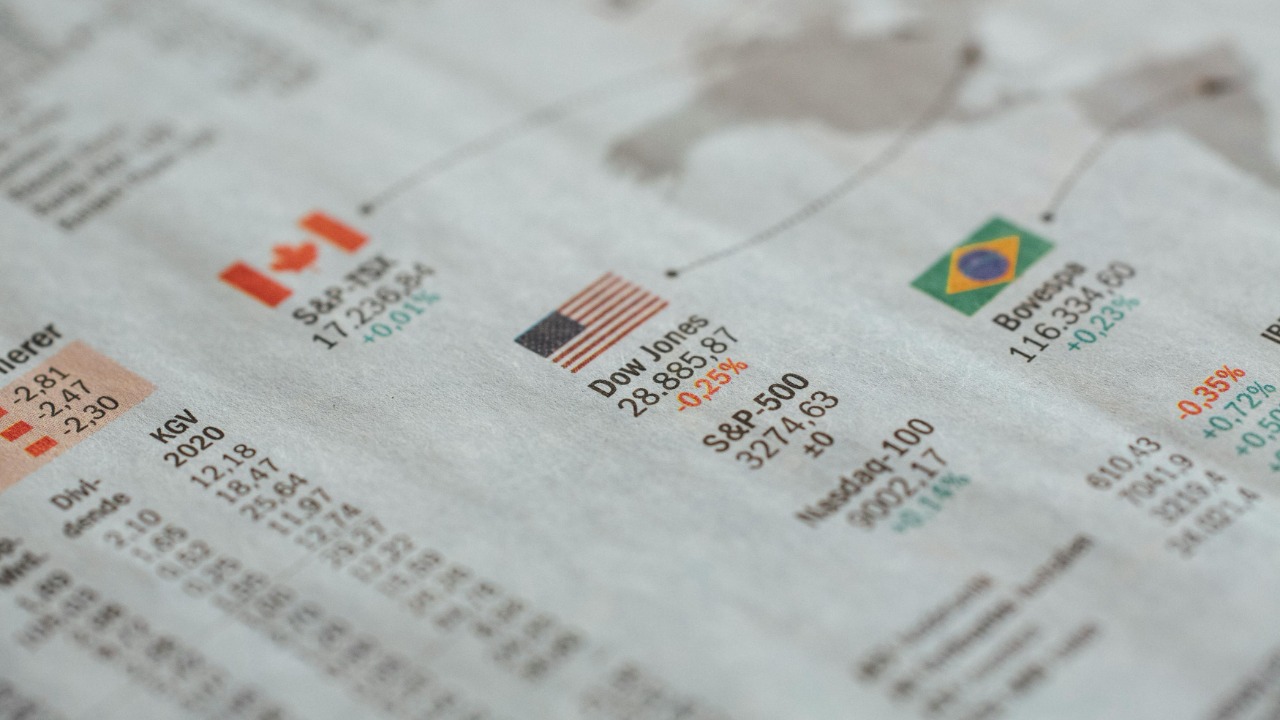
Two decades is long enough for the stock market to turn a modest sum into a life-changing amount, and the S&P 500 is the benchmark most investors use to measure that transformation. If I had put $1,000 into this index 20 years ago and simply left it alone, the result today would illustrate both the power of compounding and the discipline required to capture it. The exact figures vary with the end date, but the story is consistent: patient exposure to a broad basket of large U.S. companies has historically turned four figures into several times that amount.
How $1,000 in the S&P 500 grew over 20 years
The cleanest way to answer what $1,000 became is to look at how the S&P 500 itself performed over roughly that span. When the index hit fresh highs in early summer, analysis of a hypothetical $1,000 invested 20 years earlier showed a Percentage gain of exactly 658.14%, for a Total value of $7,581. That figure assumes dividends were reinvested and no additional money was added, which means the original stake multiplied more than sevenfold simply by tracking the market over two decades, a result that lines up with the long-run character of U.S. stocks even if the path included multiple bear markets and sharp rallies, as highlighted in the detailed breakdown of that 20‑year return.
That 658.14% surge is not a one-off anomaly tied to a single start date, it is broadly consistent with what long-term data show. Research that tracks the S&P 500 across many different starting months finds that we now have the tools to estimate how much any hypothetical $1,000 contribution would be worth, and the results cluster around the same basic outcome: a small four-figure investment, left untouched for 20 years, tends to grow into several thousand dollars, with the exact number depending on whether you bought before or after major swings like the financial crisis or the pandemic crash, a pattern that is mapped out in depth in the modeling of a $1,000 S&P scenario.
What the long-run averages say about those gains
To understand why $7,581 is a reasonable outcome for a 20-year holding period, I look at the average yearly return rather than any single snapshot. Over the last 20 years, the historical average yearly return of the S&P 500 has been reported at 11.095% as of the end of October, a figure that includes dividends and smooths out the booms and busts that defined the period. If I plug that 11.095% annualized gain into a compound growth calculation over 20 years, $1,000 grows to a level that is very much in the same ballpark as the 658.14% jump, which helps explain why the index has been such a powerful engine for long-term savers according to the long-horizon analysis of 20‑year averages.
Those averages also underscore why time in the market matters more than timing the market. Over shorter stretches, returns can be wildly different, but as the horizon stretches toward two decades, the distribution tightens around that 11.095% figure, which is why a single $1,000 contribution can plausibly end up near $7,581 even if it was made just before a downturn. The same data set shows that the long-run total return, including dividends, has historically been lower over some earlier eras and higher over others, yet the recent 20-year window still fits the broader pattern of U.S. equities rewarding patience, a pattern that gives context to the specific 658.14% gain cited in the summer analysis of a hypothetical $1,000 stake.
How a broad index stacks up against single stocks
Once I know that $1,000 in the S&P 500 turned into roughly $7,581, the natural comparison is with individual winners that did even better. One high-profile example is Amazon, where a $1,000 investment 20 years ago produced an annualized total return of about 26%, far ahead of the S&P 500 over the same stretch. That gap illustrates the tradeoff: a diversified index of 500 companies will rarely match the most explosive stock in the market, but it also avoids the risk that a single business stumbles or disappears, a contrast that is laid out clearly in the review of how Amazon’s 26% annualized gain compared with the index’s roughly 10.8% total return (including dividends) over the same period in a 20‑year Amazon comparison.
Alphabet offers a similar lesson. A $1,000 investment in GOOGL two decades ago would have produced what one analysis bluntly calls a Spoiler in favor of the stock, with Alphabet’s performance described as “nothing less than stupendous” compared with the S&P 500. In that review, GOOGL is shown to have outpaced the index so decisively that it now appears on lists of top S&P 500 stocks, a reminder that owning the benchmark means you do participate in the rise of giants like Alphabet, but in a diluted way that smooths out both their upside and their volatility, as detailed in the long-term look at a $1,000 GOOGL investment.
Why the S&P 500 still anchors most portfolios
Even when individual names like Amazon or Alphabet leave the index in the dust, I still see a strong case for using the S&P 500 as a core holding. The 658.14% gain that turned $1,000 into $7,581 did not require picking winners, monitoring earnings calls, or reacting to every headline, it simply required buying a low-cost fund that tracks the index and holding it through thick and thin. That kind of hands-off compounding is what makes the S&P 500 such a common default in retirement plans and brokerage accounts, especially for investors who prefer a rules-based approach to stock selection, a role that is reinforced by the way long-run models of a $1,000 index investment show similar outcomes across many different starting months.
There is also a psychological advantage to anchoring on the index. Knowing that the historical average yearly return has been 11.095% over the last 20 years makes it easier to stay invested during downturns, because I can frame short-term losses against a backdrop where time has historically been on the side of patient shareholders. That does not guarantee future results, and the data on long-term averages explicitly warn that past performance is no promise of what comes next, but it does show that a disciplined, diversified approach has repeatedly turned relatively small sums like $1,000 into meaningful wealth, a pattern that underpins the 658.14% gain and the resulting $7,581 value highlighted in the summer snapshot of a 20‑year S&P return.
More From TheDailyOverview
- Dave Ramsey warns to stop 401(k) contributions
- 11 night jobs you can do from home (not exciting but steady)
- Small U.S. cities ready to boom next
- 19 things boomers should never sell no matter what

Cole Whitaker focuses on the fundamentals of money management, helping readers make smarter decisions around income, spending, saving, and long-term financial stability. His writing emphasizes clarity, discipline, and practical systems that work in real life. At The Daily Overview, Cole breaks down personal finance topics into straightforward guidance readers can apply immediately.

