The sudden decision by Washington to launch a strike on Venezuela has jolted a market that was already wrestling with slowing demand and the risk of oversupply. Traders now have to weigh the shock of military action and regime change against the reality that Venezuela’s crippled oil sector cannot quickly flood the world with crude even under new management. What happens next will shape not only benchmark prices but also gasoline costs for drivers and investment strategies from Houston to Beijing.
The scale of Venezuela’s oil trove versus its actual output
On paper, Venezuela is one of the biggest prizes in global energy, a country sitting on an estimated 303 billion barrels of crude that, in theory, could transform supply dynamics for decades. I see that figure, cited as markets assess the fallout from the raid, as a reminder that the stakes are not about today’s barrels but about who controls the world’s largest proven reserves and how quickly they can be brought back online. Analysts watching the situation note that, following the US move, attention has shifted to what that stockpile might mean for prices if it is eventually unlocked, rather than any immediate loss of flows.
The problem is that the country’s oil sector has been hollowed out by years of mismanagement and sanctions, so the gap between reserves and production is vast. Reporting on the 303 billion barrels figure underscores that the market is reacting to long term potential rather than current export volumes, which are a fraction of what they were a decade ago. That disconnect is why the strike has produced more debate than panic among traders, even as they reprice geopolitical risk.
A damaged industry that cannot respond overnight
Even if the fighting stopped tomorrow, I would not expect Venezuela’s wells and refineries to roar back to life in a matter of months. Years of neglect and international sanctions have left pipelines corroded, upgraders idled and skilled workers scattered, a reality that has been highlighted in assessments of the country’s energy infrastructure. One detailed account notes that, after this long period of decay, the oil industry is in such disrepair that it could take years and massive investment to restore anything like its former capacity.
That is why early market reaction has been relatively restrained, with investors treating the strike as a political shock layered on top of an already constrained producer rather than the sudden loss of a major supplier. Analysts quoted in coverage of how markets responded After years of neglect stress that Venezuela’s diminished role in day to day supply has limited the immediate price spike, even as the episode reinforces how fragile energy systems can be in times of geopolitical turmoil.
Why crude benchmarks barely budged after the raid
In the hours after the operation, I watched crude futures swing sharply, then settle back as traders digested the news and concluded that the short term hit to physical supply was modest. Reports on intraday trading describe oil prices moving lower even as gold and defence stocks climbed, a pattern that suggests investors were more focused on safe haven assets and military contractors than on a sustained disruption to barrels on the water. The fact that prices could fall in the wake of such a dramatic move underlines how much spare capacity and alternative supply the market believes it still has.
One live market blog pointed out that Venezuela accounts for roughly 1% of global supply at current output levels, a sliver that can be offset by other producers if necessary. That limited footprint helps explain why Brent and West Texas Intermediate have traded sideways or even slipped, with one analysis of price action after the capture of Nicolás Maduro noting that crude benchmarks declined while investors rotated into gold and selected oil stocks on expectations of future gains rather than present scarcity.
Short term gasoline pain is likely to be contained
For drivers in the United States, the immediate question is whether this conflict will make filling up a Ford F-150 or a Toyota RAV4 more expensive. I see some upward pressure as refiners and retailers factor in geopolitical risk, but the consensus in early commentary is that any spike at the pump should be limited and temporary. One detailed breakdown of fuel markets stresses that Venezuela’s energy infrastructure has deteriorated so badly that its capacity to produce oil has already been constrained for years, which blunts the impact of fresh turmoil.
That same analysis notes that even if Venezuela’s oil supply is completely cut off in the short run, global producers have room to compensate, which should cap the effect on US gasoline prices. That is cold comfort for households already squeezed by inflation, but it suggests that the strike is more likely to add a few cents to a gallon of regular than to trigger the kind of price shock seen after major Gulf disruptions.
Trump’s promise to “take control” and the prospect of a revamp
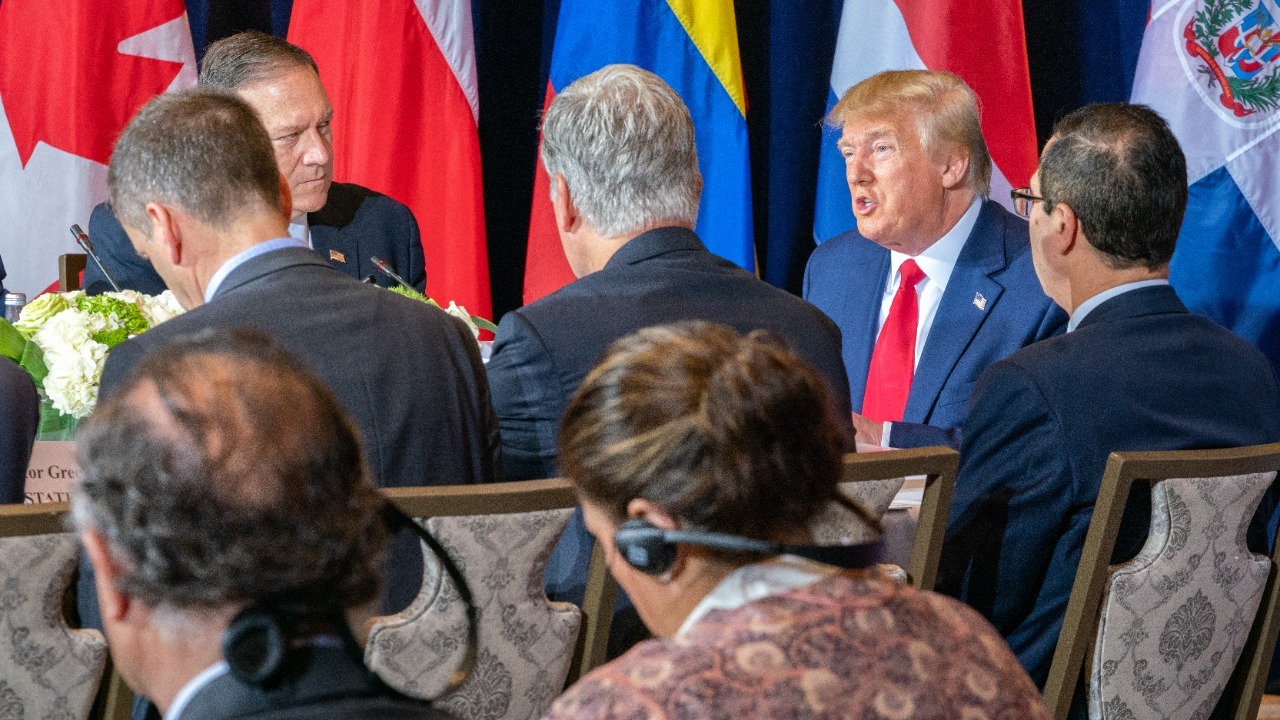
President Donald Trump has framed the operation not just as a security move but as a way to reshape who benefits from Venezuela’s vast reserves. In public comments, he has said the United States is taking control of Venezuela’s oil reserves, a phrase that signals an ambition to steer future production and investment. I read that as an attempt to reassure markets that, over time, a US backed restructuring could turn a troubled petrostate into a more reliable supplier aligned with Western interests.
Reporting on the administration’s plans suggests that a US led revamp could eventually make Venezuela a much bigger supplier of oil and open opportunities for Wester companies that were previously barred from producing there. Yet even sympathetic analysts caution that this is a long term story, one that depends on stabilizing the country, overhauling its state oil company and attracting billions of dollars in capital. For now, Trump’s rhetoric is shaping expectations more than barrels, nudging some investors to bet on future supply growth even as spot prices soften.
Regime change, Maduro’s arrest and the long road to recovery
The capture of Nicolás Maduro in the US raid has raised the prospect of a full regime change, something energy strategists have long flagged as a potential turning point for global supply. One in depth assessment argues that a regime change in Venezuela would immediately represent one of the largest upside risks to the global oil supply outlook, because a new government could invite foreign partners back in and reform the nation’s state oil company. I see that as a reminder that political shifts can matter as much as geology in determining how much crude actually reaches the market.
Yet even that optimistic scenario comes with a warning label about timing. The same analysis of how Venezuela faces a long road to lasting recovery stresses that rebuilding production will take years, not months, given the depth of the sector’s problems. In other words, Maduro’s removal may eventually add supply and weigh on prices, but in the near term it mainly adds uncertainty about how quickly a new leadership can turn political change into physical barrels.
How OPEC+ and an oversupply risk shape the price ceiling
Even before the strike, the oil market was grappling with the possibility that supply could outstrip demand in 2026 as growth in consumption slows. One forward looking analysis warned that, with OPEC+ facing strategic crossroads and demand growth losing steam, a looming supply glut may depress prices if producers do not restrain output. I interpret that backdrop as a kind of safety valve on the Venezuela shock, because it means there is already concern about too much oil rather than too little.
The same report on the OPEC+ and the Oversupply Dilemma notes that this potential glut could put downward pressure on benchmark prices, limiting how far any geopolitical premium can run. If Saudi Arabia, the United Arab Emirates and others choose to open the taps to offset Venezuelan disruption, they would be doing so in a market that already fears oversupply, which is one reason traders have been reluctant to price in a sustained rally after the US operation.
Market psychology: sideways crude, rising gold and selective stock gains
Price action in the days after the raid has been a study in how investors parse complex shocks. One account of trading described oil moving sideways despite the political turmoil, with analysts arguing that the direct impact on physical supply is limited and that the main risk lies in how US sanctions policy evolves. A key takeaway from that coverage is a quote that there are ambiguous but modest risks to oil prices in the short run from Venezuela, and that the turmoil may have little immediate impact on prices if other producers step in.
At the same time, safe haven assets and certain equities have reacted more dramatically. One market wrap noted that Why oil prices are falling even as gold surges has a lot to do with expectations that future Venezuelan output will rise under new management, which supports oil company valuations even when spot crude dips. Another detailed look at futures trading urged readers to see ambiguous but modest risks to prices, a phrase that captures the cautious mood: investors are alert, but not panicked.
US companies, Chevron’s foothold and the global supply web
One reason I am cautious about predicting a price spike is that the global supply system is more flexible than it was during past crises. Currently, Chevron is the only American oil giant maintaining limited operations in Venezuela, and its activities are strictly conditioned by US sanctions, which has kept a small but symbolically important link between the two countries’ energy sectors. That foothold could give Washington and US firms a head start if a new government invites foreign capital to rebuild fields and upgraders.
Analysts quoted in a Chinese focused assessment of whether US military actions will change global flows argue that this episode highlights the market’s sensitivity to marginal supply changes, even when the country involved is a relatively small current exporter. That sensitivity is why traders are also watching how President Donald Trump calibrates sanctions and production sharing deals, and why they are following detailed intraday coverage that urges readers to Follow Huileng Tan and other market specialists as they track every shift in rhetoric and policy. In the end, what a US strike on Venezuela means for oil prices will depend less on the explosions of Jan and more on whether the country’s 303 billion barrels stay stranded or finally start to flow.
Long term scenarios: from modest bump to structural shift
Looking beyond the next few weeks, I see three broad paths for prices. In the first, the conflict drags on, infrastructure suffers further damage and sanctions tighten, which could add a modest risk premium to crude but still be cushioned by spare capacity elsewhere and the oversupply concerns already haunting OPEC+. In the second, a relatively orderly transition allows a new leadership to stabilize the sector, invite foreign partners and gradually lift output, a scenario that would weigh on prices over the next decade as Venezuelan barrels re enter the market.
The third, more volatile path would combine prolonged instability with policy missteps that deter investment, leaving Venezuela stuck in limbo and reinforcing the sense that geopolitical events, not only Venezuela, can swing sentiment even when physical flows are unchanged. One early analysis of the US Strike In Venezuela framed it as a test of how a market already worried about oversupply digests a fresh geopolitical shock. For now, the answer seems to be that prices will wobble rather than spike, but with 303 billion barrels in play and While the Trump administration signals a more assertive energy strategy, the long term story is only beginning to unfold, as one analysis of how While the Trump team sees room for long term supply increases makes clear.
More From TheDailyOverview

Grant Mercer covers market dynamics, business trends, and the economic forces driving growth across industries. His analysis connects macro movements with real-world implications for investors, entrepreneurs, and professionals. Through his work at The Daily Overview, Grant helps readers understand how markets function and where opportunities may emerge.