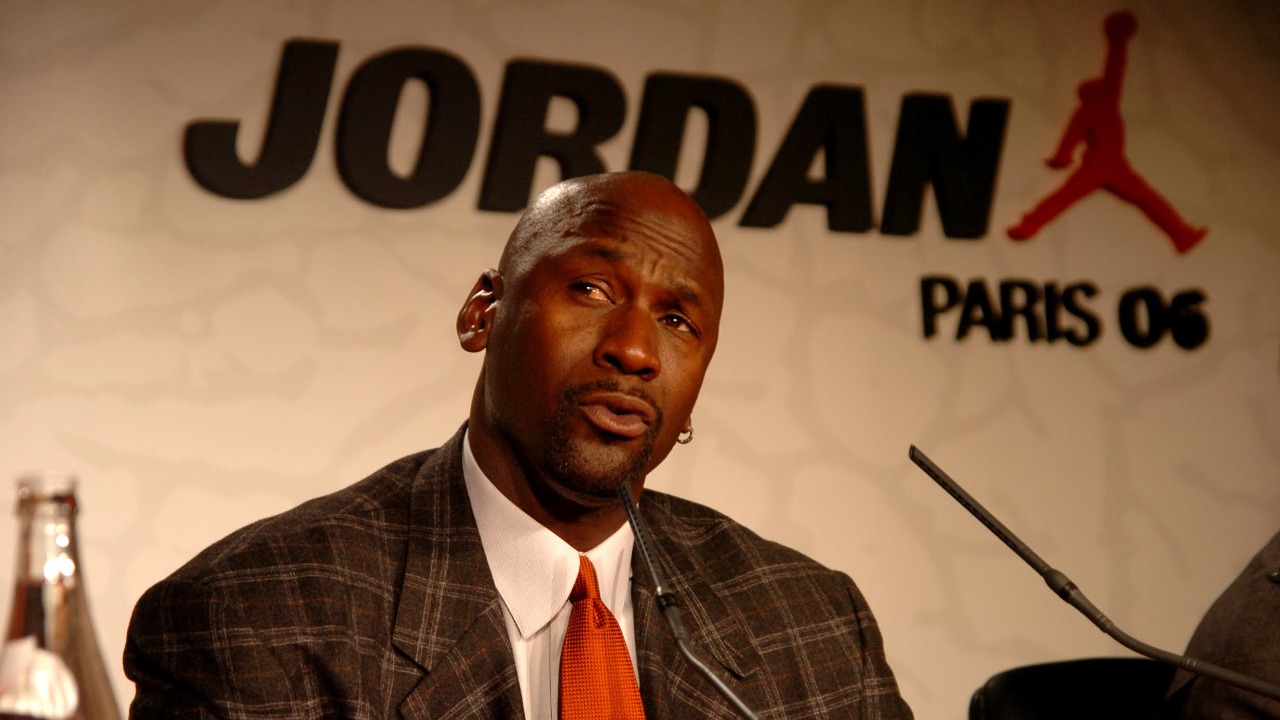
Michael Jordan’s fortune is so large that it can feel abstract, almost like a scoreboard number that keeps ticking up. Turning that pile of money into a per-person payout for every American is a way to test what extreme wealth really means in everyday terms, and what it does not.
When I run the math on his net worth against the size of the United States population, the result is far less life changing than the headline might suggest, yet it still reveals a lot about how money and fame intersect in modern America and why individual billionaires, even icons, cannot substitute for broad economic policy.
How big Michael Jordan’s fortune really is
To understand what a nationwide split of Michael Jordan’s money would look like, I first need a clear number for his wealth. Reporting from Nov 21, 2025, puts Michael Jordan’s net worth at exactly $3.8 billion, with that figure tied to estimates from September. That number reflects not just his Chicago Bulls salary and endorsement checks, but decades of compounding business decisions that turned a superstar athlete into a multi billionaire.
One of the most important of those decisions came when he moved from being the face of a brand to being an owner. Earlier in his post playing career, Jordan bought a controlling stake in the Charlotte Hornets, and reporting notes that his biggest wealth growth came from purchasing a majority stake in the Charlotte Hornets in 2010 for about $175 m, a deal also described as $175. That relatively modest price for an NBA franchise in 2010, compared with today’s valuations, helped transform his earnings from basketball and shoes into equity that could grow far faster than a standard paycheck.
What every American would actually get
Once I have the $3.8 billion figure, the next step is to spread it across the country. The United States population is roughly 335 million people, so dividing $3,800,000,000 by 335,000,000 yields about $11.34 per person. Even if I round the population down to make the math friendlier, the payout still lands in the low double digits, the kind of money that buys a fast food combo or a couple of gallons of gas, not a down payment or a college semester.
That scale is exactly what recent coverage is getting at when it asks how much every American would receive if Jordan emptied his accounts. One analysis framed the thought experiment under the question, How Much Would Every American Get If Jordan Evenly Distributed His Wealth, and the answer was essentially enough for a free lunch, maybe with fries, but not much more. When I compare that outcome with the way we talk about billionaires, it underscores how enormous the national population is and how even headline grabbing fortunes shrink quickly when they are sliced 300 million ways.
Why the “share the wealth” fantasy misses the real problem
Looking at that $11 or so per person, I find it tempting to dismiss the whole exercise as a gimmick, but it actually highlights a deeper misconception about inequality. The gap that worries economists is not just about one celebrity’s net worth, it is about the structural forces that let a small slice of households accumulate assets while wages for typical workers lag behind. Redistributing a single fortune, even one as large as Michael Jordan’s, barely dents that imbalance because the underlying rules of the game, from tax policy to housing costs, remain untouched.
There is also a psychological trap in fixating on individual billionaires as if they are walking policy solutions. When I imagine If Michael Jordan writing a check to every American, it can feel like a shortcut around the messy work of reforming healthcare, education, or the labor market. In reality, the math shows that no single person, no matter how rich, can fund universal childcare, erase student debt, or stabilize Social Security. Those are collective choices that require public budgets, not one time windfalls from famous names.
What Jordan’s path says about opportunity in America
Jordan’s journey from rookie guard to owner level wealth also tells a story about who gets access to the most powerful engines of prosperity. His playing career and endorsements made him rich, but the leap to $3.8 billion depended on owning a major asset like the Charlotte Hornets, which he bought in 2010 for about $175 m. Most Americans will never be invited into that kind of deal, and that is part of why the wealth ladder is so steep: the biggest gains often come from equity stakes that are available only to people who already have significant capital and connections.
At the same time, his trajectory shows how cultural influence can be converted into financial power. The Air Jordan brand, the global recognition of his name, and the cachet he brought to the Hornets all helped justify higher valuations and richer contracts. When I compare that to a teacher in Phoenix or a nurse in Cleveland, whose income is capped by public budgets or hospital pay scales, the contrast is stark. The system rewards those who can scale their impact across millions of customers or viewers, and it leaves most workers trading hours for dollars in a way that never compounds into anything close to $3.8 billion.
What an $11 payout reveals about our expectations
In the end, the thought experiment of carving up Michael Jordan’s fortune is less about the money itself and more about our expectations of what extreme wealth should do. If every American woke up tomorrow with an extra $11 in their bank account, the headlines would fade quickly, and the same debates about rent, medical bills, and retirement savings would still dominate kitchen table conversations. That tiny per person slice shows that even spectacular individual success cannot substitute for broad based prosperity.
When I look at the numbers, I see a useful reality check. The country can celebrate Jordan’s achievements and still recognize that solving inequality will not come from passing around one man’s net worth, no matter how many zeros it has. The real work lies in making sure that more people have a shot at building durable wealth of their own, whether or not they ever lace up a pair of signature sneakers.
More From TheDailyOverview
- Dave Ramsey warns to stop 401(k) contributions
- 11 night jobs you can do from home (not exciting but steady)
- Small U.S. cities ready to boom next
- 19 things boomers should never sell no matter what

Cole Whitaker focuses on the fundamentals of money management, helping readers make smarter decisions around income, spending, saving, and long-term financial stability. His writing emphasizes clarity, discipline, and practical systems that work in real life. At The Daily Overview, Cole breaks down personal finance topics into straightforward guidance readers can apply immediately.
