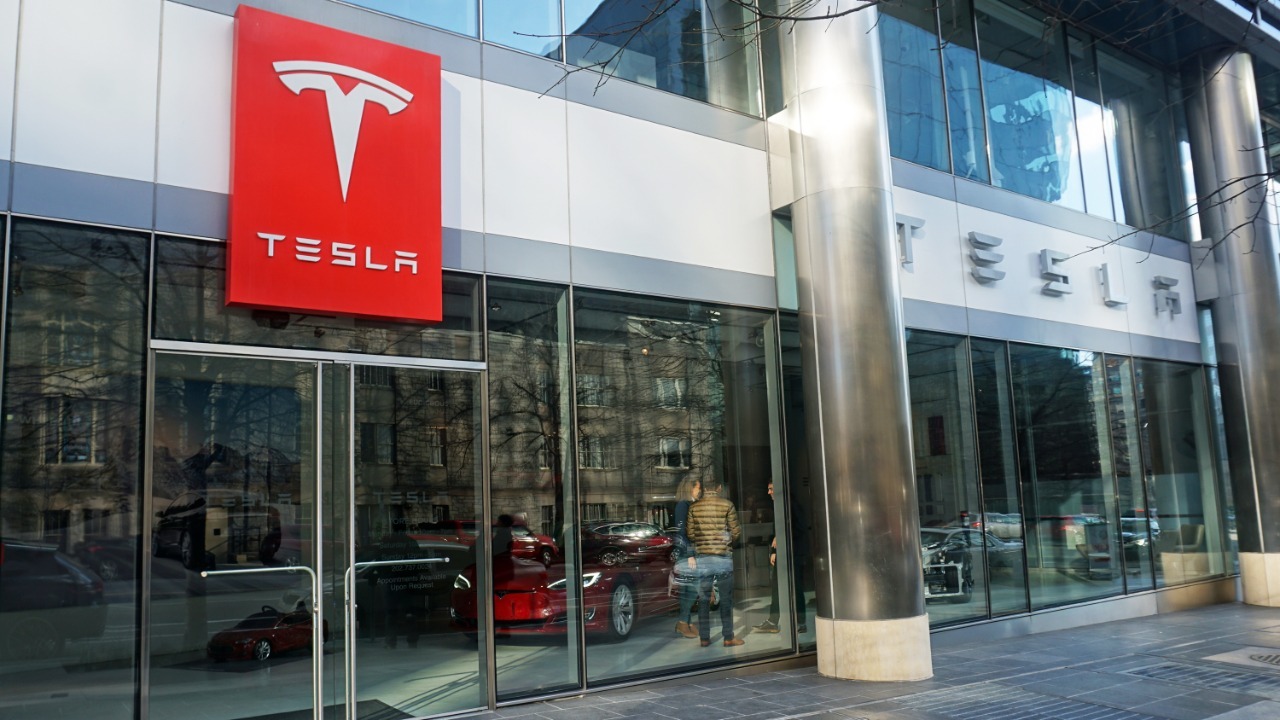
Tesla has rarely inspired modest forecasts, and the run‑up to 2026 is no exception. Wall Street targets now stretch from cautious single‑digit gains to scenarios where the company is worth multiple trillions of dollars, with the spread reflecting deep disagreement over electric‑vehicle demand, margins and the value of Tesla’s software and energy businesses. The most bullish camp argues that one powerful driver, a shift from being an automaker to an artificial‑intelligence and energy platform, could make the optimistic calls look reasonable rather than reckless.
To understand what Tesla might be worth by 2026, I need to unpack how analysts are modeling its earnings, where they see growth coming from and why some believe the company is on the cusp of a structural break in profitability. The debate now turns less on how many cars Tesla can ship and more on whether its autonomy and energy bets can scale fast enough to justify valuations that would once have sounded absurd.
How big the 2026 targets really are
On the surface, the 2026 conversation looks like a familiar tug‑of‑war between bulls and bears, but the numbers involved are striking even by Tesla standards. One prominent forecast from a top analyst argues that Tesla could reach a $2 trillion market capitalization by 2026, with a stretch case that pushes toward $3 trillion if its artificial‑intelligence strategy gains full traction. That kind of valuation would place Tesla in the same league as the largest technology platforms, implying that investors are paying not for a carmaker but for a software‑heavy infrastructure company that happens to build vehicles.
Even more conventional price targets are lofty. One detailed Tesla stock forecast for 2026 to 2030 highlights how third‑party research houses such as GLJ Research have been forced to raise their 12‑month targets as the share price and earnings expectations climbed. The fact that a bearish valuation shop like GLJ Research is revising numbers upward underscores how quickly sentiment has shifted, even among skeptics who still question whether Jan and other optimists are overestimating long‑term demand and margins.
What the analyst consensus is really saying
Headline‑grabbing targets can obscure what the broader analyst community is signaling. Over the past 90 days, a total of 46 analysts have updated their guidance on Tesla, according to one survey of recommendations, and the result is a mixed picture that blends outright buy ratings with cautious holds and a minority of sells. That breadth of coverage, 90 days and 46 voices, reflects how central Tesla has become to institutional portfolios, but it also shows that there is no single Wall Street view on what the stock should be worth in 2026.
Another synthesis of broker targets, framed as a price prediction heading, emphasizes that the range between the most bullish and most bearish calls is unusually wide. That spread is not just noise, it reflects fundamentally different assumptions about Tesla’s growth rate, its ability to defend margins in a crowded EV market and whether its software and services revenue will scale fast enough to offset any slowdown in vehicle deliveries. When I look at that dispersion, I see a market that is still trying to decide whether Tesla should be valued like a cyclical manufacturer or a high‑multiple technology platform.
The boldest 2026 calls, from $800 shares to $3 trillion dreams
Within that broad consensus, a handful of high‑profile forecasts stand out for their sheer ambition. One detailed note from an Analyst pegs Tesla’s 2026 share price at $800, a level that would imply a dramatic re‑rating from current levels and a vote of confidence in the company’s ability to convert its technology roadmap into earnings. The same report sits alongside a market snapshot that lists other tickers such as LOT at $0.008905 with a move of 6.06 percent, CAP at $0.11473 with a 7.78 percent decline and BELIEVE at $0.001556, a reminder that Tesla trades in a universe where speculative assets and high‑growth equities often move together.
On the far end of the optimism spectrum, a widely followed Tesla bull argues that the stock is effectively Tesla Stock Eyes a $3 Trillion Valuation if everything breaks right in 2026. That scenario, laid out by What Noted Bull Dan Ives Expects In his latest roadmap, assumes that Tesla’s artificial‑intelligence capabilities, software subscriptions and new business lines can support a valuation more commonly associated with the largest cloud and search platforms. It is a vision that treats the current market cap as a waystation rather than a peak, and it has become a reference point for the most aggressive Tesla bulls.
Why 2026 is seen as a “defining year”
What makes 2026 so central to these forecasts is not just the calendar, it is the cluster of milestones that investors expect Tesla to hit around that time. One detailed video analysis argues that 2026 is shaping to be the most consequential year in Tesla’s history, with a perfect storm of product launches, software rollouts and manufacturing expansions converging. In that framing, 2026 is when the company must prove that its years of heavy investment in autonomy, robotics and new factories can translate into sustained free‑cash‑flow growth rather than sporadic bursts of profitability.
Another breakdown of the company’s roadmap describes 2026 as a Tesla 2026 setup that is getting serious, with a roundup of analysts from Baron, Baird and Wedbush dissecting how each business line might contribute. The discussion highlights how Baron, Baird and Wedbush are watching not only vehicle deliveries but also software attach rates, energy deployments and the pace of cost reductions in new factories. When I connect those dots, it is clear why so many models treat 2026 as a pivot point where Tesla either cements its status as a dominant platform or settles into a more conventional automaker trajectory.
The one big reason the bulls might be right: AI‑driven robotaxis
Behind the most aggressive valuation calls sits one central thesis, that Tesla’s artificial‑intelligence capabilities will unlock a high‑margin robotaxi and autonomy business by 2026. A detailed outlook on Tesla 2026 notes that Yet investors have moved past the sour views that knocked a quarter off the stock in early 2025 and are now focused on an accelerated Robotaxi and autonomous roadmap. The argument is straightforward: if Tesla can deploy self‑driving robotaxis at scale, it could shift from selling one‑off hardware to running a recurring‑revenue transportation network, a business that would justify software‑style valuation multiples.
That same logic underpins the $2 trillion and $3 trillion scenarios, which assume that Tesla’s AI chapter finally takes hold and that its autonomous and robotics roadmap becomes a material earnings driver. In that framing, the company’s current automotive margins and delivery volumes matter less than the potential for high‑margin software and services layered on top of its installed base. When I weigh those assumptions, I see why the AI and robotaxi story is the single biggest reason the bullish 2026 targets might prove accurate, provided the technology and regulatory pieces fall into place on the timeline the most optimistic analysts expect.
Energy, non‑automotive growth and the case for a higher multiple
Even if robotaxis take longer than hoped, Tesla’s non‑automotive businesses are already changing the earnings mix in ways that support a richer valuation. One detailed breakdown of the company’s financials notes that Its Tesla non‑automotive revenue continues to grow at a high year‑over‑year rate, even as vehicle margins come under pressure. That shift matters because software, services and energy tend to carry higher margins and more predictable cash flows than car sales, which are cyclical and capital‑intensive.
A separate analysis of Key Takeaways from Tesla’s energy segment highlights that the company’s energy generation and storage business is posting record deployments even as EV deliveries decline, with storage volumes up 49 percent year over year. That kind of growth in a high‑margin, capital‑light segment strengthens the argument that Tesla deserves to trade at a premium multiple, because it is less exposed to the boom‑and‑bust cycles of auto demand and more tied to long‑duration infrastructure and software contracts.
The skeptical view: stretched valuation and execution risk
For all the enthusiasm around AI and energy, a significant camp on Wall Street remains unconvinced that Tesla can grow into the most aggressive 2026 targets. A detailed analysis of Tesla’s forecast and price targets lays out the Bears case, highlighting significant concerns about projected performance, especially around global deliveries and margin sustainability. The same work points to assumptions about demand acceleration to 15.0 percent in 2026 that may prove optimistic if competition intensifies and subsidies fade, and it questions whether the company can maintain its current pricing power.
Other skeptics focus on valuation metrics and near‑term earnings expectations. A note from What Comes Next points out that Tesla’s next earnings release is expected to show $0.30 in EPS for the current quarter, a figure that some see as modest relative to the company’s market capitalization. When I compare that to the TSLA Key Statistics that list a Price Earnings ratio of 392.37 and an average volume of 62.49M on TSLA Key Statistics, it is clear why valuation purists argue that the stock is priced for near‑flawless execution. They see a company that must deliver on multiple ambitious roadmaps simultaneously just to justify its current multiple, let alone a 2026 re‑rating.
More From The Daily Overview
*This article was researched with the help of AI, with human editors creating the final content.

Grant Mercer covers market dynamics, business trends, and the economic forces driving growth across industries. His analysis connects macro movements with real-world implications for investors, entrepreneurs, and professionals. Through his work at The Daily Overview, Grant helps readers understand how markets function and where opportunities may emerge.

