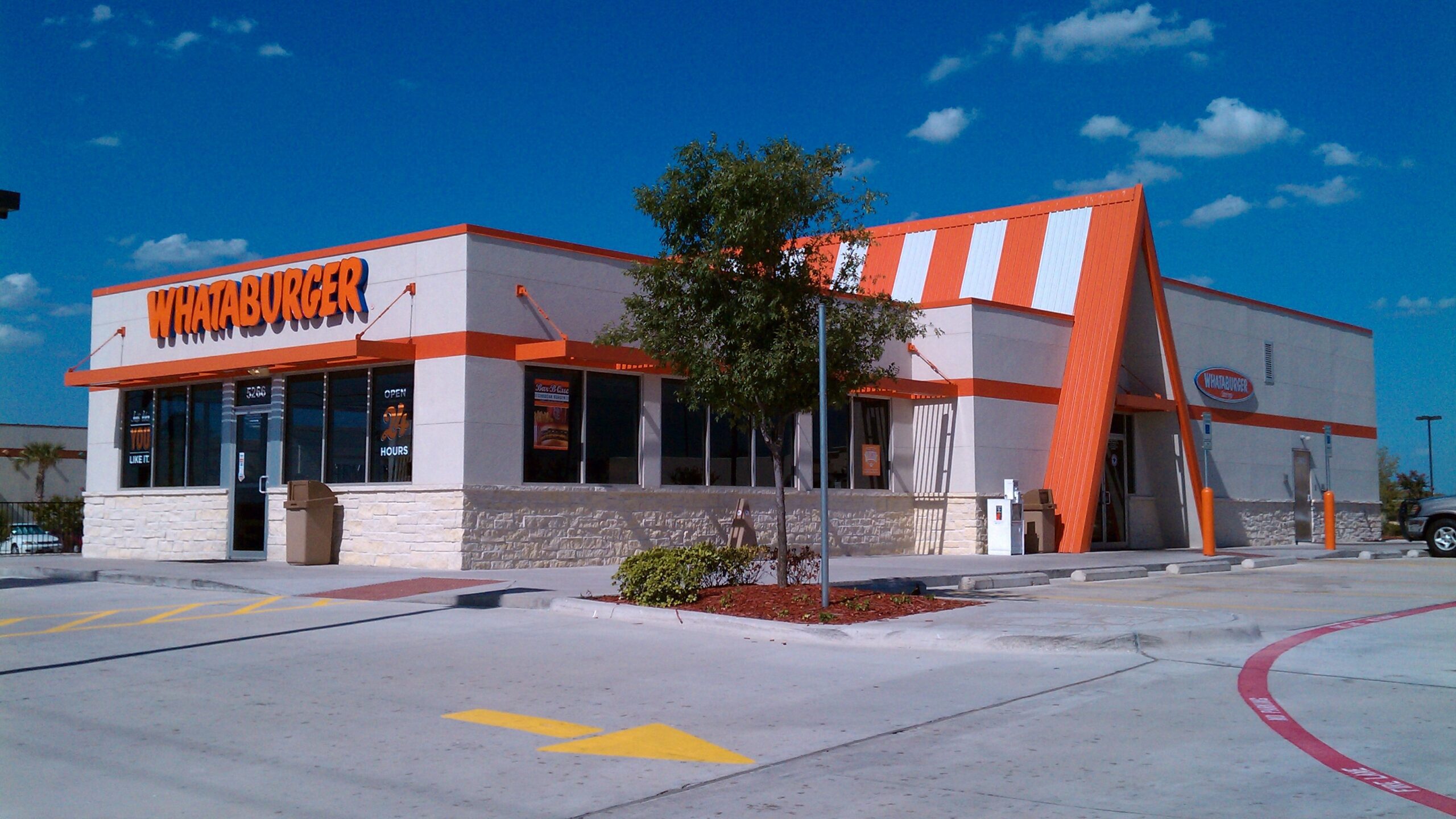
Whataburger’s familiar orange-and-white stripes are disappearing from parts of the South, as the Texas-born chain shutters all of its restaurants in three states even while it prepares a fresh wave of openings elsewhere. The closures mark a sharp turn for a brand that has spent the past few years racing to plant its flag far beyond its home base, and they raise pointed questions about how far a regional favorite can stretch before the numbers stop working.
Instead of a simple retreat, the move reflects a deliberate reshuffling of where Whataburger wants to compete, which markets it believes can sustain its 24-hour burger model, and how it balances local loyalty with national ambition. I see a company betting that short-term pain in Alabama, Tennessee, and Georgia will pay off in a tighter, more profitable footprint that still leaves room for aggressive growth.
Eight closures, three states, one strategic pullback
Whataburger has confirmed that it is closing eight restaurants across the South, a relatively small number in its overall system but a decisive step in three specific states. The company is shutting four locations in Tennessee, two in Alabama and two in Georgia, effectively wiping out its presence in those markets after a brief and highly publicized expansion push. Reporting on the closures notes that the affected stores include sites in Middle Tennessee and North Georgia, underscoring how quickly the chain is reversing course in areas it only recently entered in force, even as its core Texas operations remain anchored by long-standing flagship restaurants listed on local maps.
Company statements describe the move as part of a broader review of performance across the system, not a sign that the brand itself is in trouble. Executives have emphasized that the closures are limited to these eight locations and that they follow a routine assessment of sales, traffic, and long term potential at each site, including the four restaurants in Murfreesboro and the two in Alabama that are going dark. In that light, the retreat looks less like a collapse and more like a recalibration of where the chain believes it can win.
Why Whataburger is walking away from parts of the South
From the company’s perspective, the decision to exit three Southern states is not a repudiation of the region but a response to uneven performance in specific trade areas. A spokesperson has explained that Whataburger “regularly conduct[s] a business review” of its restaurants and, as part of that process, chose to close four locations in Tennessee, two in Alabama and two in North Georgia that did not meet internal benchmarks. That explanation, shared in detail in a corporate statement, frames the closures as a targeted adjustment rather than a broader retreat from the Southeast.
In a separate statement, Whataburger reiterated that “While we continue to grow in the Southeast, we’ve made the decision to close eight restaurants across three states,” explicitly tying the closures to a larger growth plan that still includes new builds and remodels. That same message, echoed in coverage of the chain’s national strategy, notes that the company remains committed to expansion despite these unexpected closures, even as the Whataburger sign has already gone dark at some shuttered locations across the South. I read that as a clear signal that the brand is prioritizing markets where it already has deep roots and strong unit economics over newer, more volatile territories.
A setback in Middle Tennessee and North Georgia
The closures land hardest in Middle Tennessee, where Whataburger had rapidly built a cluster of 24 restaurants in and around Nashville before deciding to pull the plug on four of them. Those locations, which had been promoted as proof that the chain could thrive far from its Texas base, are now being held up as examples of how quickly expansion plans can change when traffic and labor costs do not line up with projections. Coverage of the decision notes that the burger giant is trimming back in Middle Tennessee after a recent growth spurt, a reminder that even beloved brands can misjudge how many drive-thru lanes a region can support.
North Georgia is seeing a similar reversal, with two locations closing despite heavy initial buzz and long lines when they opened. Reports on the company’s explanation highlight that Whataburger is shutting two restaurants in North Georgia as part of the same eight store reduction, a move that leaves fans in that part of the state facing a long drive if they want a Honey Butter Chicken Biscuit. The company’s own description of the closures, shared in a detailed statement about why Whataburger is closing locations nationwide, underscores that these restaurants simply did not perform at the level needed to justify staying open.
Closing eight, planning 70 new restaurants
What makes the pullout especially striking is that it comes just as Whataburger is preparing one of its most aggressive growth years yet. The company has said it will close eight locations this month ahead of next year’s 70-restaurant expansion, a figure that underscores how small the current retrenchment is compared with the pipeline of new stores. That plan includes more than 70 new restaurants in 2026, according to multiple reports that describe the chain’s ambitions to deepen its presence in Texas and other core markets while still pushing into select new territories.
Detailed coverage of the expansion notes that The Texas institution is closing four restaurants in Tennessee, two in Alabama and two in Georgia, but also that it expects to open 70 new restaurants in 2026 as part of a broader growth strategy. That same reporting, echoed in a separate analysis that says The Texas institution is closing four restaurants in Tennessee, two in Alabama and two in Georgia while planning 70 new restaurants in 2026, makes clear that the closures are being offset many times over by new builds. In that context, the decision to pull out of three states looks less like retreat and more like pruning, a way to free up capital and management attention for markets where the brand’s menu and 24 hour operations already resonate.
What it means for workers, fans, and the fast food map
For employees and local customers, the strategic logic offers little comfort. Workers at the eight closing restaurants are facing job losses or transfers, depending on whether nearby units can absorb them, and regulars are losing a familiar late night option that had become part of their weekly routines. In Alabama, where the burger chain is shutting two locations, and in Murfreesboro, where several restaurants are closing over a single weekend, the sudden disappearance of the brand is a tangible reminder of how quickly corporate decisions made in San Antonio can reshape local dining choices, even in communities that had embraced the chain’s arrival. The impact is especially visible in smaller markets where a Whataburger may have been one of only a handful of 24 hour drive thrus listed on regional directories.
At the same time, the closures highlight how competitive the Southern fast food landscape has become, with legacy players and newer entrants all vying for the same breakfast, lunch, and late night dollars. Whataburger is not abandoning the region entirely, as it continues to operate and expand in other Southern states and to promote its brand through digital channels and location listings such as nearby outlets, but it is clearly drawing a sharper line around where it believes it can compete effectively. For fans in Tennessee, Alabama and Georgia, the message is blunt: for now, the nearest Whataburger experience may be a road trip away, even as The Whataburger sign lights up new corners of Texas and beyond in the years ahead, a shift captured in coverage of how The Whataburger brand is refocusing its efforts.
More From TheDailyOverview
*This article was researched with the help of AI, with human editors creating the final content.

Grant Mercer covers market dynamics, business trends, and the economic forces driving growth across industries. His analysis connects macro movements with real-world implications for investors, entrepreneurs, and professionals. Through his work at The Daily Overview, Grant helps readers understand how markets function and where opportunities may emerge.