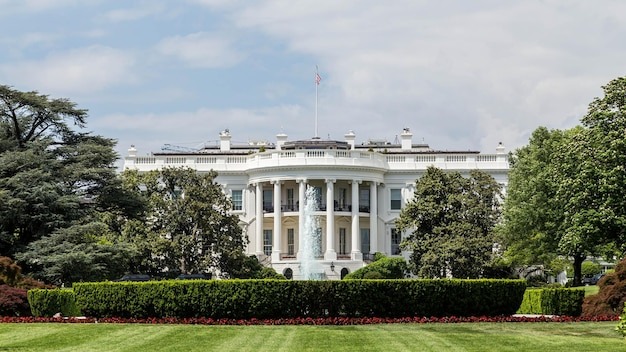
Gas at $2.81 a gallon is the kind of number that jumps off the station marquee and straight into political talking points. The White House is celebrating the lowest pump prices in years as proof that the economy is finally giving Americans a break, and the savings are real enough to feel like an extra paycheck for millions of drivers. The real question is whether this brief window of cheap fuel becomes a sugar high or a springboard for bigger gains in 2026.
I see the current moment as a rare “margin windfall” for households, a bit like finding slack in a tight family budget that can either vanish into takeout and impulse buys or be channeled into assets that compound. If Americans and policymakers treat lower gas and mortgage costs as a strategic opportunity rather than a victory lap, the country could turn today’s relief into lasting gains in wealth, resilience, and energy security.
The politics of $2.81 gas and a rare household windfall
The White House has been quick to frame the national average of $2.81 per gallon as a signature achievement, tying it directly to President Donald Trump’s economic stewardship. In its messaging, the administration casts the drop in fuel costs as part of a broader story in which Trump’s America First agenda is delivering “real, tangible relief” to American families through lower energy and borrowing costs. That narrative is politically potent because it connects a number on the gas station sign to a story about competence and control at a time when inflation fatigue is still raw.
Official communications highlight that gas prices and mortgage rates have both fallen sharply to multiyear lows, positioning the combination as a double dividend for households that drive and borrow. In one White House account, the administration links cheaper fuel and lower home loan costs as proof that its economic program is working for ordinary Americans. That framing matters because it encourages people to see the savings as a sign of prosperity, not just a temporary break from pain, which in turn shapes how they are likely to spend or invest the extra cash.
How much money is really on the table?
Behind the celebratory tone is a striking figure: Americans are expected to spend $11 billion less on gasoline this year than they did last year. That estimate, highlighted by White House Press Sec Karoline Leavitt, reflects the cumulative effect of lower prices across millions of daily commutes, school runs, and delivery routes. For a typical two-car household that fills up weekly, the savings can easily reach several hundred dollars over the course of the year, enough to cover a month of groceries or a chunk of credit card debt.
Reporting from WASHINGTON notes that this projected $11 billion reduction in fuel spending comes as pump prices fall to their lowest level since the coronavirus pandemic, giving Americans a rare breather after years of elevated energy costs. In coverage carried by TNND, officials emphasize that the relief is broad based, touching drivers across the nation rather than a single region or demographic. That scale is what turns a modest per-gallon drop into a macroeconomic lever, with enough aggregate savings to shift consumer behavior if people choose to treat it as investable surplus rather than found money.
Cheap fuel, cheaper mortgages and the 2026 wealth opportunity
The more interesting story is not just what Americans save at the pump, but how lower fuel costs interact with falling mortgage rates to reshape household balance sheets. When gas is cheaper, families have more room to qualify for a home loan, pay down principal faster, or refinance into a shorter term. The administration has underscored that mortgage rates have dropped to three year lows alongside fuel prices, presenting the combination as a coordinated payoff from Trump’s economic strategy. In one official description, Trump’s America First agenda is credited with helping push both gas and borrowing costs sharply lower, a point repeated in America First messaging.
If households redirect even a fraction of their fuel savings into home equity, retirement accounts, or education, the long term payoff could be substantial. A family that takes an extra $100 a month freed up by lower gas and applies it to a 30 year mortgage can shave years off the loan and tens of thousands of dollars in interest. Similarly, channeling that same $100 into a tax advantaged retirement plan or a 529 college account turns a temporary price dip into a compounding asset. The policy implication is clear: the real economic win is not the $2.81 price itself, but whether Americans are nudged to convert this temporary relief into durable gains in 2026 and beyond.
The hidden risks of celebrating fossil fuel bargains
There is a catch to all the cheering over cheap gasoline. When fuel is inexpensive, it tends to encourage more driving, larger vehicles, and slower adoption of alternatives, which can lock in higher emissions for years. That is why some climate advocates view the current moment less as a victory than as a stress test of whether the United States can use a fossil fuel windfall to accelerate, rather than delay, the transition to cleaner energy. If the political message stops at “gas is cheap again,” it risks reinforcing the assumption that low pump prices are the ultimate policy goal, rather than a tool that can be leveraged for a broader shift.
The administration’s own rhetoric complicates that picture. In public remarks, officials have tied the price drop to Trump’s America First agenda, which has often emphasized domestic oil and gas production as a pillar of energy security. That framing, reflected in Trump focused communications, tends to prioritize traditional production over rapid deployment of renewables or electric vehicles. The risk is that a short term price victory entrenches a system that remains vulnerable to future oil shocks and climate constraints, rather than using today’s breathing room to invest in insulation, public transit, and cleaner cars.
Turning pump savings into green and financial resilience
The most powerful way to turn $2.81 gas into big 2026 gains is to treat it as a bridge to a less fragile energy system. For households, that can mean using the savings to upgrade to more efficient vehicles, from hybrid sedans like the Toyota Prius to plug in models such as the Chevrolet Bolt EUV, or to invest in home improvements like better insulation and smart thermostats. For policymakers, it suggests pairing the current relief with targeted incentives, for example, time limited rebates for heat pumps or EV chargers that explicitly encourage people to reinvest their fuel windfall into lower future energy use.
There is also a straightforward financial resilience play. If Americans used even half of the projected $11 billion in fuel savings to pay down high interest debt or build emergency funds, the aggregate effect on household vulnerability would be significant. Research on consumer behavior often shows that windfalls are more likely to be spent than saved, but clear messaging from leaders can shift norms. When the White House talks about “big gains in 2026,” it has an opening to define those gains not just as lower prices today, but as stronger balance sheets and cleaner energy use tomorrow.
More From The Daily Overview
*This article was researched with the help of AI, with human editors creating the final content.

Grant Mercer covers market dynamics, business trends, and the economic forces driving growth across industries. His analysis connects macro movements with real-world implications for investors, entrepreneurs, and professionals. Through his work at The Daily Overview, Grant helps readers understand how markets function and where opportunities may emerge.

