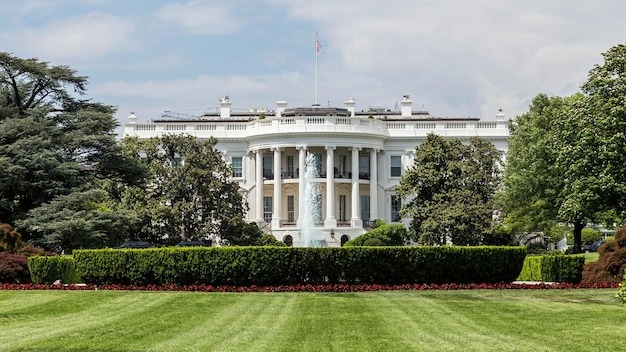
The White House has pulled crypto exchanges and big banks into the same room to tackle one of the most contentious questions in digital finance: how much yield stablecoin issuers should be allowed to pay. At stake is not just a technical detail of token design but the future balance of power between traditional lenders and on-chain platforms that promise higher returns on dollar-pegged assets. The talks are now shaping the Clarity Act, a flagship market-structure bill that could decide whether stablecoins behave more like bank deposits or money market funds.
Behind the closed doors, the administration is trying to broker a compromise that keeps dollar liquidity inside the regulated system without crushing the business models of firms like Coinbase. The result will determine whether everyday savers see stablecoins as a safe, low-friction cash alternative or as a tightly capped product that mainly serves banks’ interests.
The White House steps into the stablecoin yield fight
Senior officials at The White House have moved from watching the stablecoin boom to actively refereeing it, convening a series of meetings with crypto platforms and banking trade groups to hash out rules for yields on dollar-pegged tokens. According to one account, U.S. banking associations said they met the administration to discuss crypto market structure as a widening divide over stablecoin rewards hardened positions on both sides, a process described as Banks Meet White. The core question is whether interest and rewards on these tokens should be treated like bank interest, securities income, or something entirely new.
The political urgency sharpened after Coinbase pulled its backing for a Senate bill that would have sharply restricted yield on stablecoins, a move that signaled to the administration that the industry would not quietly accept bank-style caps. Reporting on the talks notes that the White House engagement followed this withdrawal of support, with one summary stressing that the discussions came after Coinbase withdrew support for the Senate effort. That sequence has turned what might have been a technical rulemaking into a high-stakes negotiation over who gets to capture the spread on tokenized dollars.
Inside the crypto–bank huddle on the Clarity Act
The latest round of talks centered on the Clarity Act, a crypto market-structure bill whose progress is now effectively hostage to the stablecoin rewards dispute. One detailed account of the meeting said that Yesterday there was a gathering at the White House aimed at reaching a compromise on a key issue holding up the Clarity Act, specifically how to treat third party interest and rewards on stablecoins, a sticking point described in depth in a stablecoin rewards issue analysis. Participants left without a final deal, underscoring how far apart banks and crypto firms remain on what counts as fair competition.
Earlier briefings had already framed the session as part of a broader push to define crypto market structure, with U.S. banking trade groups publicly confirming they had met the administration as the divide over stablecoin rewards deepened. One report on those contacts, titled US Banks Meet White House On Crypto Market Structure As Stablecoin Rewards Divide Deepens, highlighted how the industry’s own messaging emphasized the unresolved questions around yield, a point captured in a follow up that described how journalist commentary zeroed in on the rewards debate. In that context, the Clarity Act has become less a routine legislative vehicle and more a battleground over whether on-chain dollars will be allowed to outcompete savings accounts.
Coinbase, banks, and the scramble over stablecoin rewards
Crypto platforms and banks are approaching the yield question from opposite ends of the spectrum, and the White House is now trying to bridge that gap. Coinbase, which has been central to the talks, initially engaged with the Senate process but then withdrew support when it became clear that some lawmakers wanted to sharply limit stablecoin rewards, a shift that one recap of the negotiations linked directly to the deepening divide over yields and cited as part of the broader narrative that Coinbase helped fuel. From the exchange’s perspective, capping yields too tightly would strip stablecoins of the very feature that has drawn users away from low interest bank deposits.
Banking groups, by contrast, have warned that generous stablecoin rewards could siphon deposits out of the regulated system and into platforms that do not face the same capital and liquidity rules. Their message to the administration has been that if stablecoins can pay higher yields without bank-like oversight, the playing field will tilt sharply against traditional lenders. That concern was front and center at a February roundtable where The White House hosted crypto firms, including Coinbase, alongside banking groups to discuss stablecoin yields and the impact on dollar liquidity, a session summarized as a White House crypto that drilled into policy compromise and liquidity risks. The result is a classic Washington standoff: tech firms argue for innovation and user choice, while banks warn of systemic risk and regulatory arbitrage.
How the Senate bill and White House talks are converging
While the White House has taken the lead on convening stakeholders, the Senate still holds the pen on the market-structure bill that will translate these debates into law. One participant in the administration’s meeting on the Senate’s crypto market structure bill described the discussion as exactly the kind of detailed negotiation needed to get legislation across the finish line, noting that the goal was to resolve the yield question before the month is out, a perspective captured in a report that framed what one participant said about the talks. That comment underscores how closely the legislative calendar is now tied to the administration’s ability to broker a compromise between banks and crypto firms.
Yet even as negotiators talk up progress, the substance remains stuck. A detailed legal analysis of the process described how a deadlock over stablecoin yield persisted in White House-led negotiations on crypto market-structure legislation, with a memo circulating among participants that underscored the unresolved nature of the issue, a stalemate summarized under the banner of Stablecoin Yield Deadlock in White House Crypto Talks. Until lawmakers and the administration can agree on whether stablecoin rewards should be treated like deposit interest, securities income, or a new category altogether, the Clarity Act will remain more aspiration than statute.
Process, politics, and what comes next for stablecoin yields
The choreography around these meetings shows how carefully the administration is managing both process and optics. Ahead of the latest session, one briefing noted that The White House would host a 1 PM Eastern meeting between banks and bitcoin firms to focus specifically on stablecoin yields, with the timing and guest list flagged by journalist Eleanor Terrett, a detail captured in coverage that said the White House will the stablecoin yield meeting. Afterward, another update reported that the meeting ran for more than two hours and was aimed at resolving sticking points in the crypto market structure bill, noting that Trump’s crypto adviser, @patrickjwitt, was among those involved, an account shared in an UPDATE on The meeting. The presence of a named presidential adviser underlines how closely the president’s team is tracking the outcome.
For the administration, the goal is not just to settle a technical dispute but to frame a broader regulatory push. One overview of the talks said that White House officials met with crypto and banking groups to discuss stablecoin yields and the CLARITY Act, presenting the discussion as a meaningful step forward in a new push for crypto regulation, a framing that highlighted how the White House officials metThe White House is set to keep convening such sessions. Taken together, these moves signal that the administration sees stablecoin yields not as a niche product feature but as a central test of how far the United States is willing to let on-chain finance compete with the banking system.
More From The Daily Overview
*This article was researched with the help of AI, with human editors creating the final content.

Grant Mercer covers market dynamics, business trends, and the economic forces driving growth across industries. His analysis connects macro movements with real-world implications for investors, entrepreneurs, and professionals. Through his work at The Daily Overview, Grant helps readers understand how markets function and where opportunities may emerge.

