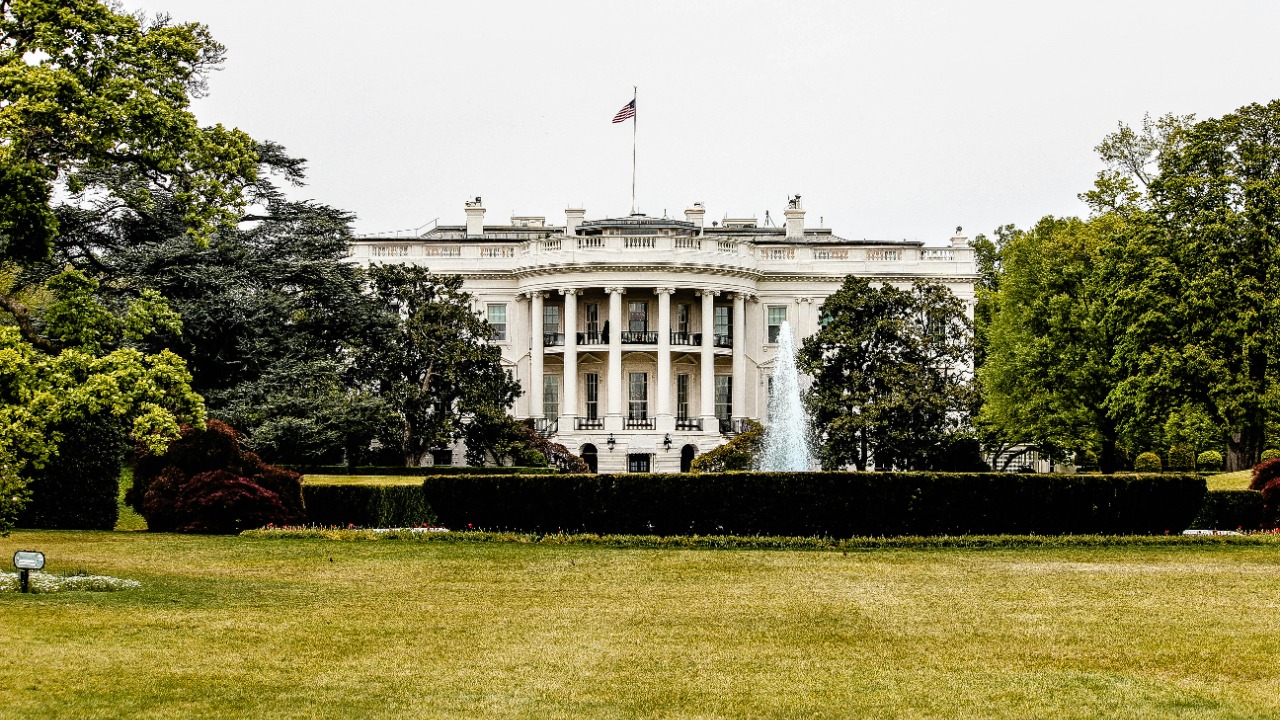
The White House is leaning hard on a fresh batch of economic data to argue that the recovery is not just intact but accelerating, pointing to rapid growth, easing inflation and a pickup in private investment as proof that momentum is real. The latest figures show output and hiring holding up even as borrowing costs remain elevated, a combination officials say validates President Donald Trump’s policy mix. I see an economy that is undeniably stronger on paper, but also one where the headline numbers mask pockets of strain that will shape how voters feel about all this “momentum” at their own kitchen tables.
Growth numbers the White House cannot stop talking about
At the center of the administration’s case is the simple fact that the United States is growing faster than most forecasters expected. Government statisticians report that real gross domestic product, the broadest measure of output, accelerated in the third quarter as consumers, businesses and exporters all added to demand. In its latest release on gross domestic product, the government highlighted that the expansion was broad based, with gains in services, manufacturing and trade feeding into a stronger overall pace.
Private estimates line up with that story, with one widely cited report noting that the US economy expanded at a surprisingly strong 4.3% annual rate in the third quarter, a sharp improvement from the prior three months. That figure, which covers activity from July through September, is the kind of number any White House would be eager to showcase as evidence that its policies are working. I read it as a clear sign that demand has not cracked under the weight of higher interest rates, even if the pace is unlikely to be repeated quarter after quarter.
What the BEA data actually shows beneath the headline
Behind the celebratory talking points, the official data set offers a more nuanced picture of how the expansion is being built. The government’s portal for The Latest numbers on Gross Domestic Product, Quarter, Initial Estimate and Corporate Profits, Preliminary, makes clear that some components of demand are doing more work than others. Consumer spending and business investment are pulling the economy forward, while some categories that subtract from growth, such as certain parts of the calculation of GDP, decreased and therefore provided a modest tailwind.
The more detailed breakdown of the third quarter shows that Real gross domestic product (GDP) increased at a solid pace, while Imports decreased less than before and real final sales to private domestic purchasers, the sum of consumer spending and fixed investment, continued to climb. I read that combination as a sign that domestic demand is still the main engine of growth, with households and firms spending enough to offset softer trade flows. It is a healthier pattern than a boom driven purely by inventory swings or government outlays, but it also means the economy is heavily exposed if consumers finally pull back.
Inflation relief gives the White House another talking point
Growth alone would not feel like momentum if prices were still spiraling, which is why the latest inflation readings are politically crucial. The administration has seized on new data showing that core inflation, which strips out volatile food and energy costs and is often called the best measure of underlying price pressure, has cooled to its lowest level in nearly five years. In a Dec statement, officials framed the report as proof that the Federal Reserve’s tightening cycle and the president’s policies are finally squeezing inflation out of the system, citing the latest inflation data as having shattered economists’ expectations.
From my vantage point, the political power of that claim lies in its contrast with the price spikes that defined the Biden years, which the White House continues to invoke as a foil. Officials argue that as core inflation retreats, households are slowly clawing back purchasing power lost under Biden, even if overall price levels remain high. The data does support the idea that the worst of the inflation shock is behind us, but it also reminds me that disinflation is not deflation: prices are rising more slowly, not falling, which helps explain why many families still feel squeezed despite the improving trend.
Jobs, wages and the story the labor market tells
No claim of economic momentum can stick if the labor market is deteriorating, and here too the White House sees validation. Officials have been touting a Dec update that highlights how private sector hiring remains robust, with particular emphasis on how Workers are benefiting from rising pay and easing prices. In a recent message on private sector job growth, the administration argued that Workers’ wages are rising, prices are falling, trillions of dollars in investments are pouring into the country and that this combination is lifting living standards.
I see a labor market that is cooler than the breakneck pace of the immediate post‑pandemic years but still fundamentally solid, which is exactly what policymakers have been hoping for. The White House has contrasted the current environment with the period when millions of workers LEFT the labor force, presenting today’s participation rates and job creation as a reversal of that damage. That narrative is grounded in the data, but it glosses over the unevenness of the recovery, where sectors like tech and media have seen layoffs even as health care, construction and hospitality continue to hire aggressively.
How this quarter fits into Trump’s broader economic narrative
The administration is not treating the latest GDP report as a one‑off surprise, but as part of a longer story it has been telling since President Trump returned to office. Earlier in the year, officials celebrated what they called an “absolute blockbuster” update on output, arguing that Biden’s first quarter is behind us and growth is already accelerating under the new policy regime. In that messaging, they credited President Trump’s tariff policies and deregulatory push for setting the stage for a second half boom and beyond, a theme that runs through the White House’s own account of explosive growth in Trump’s economy.
From my perspective, the new third‑quarter numbers give that narrative more substance, but they do not settle the debate over what is driving the upswing. Some of the current strength reflects pent‑up demand and balance sheets that were fortified by earlier stimulus, including measures signed by Biden, even if the White House now prefers to downplay that inheritance. At the same time, the combination of tighter immigration rules, tariffs and industrial subsidies under President Trump has clearly reshaped investment decisions, with some manufacturers and energy producers citing policy certainty as a reason to expand capacity in the United States rather than abroad.
Consumers are still carrying the expansion
For all the focus on policy, the real engine of this economy remains the American consumer. The latest growth figures show that household spending on goods and services is doing much of the heavy lifting, with travel, dining and big‑ticket purchases all contributing to the third‑quarter surge. One detailed account notes that the U.S. economy expanded at a strong 4.3% annual rate from July through September as consumer spending, exports and business investment combined to produce the strongest expansion in two years, even in the face of ongoing inflation.
I interpret that resilience as a sign that wage gains and a still‑healthy job market are offsetting the drag from higher borrowing costs for many households. At the same time, the composition of spending matters: more money going to services like health care and rent leaves less room for discretionary purchases that drive sectors such as retail and autos. If the labor market cools more sharply or if student loan payments and credit card rates bite harder, the consumer‑led story underpinning the current momentum could shift quickly, which is why officials are so keen to lock in the perception of strength now.
Warning signs that complicate the victory lap
Even as the White House leans into the upbeat data, some analysts are flagging risks that could undermine the narrative of unbroken momentum. Recent coverage of the latest jobs and output figures has described the US economy as flashing warning signs in new data, with particular concern about how long the lagged impact of higher interest rates will take to fully show up. One report on warning signs noted that some analysts say the jobs report, Hir trends and other indicators could be hinting at a slowdown that has simply not yet appeared in the headline GDP number.
From where I sit, those concerns are not inconsistent with the administration’s argument, they simply highlight that economic data is a moving target. A quarter that looks stellar in the initial estimate can be revised down, and sectors that appear healthy can weaken quickly if financing dries up or global demand falters. The White House is betting that the current mix of strong growth and easing inflation will persist long enough to outweigh any late‑arriving softness, but the caution from forecasters is a reminder that momentum can fade faster than political narratives adjust.
The Fed, interest rates and the policy backdrop
Monetary policy is the quiet partner in this story, shaping the backdrop against which the White House is making its case. Even as inflation remains above the central bank’s 2 percent target, the Fed has started to ease off the brakes, cutting its benchmark lending rate three times in a row in response to cooler price data and signs of slower hiring. One account of the third‑quarter surge notes that Though inflation remains above the Fed goal, the benchmark rate reductions are intended to keep the expansion going, even as some analysts warn that the growth figure will be revised even lower.
I see this as a delicate balancing act: the Fed is trying to avoid choking off a recovery that is finally delivering real wage gains, while also guarding against a re‑acceleration of prices that would force it back into aggressive tightening. For the White House, the rate cuts are politically convenient, since they support housing, autos and business borrowing at the same time officials are touting their own role in taming inflation. But they also introduce a variable the administration cannot control, because if inflation flares again, the central bank will feel compelled to reverse course, potentially puncturing the very momentum the president is celebrating.
The kitchen‑table test of “real” momentum
Ultimately, the question of whether economic momentum feels real will be decided far from the briefing room, at kitchen tables where families are paying bills and planning for the year ahead. Some of the most tangible relief has come at the gas pump, where Consumer gasoline prices have dropped below $3 per gallon, the lowest since 2021, giving drivers a visible break every time they fill up. At the same time, Data on electricity costs are more mixed, and broader measures of inflation under President Joe Biden still loom large in public memory, as one analysis of Consumer sentiment and prices makes clear.
From my perspective, that is why the administration is so intent on connecting the dots between macro statistics and everyday life, arguing that lower fuel costs, rising paychecks and slowing inflation add up to a genuine improvement in living standards. The data on growth, jobs and prices largely back up the claim that the economy has regained momentum under President Trump, at least for now. Whether voters accept that story will depend less on the precise reading of 4.3 percent GDP and more on whether they feel, in their own budgets, that the era of relentless financial strain is finally giving way to something more sustainable.
More From TheDailyOverview

Grant Mercer covers market dynamics, business trends, and the economic forces driving growth across industries. His analysis connects macro movements with real-world implications for investors, entrepreneurs, and professionals. Through his work at The Daily Overview, Grant helps readers understand how markets function and where opportunities may emerge.

