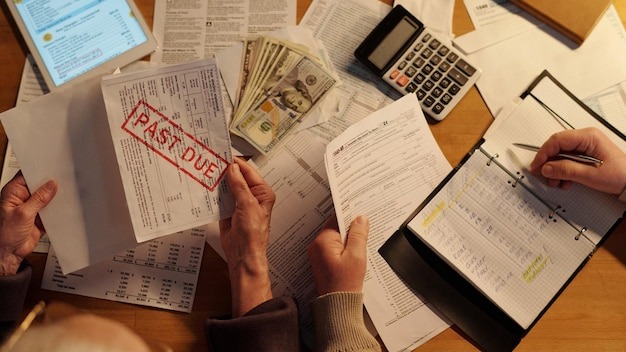
The new $600 IRS reporting rule was sold as a way to catch tax cheats at the top, but its sharpest edge cuts into the lives of people stringing together side gigs, online sales, and tips to stay afloat. Instead of targeting complex tax shelters, the lower threshold pulls casual earners and very small businesses into a formal reporting system they often do not understand and cannot easily afford to navigate.
At the same time, Congress and regulators are layering in broader changes to 1099 forms and thresholds, creating a confusing mix of relief and new obligations. The result is a tax landscape where some reporting limits are rising to $2,000 while the $600 trigger on payment apps still looms, and the people with the least professional help are the ones most likely to be tripped up.
How the $600 rule actually works on payment apps
The core of the controversy is simple: once payments for goods or services flowing through third party platforms cross $600 in a year, the IRS expects that income to be reported, and the platform is supposed to issue a 1099-K. That means someone who casually sells used furniture or bakes cakes on weekends can suddenly receive a tax form that looks like business revenue, even if their profit after costs is tiny. The rule applies to popular services like PayPal, as well as app-based processors that many people still think of as peer-to-peer tools rather than business infrastructure.
Guidance on the new standard makes clear that if you use third party payment platforms such as Venmo or Cash App to collect money for a side gig or business, crossing the $600 threshold triggers reporting, even if you never set up a formal company. The IRS has also stressed that purely personal transfers, like splitting rent or paying back a friend, are not supposed to count, but the burden falls on users to label transactions correctly on apps like Venmo and Cash App so they are not misclassified as taxable income.
Why very small earners and casual sellers feel the squeeze
The people hit hardest are not high volume online merchants but low level earners who never thought of themselves as running a business. A teacher who tutors on weekends, a retiree selling collectibles from the attic, or a parent reselling outgrown kids’ clothes can all cross $600 in gross payments without realizing they have created a paper trail the IRS will see. Video explainers that ask “who remembers the $600 tax rule for Cash App Venmo PayPal” capture the shock many feel when they learn that a handful of casual transactions can generate a formal tax document from the IRS, as highlighted in one widely shared clip on Cash App Venmo.
Earlier delays in enforcement were framed as a way to give taxpayers time to adjust, but advocacy groups warned that the underlying structure still creates a “Burdensome IRS $600 Threshold Reporting Requirement Delayed By One Year” that ultimately lands on people with the least margin for error. Small business organizations argued that the lower limit would increase the paperwork burden on very small operators and side hustlers, a concern echoed by Burdensome IRS critics who saw the delay as a temporary reprieve rather than a fix.
Gig workers, freelancers and the 1099 maze
For freelancers and gig workers, the $600 trigger on payment apps lands on top of an already complex 1099 environment. Independent contractors are used to receiving 1099-NEC or 1099-MISC forms from clients, but many did not expect that the same income could also be captured through 1099-K reporting when routed through platforms. Tax guides for self employed workers now warn that Lower tax rates introduced under the Tax Cuts and Jobs Act, often shortened to TCJA, do not eliminate the need to track every dollar of income and estimated tax, especially when multiple forms arrive from different payers, as explained in one overview of Lower freelance rules.
At the same time, broader reforms are reshaping 1099 reporting. Under the One Big Beautiful Bill Act, often shortened to OBBBA, the threshold for issuing 1099-MISC and 1099-NEC forms is rising from $600 to $2,000, a shift that is supposed to reduce the number of small payments that trigger separate forms. Detailed summaries of these changes explain that the law has raised the reporting minimums for MISC and NEC to $2,000 starting with 2026 payments, a move that could simplify life for some contractors even as the $600 rule on payment apps remains in place, according to $2,000 guidance.
Small businesses and the new compliance dragnet
For true small businesses, the lower reporting threshold on digital payments is only one piece of a wider compliance puzzle. Analyses of new tax rules warn that “Small Business Owners Face Unexpected Reporting Burdens” as they juggle not just the $600 standard but also a new 1 percent excise tax on certain cash transfers and a dramatic drop in the threshold for when those transfers must be reported, down from a previous $20,000 level. Commentators note that while the 1 percent levy primarily targets public companies, the ripple effects of more detailed reporting can hit smaller firms through audits and penalties if they misclassify transactions, as described in coverage of how While the new rules work.
Tax professionals are also flagging technical updates to Forms 1099-MISC and 1099-NEC that matter for employers who rely on tipped labor or overtime. Draft IRS publications show that these forms have been updated to allow reporting of cash tips, a Treasury Tipped Occupation Code, and overtime compensation, which means more granular data about how workers are paid will flow directly to the IRS. For small restaurants, salons, and delivery operations that already struggle with record keeping, the combination of new tipped reporting fields and the $600 digital payment trigger raises the risk that a mismatch between payroll records and 1099 data could invite scrutiny, as outlined in the latest Forms draft.
Policy whiplash and who is really targeted
Part of what makes the $600 rule so disruptive is the sense of policy whiplash around it. Lawmakers have floated repeals and rollbacks, including efforts by Rep Carol Miller to restore higher 1099-K thresholds for app users, arguing that without congressional action anyone who uses platforms like Venmo and PayPal for small side income could be swept into a politicized enforcement regime tied back to Tax Reform debates. At the same time, viral commentary has claimed that “Trump just killed the $600 IRS rule” for Cash App Venmo users, even as other explainers warn that if you have used PayPal Venmo or a cash app to get paid you are still about to get hit with a surprise tax form from the IRS, a tension captured in dueling videos on Venmo and earlier clips on $600.
Behind the noise, the practical effect is that people who can least afford professional advice are navigating the most abrupt changes. Analyses of “Changes to the 1099-K rules” note that initially the $600 rule statute was written so that all taxpayers with more than $600 in payments for goods and services would receive a form, a design that inevitably pulls in casual gig workers and online sellers. Video segments on who gets hit hardest by the $600 IRS rule argue that lowering the threshold is creating chaos for small earners and that the impact is falling on people who can least afford it, a point underscored in coverage of Changes and in a separate report on $600 impacts.
More From TheDailyOverview
*This article was researched with the help of AI, with human editors creating the final content.

Julian Harrow specializes in taxation, IRS rules, and compliance strategy. His work helps readers navigate complex tax codes, deadlines, and reporting requirements while identifying opportunities for efficiency and risk reduction. At The Daily Overview, Julian breaks down tax-related topics with precision and clarity, making a traditionally dense subject easier to understand.
