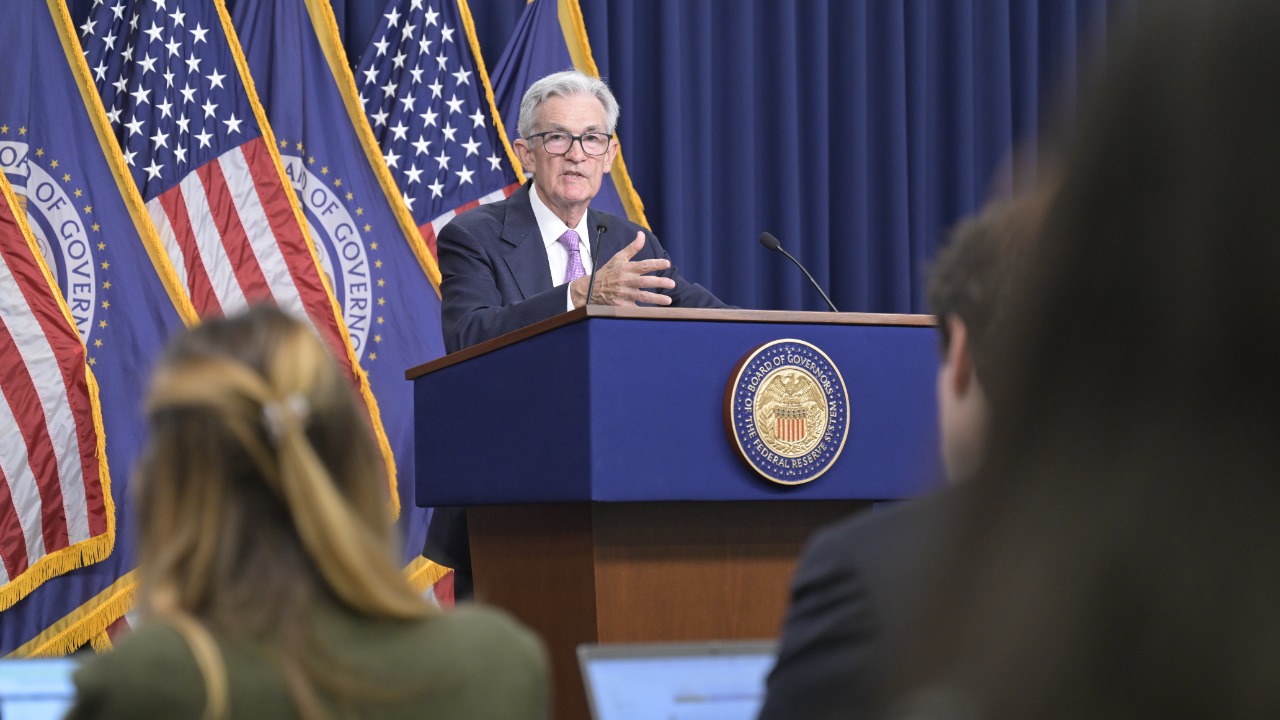
Corporate leaders have spent years praising the virtues of an independent central bank, yet as Jerome Powell faces a criminal probe and an escalating clash with President Donald Trump, the C‑suite is largely watching from the sidelines. The same executives who depend on predictable interest rates and a credible Federal Reserve are now weighing the risks of defending its chair in public against the wrath of the White House. Their silence says as much about the new balance of power in Washington as it does about Powell himself.
At stake is not only the future of one man’s tenure, but the unwritten pact that has long kept monetary policy at arm’s length from partisan combat. Corporate America is discovering that standing up for that principle in the current environment carries real political and commercial costs, and so far, most have decided those costs are too high.
The Trump–Powell confrontation reaches a new level
The conflict between Powell and Trump has moved far beyond the usual grumbling over interest rates into a direct institutional confrontation. Trump has repeatedly attacked Powell for keeping borrowing costs higher than the president wants, demanding drastically lower rates even as the economy continues to grow and inflation cools. According to reporting on the internal debate at the central bank, some officials at The Fed are now wary of cutting too quickly, precisely to avoid any perception that they are bowing to political pressure from the White House.
The confrontation intensified when the Justice Department opened a criminal investigation into whether Powell lied to Congress about cost overruns on a massive renovation of Federal Reserve buildings. The Justice Department probe, which centers on Powell’s testimony to Congress, is separate from the long‑running policy feud but has become entangled with it in the public mind. Trump has seized on the investigation as proof that Powell is unfit, while allies argue that the case is about accountability, not interest rates. Critics, however, see a pattern in which legal tools are being deployed against an official whose real offense, in the president’s eyes, is resisting demands for cheaper money.
Why CEOs are alarmed in private but quiet in public
Inside boardrooms, the mood is far less complacent than the public silence suggests. Senior executives worry that if Trump can intimidate or discredit Powell, future presidents will feel freer to lean on central bankers whenever markets wobble or elections loom. Reporting on conversations with top business leaders describes a sense of “private alarm” that the president is trying to bend monetary policy to his will, even as those same leaders avoid saying so on the record. One account of meetings in Washington notes that CEOs are acutely aware of how exposed they are to regulatory decisions and federal contracts, and they see little upside in becoming targets in a fight they did not start.
The reluctance is especially striking given how often corporate leaders extol the “Collective wisdom” that an independent central bank is essential to a modern economy. Analysts quoted in coverage of the Powell saga stress that investors and executives alike have long treated the Federal Reserve as the country’s monetary authority, separate from day‑to‑day politics, and that this separation underpins confidence in the dollar. Yet when asked to defend that principle in Powell’s case, many of the same voices demur. As one summary of the business reaction put it, America’s business elite is content to let Powell twist in the wind as long as markets remain relatively calm.
The “political theatre” label and what it signals
Outside the United States, some central banking veterans have been more willing to say out loud what many executives only whisper. One Expert, Glen Smith, who is described as a Chief economist, has dismissed the probe into Jerome Powell as “political theatre,” arguing that the case is unlikely to have a significant impact on markets. Smith notes that Powell will no longer be chairman after May 2026, which limits the practical stakes of the investigation even as it raises troubling questions about how far politicians are willing to go to pressure the Fed.
That assessment is echoed in more technical market analysis. Economists at Goldman Sachs have already adjusted their forecasts, pushing back expectations for the Fed to lower rates in March and June 2026 and now projecting two 25‑basis‑point cuts later in the year. Crucially, they argue that the Justice Department’s investigation will not change the path of policy, which is still being set by inflation and growth data rather than legal drama. Markets, in other words, are treating the spectacle around Powell as noise, at least for now. That gives corporate leaders even less incentive to intervene, since the immediate financial fallout they fear has not yet materialized.
Wall Street’s line: defend the Fed, not the man
Where business leaders have spoken up, they have tended to defend the institution rather than Powell personally. Senior bankers have warned Trump to stop attacking the central bank and the credit card industry, stressing that the Federal Reserve’s independence is “sacrosanct” for the stability of the financial system. In one exchange with reporters, a prominent chief executive underscored that The Federal Reserve must be able to set rates without fear of political retribution, even if banks sometimes disagree with Powell and other Fed policymakers on the details.
At the same time, the global central banking community has rallied more explicitly around Powell himself. Top monetary officials meeting under the umbrella of the Bank for International Settlements have expressed “full solidarity” with the Fed chair in his clash with Trump, framing the dispute as a test of whether elected leaders will respect the separation between fiscal and monetary authority. They point out that the formal dispute is ostensibly about Powell’s testimony to Congress over renovation costs, but they argue that the real issue is Trump’s repeated criticism of Powell for not cutting rates as aggressively as the president wants. Wall Street, by contrast, has largely stopped short of endorsing Powell personally, preferring to talk about process and precedent rather than the fate of one chair.
Fear of retaliation and the shrinking space for dissent
The most straightforward reason corporate America is not rushing to Powell’s side is fear of retaliation from the president and his allies. Trump has already made clear that he sees the Justice Department’s case as a political escalation, telling supporters that Republicans “love” the investigation into Powell and signaling that he expects them to see it through. In coverage of those remarks, Trump is described as shifting from rhetorical attacks to a more aggressive posture that treats the probe as a loyalty test for his party. For CEOs who depend on favorable regulatory decisions, tax policy, and access to the president’s inner circle, openly siding with Powell could look like a direct challenge to that expectation.
Commentators have also noted that the legal case itself rests on shaky ground, which only heightens the sense that the real stakes are political. One analysis argues that the charges against Powell, alleging that he lied to Congress about renovation costs that ballooned to 200 percent over budget, are “ludicrous” and likely to be dismissed. Another legal explainer points out that, while the president cannot simply fire Powell because he dislikes the Fed’s approach to raising or cutting interest rates, Trump can still make the chair’s life miserable through public attacks and behind‑the‑scenes pressure. As one account of the feud puts it, So the legal constraints on removing Powell have not stopped the White House from testing how far political pressure can go.
More From The Daily Overview

Silas Redman writes about the structure of modern banking, financial regulations, and the rules that govern money movement. His work examines how institutions, policies, and compliance frameworks affect individuals and businesses alike. At The Daily Overview, Silas aims to help readers better understand the systems operating behind everyday financial decisions.

