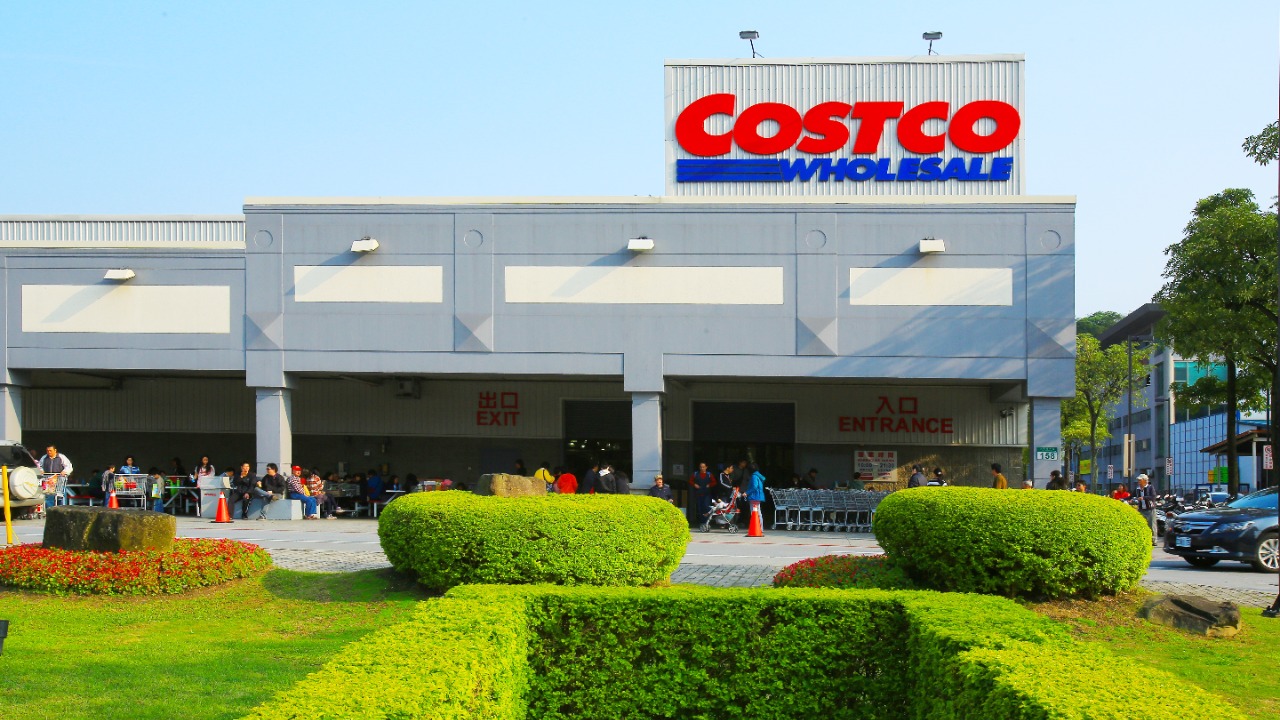
Costco shoppers hunting for laptops, noise-canceling headphones, or other high-ticket electronics are increasingly finding them hidden behind locked display cases or tethered with security tags, forcing staff-assisted retrieval that slows the warehouse club’s famously efficient shopping experience. The retailer frames these measures as a response to organized retail crime, but a closer look at the data behind that claim raises hard questions about whether the threat has been overstated and whether members are paying a hidden price in time and convenience on their next visit.
The Organized Retail Crime Narrative Has Cracks
Retailers across the country have leaned heavily on the idea that organized retail crime is surging, using it to justify everything from locked merchandise to store closures. But the evidence behind those claims is shakier than most shoppers realize. A detailed analysis from the Brennan Center found that widely repeated industry talking points about organized retail crime were imprecise, and at least one major assertion from the National Retail Federation was retracted after outside scrutiny. That retraction is significant because NRF figures have been cited by lawmakers, media outlets, and retailers themselves to support aggressive anti-theft policies that reshape how people shop.
The NRF has long published an annual shrink report tracking inventory losses across the retail sector, a publication that ran for more than three decades before the federation decided not to release it this year. That decision followed growing criticism of the report’s methodology and the way its numbers were used to inflate public perceptions of theft. When the trade group most associated with sounding the alarm on retail crime quietly steps away from its own flagship data, it signals that the foundation beneath the “theft epidemic” story is less solid than retailers have suggested, yet those same narratives continue to justify more intrusive security measures on the sales floor.
What Shrink Actually Looks Like
The term “shrink” covers all inventory losses, not just theft. According to the Loss Prevention Research Council’s 2023 security survey, shrink breaks down into reported shares attributed to external theft, employee theft, and process or control failures. That distinction matters because locking up merchandise targets only one slice of the problem. Internal theft and simple operational errors, such as mislabeled shipments or scanning mistakes, account for a meaningful portion of losses that no locked case can prevent. Retailers that focus anti-theft spending almost entirely on customer-facing deterrents may be addressing the most visible cause of shrink while ignoring the ones that happen behind the scenes in warehouses, stockrooms, and accounting systems.
For Costco members, this breakdown has direct consequences. If the warehouse club is investing in locked cases, additional security staff, and anti-theft technology based on an inflated reading of external theft, those costs get absorbed into operating expenses. Members pay annual fees expecting a streamlined, low-overhead shopping model built around pallets, concrete floors, and minimal staffing. Every dollar spent on deterrence that does not match the actual threat profile chips away at the value proposition that makes a Costco membership worth renewing. The Council on Criminal Justice has tracked shoplifting trends that add further context to the gap between perception and reality in retail theft discussions, suggesting that the loudest stories about crime may not always line up with the broader data.
How Crime Costs Get Passed to Shoppers
Even when theft does occur, the financial damage does not stop at the missing item. Researchers Hase and Kasinger published an arXiv preprint on retail crime pass-through that offers causal evidence showing victimized retailers raise prices in response to crime. The study also found that nearby competitors may raise prices as well, creating a ripple effect that spreads costs across an entire retail corridor rather than containing them within a single store. While the paper is not about Costco specifically, its findings describe a mechanism that applies broadly. When a retailer absorbs theft-related losses, those losses tend to show up in what consumers pay at the register, even if shoppers never see the theft itself.
This pass-through dynamic is especially relevant for electronics, where margins are already thin and price sensitivity is high. A Costco member comparing laptop prices might not realize that part of the sticker reflects not just supply chain costs and manufacturer pricing, but also the retailer’s calculation of expected theft losses and the expense of preventing them. The locked case itself is a cost center (staff time to unlock it, slower checkout flow, and the friction that pushes some buyers to shop online instead). Each of those factors erodes the in-store experience without necessarily reducing the total cost of shrink. At the policy level, the Department of Justice has acknowledged retail theft concerns in public remarks, which helps explain why crime statistics (accurate or not) can quickly influence how both government and businesses respond.
When Security Theater Hurts the Shopping Model
Costco’s entire business model depends on high volume, fast turnover, and minimal friction. Members accept the no-frills warehouse environment because it delivers lower prices and a quick in-and-out trip. Locked electronics cases break that contract. A shopper who needs to find an associate, wait for a key, and then escort the item to checkout is experiencing a fundamentally different store than the one they signed up for. That friction is tolerable at a department store where browsing is expected, but it clashes with the grab-and-go efficiency that warehouse clubs sell and that many members build into their weekly routines.
The deeper problem is that these measures may be calibrated to a threat that has been systematically exaggerated. The NRF’s decision to halt its shrink report, the Brennan Center’s documentation of imprecise industry claims, and the LPRC’s data showing that external theft is only one component of inventory loss all point in the same direction: the retail industry built a narrative around organized crime that outran the evidence. Costco, like other major retailers, appears to have responded to that narrative with physical barriers that change the member experience in ways the data may not justify. When security becomes more about signaling toughness on crime than about efficiently matching real risks, shoppers end up navigating what amounts to security theater rather than targeted loss prevention.
What This Means for Your Next Trip
Shoppers walking into Costco expecting to grab a pair of AirPods Max or a new Lenovo laptop off an open shelf are increasingly likely to find those items behind glass or tethered with alarmed cables. The process of getting them can involve flagging down an employee, waiting for a manager with the right key, and sometimes escorting the product directly to checkout. For members on a tight schedule, that added friction can be enough to delay a purchase or drive them to order from an online competitor instead. Over time, those small frictions accumulate into a noticeably slower, more controlled environment that feels less like a warehouse club and more like a traditional big-box store with extra hoops to jump through.
Consumers have limited visibility into how much of this shift is truly necessary and how much stems from an overstated crime narrative. But they do have choices in how they respond. Members who find the new security measures intrusive can give feedback to store managers, compare in-store prices to online alternatives, and reconsider where they buy big-ticket electronics. They can also support independent research and advocacy that pushes for accurate crime data, whether by reading work from organizations like the Brennan Center or by backing groups through channels such as the Brennan Center donation page. And on a more practical level, shoppers can make sure their own tech is up to date, using modern browsers recommended by resources like Browse Happy, so they can quickly compare prices and availability on their phones while standing in the aisle. In an environment where perceptions of crime are reshaping the shopping experience, informed and mobile-savvy customers have more power than they might think to push retailers toward measures that protect inventory without locking down the very convenience members pay to access.
More From The Daily Overview
*This article was researched with the help of AI, with human editors creating the final content.

Grant Mercer covers market dynamics, business trends, and the economic forces driving growth across industries. His analysis connects macro movements with real-world implications for investors, entrepreneurs, and professionals. Through his work at The Daily Overview, Grant helps readers understand how markets function and where opportunities may emerge.

