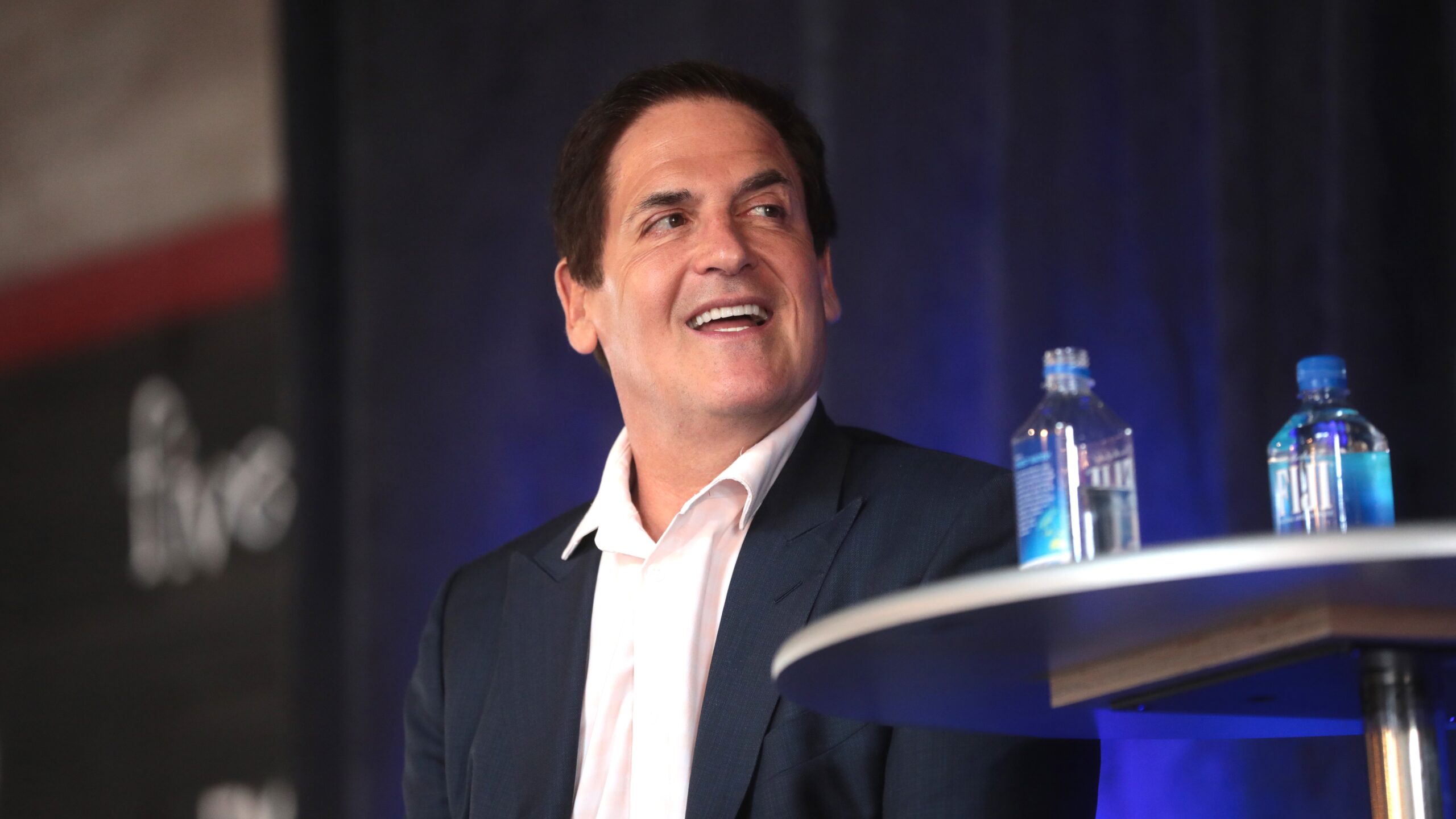
Mark Cuban, the billionaire who built his fortune through the Yahoo and Broadcast.com merger, has spent nearly a decade telling Americans that parking money in a savings account amounts to falling behind. His advice sounds counterintuitive: stop treating savings as a safe harbor and start treating idle cash as a slow leak. With recession fears circulating and inflation chipping away at purchasing power, his argument carries fresh weight for workers trying to figure out what to do with their paychecks.
Cuban’s Case Against Idle Cash
The core of Cuban’s thinking rests on a simple math problem. When inflation rises faster than the interest earned on a savings account, every dollar sitting in that account buys less over time. Data from the U.S. Bureau of Labor Statistics, which tracks consumer prices through its CPI-U index, shows how everyday expenses can climb even when wages and bank yields barely move. At the same time, the Federal Reserve’s published figures on deposit interest rates illustrate how often savings accounts trail that inflation, leaving savers with negative “real” returns once rising prices are factored in.
Cuban laid out his framework in a 2010 blog post on his personal site, where he argued that “doing nothing” in volatile markets can be rational, but only if it is paired with a focus on liquidity and optionality. In that post on his BlogMaverick page, he urged readers to think of cash not as a permanent resting place but as “ammo” that can be deployed when a clear opportunity appears. The message was not to abandon banks altogether; it was to recognize that uninvested cash steadily loses power in an inflationary environment and that the real value of liquidity lies in being ready to act, rather than endlessly watching a balance sit still.
Bulk Buying as a Bridge to Index Funds
Cuban’s most distinctive twist on the save-or-invest debate came in an interview highlighted by CNBC, where he suggested that smart shopping can deliver better immediate returns than many traditional investments. In that discussion, he described how buying household staples in bulk when they are heavily discounted effectively locks in a risk-free gain: if you know you will use toothpaste, detergent, or paper towels over the next year or two, grabbing them at 30 or 40 percent off is like earning that return up front on money you were guaranteed to spend anyway. Unlike a stock pick, the “payoff” is certain because the alternative is paying full price later.
From there, Cuban connects frugality to the broader market. The money saved by lowering one’s recurring expenses, he argues, should not simply pile up in a low-yield account. Instead, he points everyday investors toward broad, low-cost exposure to U.S. companies by suggesting they put the freed-up cash into inexpensive funds tied to the S&P 500. Historical performance for that benchmark, available through long-running index data series, shows long periods where diversified stock ownership has outpaced inflation and cash alike. Cuban’s two-step system (cut costs first, then invest the difference) aims to give people without stock-picking expertise a practical route to keep ahead of rising prices.
The Tension Cuban Never Fully Resolves
The catch is that Cuban’s public comments about his own portfolio do not always line up neatly with his guidance for the average saver. In a 2013 appearance covered by CNBC, he said he “rarely invests in stocks”, emphasizing his preference for selective deals and opportunities outside public equities. That stance can be confusing for followers who hear him recommend broad index funds while personally avoiding the stock market in most cases. The difference underscores that Cuban operates from a position of immense wealth and access, with the ability to pursue private investments, acquire entire businesses, or negotiate terms that are unavailable to retail investors.
For ordinary workers, that tension is less a contradiction than a reminder to separate the principle from the personality. Cuban’s skepticism about blindly buying stocks reflects the same concern that animates his warnings about idle cash: the risk of assuming that familiar financial products are automatically safe or effective. His arguments point toward a hierarchy of choices rather than a single magic answer. First, avoid letting inflation quietly drain purchasing power in low-yield accounts. Second, squeeze guaranteed “returns” out of your budget by locking in discounts on essentials you will certainly use. Third, once basic stability and an emergency cushion are in place, consider broad, low-fee market exposure as a long-term hedge against rising prices. The unresolved pieces of Cuban’s own strategy matter less than the consistent thread running through his advice. In a world where costs keep climbing, passivity is expensive, and every dollar needs a deliberate job.
More From The Daily Overview
*This article was researched with the help of AI, with human editors creating the final content.

Cole Whitaker focuses on the fundamentals of money management, helping readers make smarter decisions around income, spending, saving, and long-term financial stability. His writing emphasizes clarity, discipline, and practical systems that work in real life. At The Daily Overview, Cole breaks down personal finance topics into straightforward guidance readers can apply immediately.

