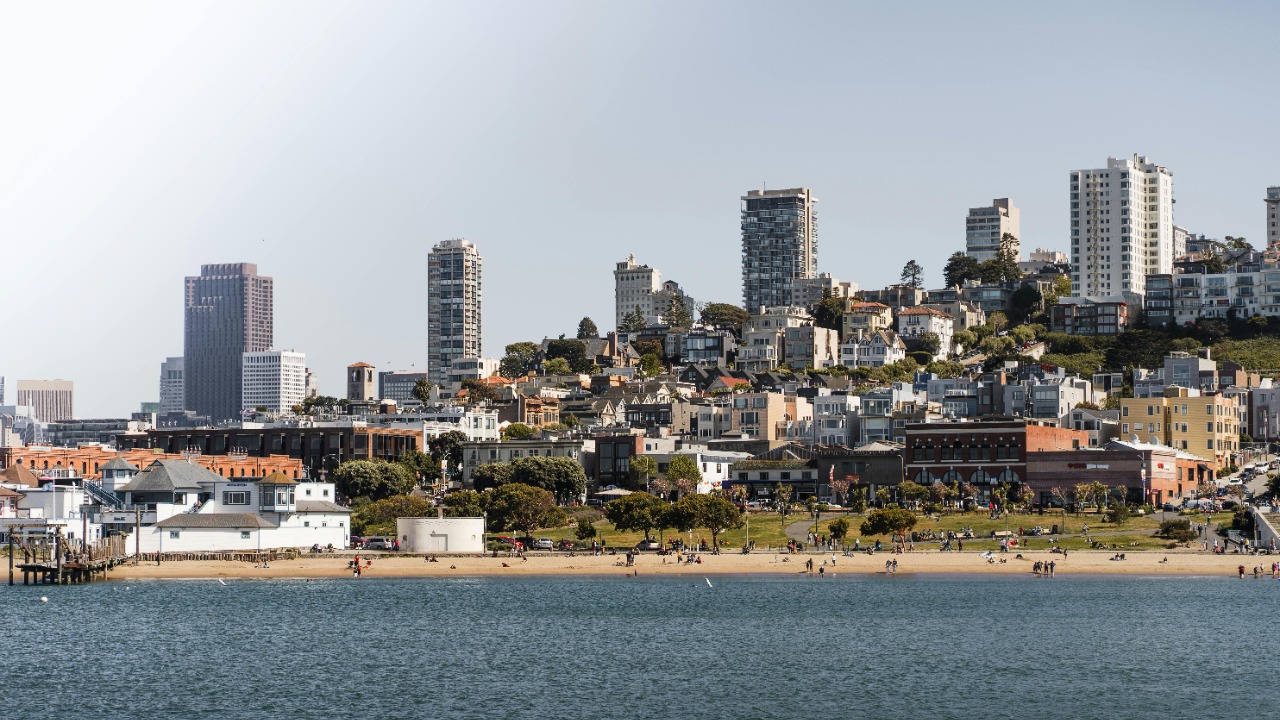
California’s most coveted coastal metros are caught in a paradox: hundreds of thousands of residents are leaving each year, yet home prices in places like the Bay Area keep climbing. The result is a market where fewer people live in the state, but those who remain or arrive with money are bidding up a chronically short supply of homes. I see that tension most clearly in and around San Francisco, where agents now warn of “bubble territory” even as long-time Californians pack moving trucks.
At the state level, the numbers are stark. Analysts tracking the market say the statewide median home price is on track to push toward a record, even as population growth stalls and then reverses. That disconnect is not a mystery to housing economists, who point to a structural shortage of homes, restrictive local rules and a buyer pool that is shrinking in number but not in spending power. The California story is no longer simply about demand, it is about who is left competing for what little is available.
The exodus is real, but so is the demand at the top
Any honest look at California’s housing puzzle has to start with the people leaving. On average, 448,000 people have left the state every year since 2009, with that figure rising to 467,000 each year after the pandemic. Many are middle-income families pushed out by costs, who head for states where a single-family home does not require tech-level salaries. Their departure is a symptom of a market that has priced out the very workers who keep cities running.
Yet the people leaving are not the ones setting prices in San Francisco or coastal Los Angeles. High earners in technology, finance and entertainment, along with global investors, continue to compete for a limited number of homes in these hotspots. As one Bay Area agent put it, he expects 2026 to be “the most feverish market San Francisco has seen since the IPO boom of 2019,” with typical listings in the city sitting on the market for just 18 days, a pattern reflected in recent Bay Area forecasts. I see that as the core contradiction: the exodus is real, but the buyers who remain are wealthy enough to keep bidding prices higher.
A shrinking population does not fix a structural shortage
Residents often ask a version of the same question: If the state’s population is declining, why are housing prices so high. The short answer from researchers is that the market started with such a deep deficit of homes that modest population losses barely dent the imbalance. California spent decades underbuilding, particularly in job-rich coastal counties, so even a smaller population still faces too few units in the places where people most want to live.
National housing economists echo that view, noting that the housing stock is simply “not large enough given the size of the population” and that this deficit remains a major constraint on affordability. In their 2026 outlook, they describe a market where some supply is coming online but not nearly fast enough to catch up with demand, especially in high-cost states. I read that as a warning that California’s shortage is not a temporary blip but a structural feature, one that national analysts see clearly in their broader real estate outlook.
San Francisco’s feverish market in a “new housing phase”
Zooming in on the Bay Area, I see a market that is both cooling from its pandemic extremes and still running too hot for most buyers. Analysts who track the California Housing Market say the state is entering a more stable period, with fewer wild swings in prices, but they also stress that inventory remains tight. One recent California Housing Market describes how California and the West Coast Enter a New Housing Phase, After years of rapid price growth, but concludes that the number of homes for sale is still far below what would be considered healthy.
In San Francisco, that tightness is amplified by geography and politics. The city is boxed in by water and long-standing height limits, and many neighborhoods remain hostile to dense construction. That is why local agents warn that 2026 could be the most intense market since the last IPO wave, with buyers once again waiving contingencies and lining up for open houses. When I look at those forecasts alongside the broader regional projections for modest gains, the Bay Area stands out as a hotspot where even “stability” still means bidding wars.
Forecasts show prices edging higher despite “modest” gains
Statewide projections reinforce the idea that California’s housing market is not about to become a bargain. The California Association of Realtors, in its 2026 California Housing Market, expects California home sales and the median price to inch up again rather than fall. Separate analysis of the California Housing Market, Prices, Trends, Forecast 2025-2026 describes a landscape that is still competitive and expensive, where high borrowing costs and limited supply make it difficult for prospective buyers to afford homes, especially in coastal counties that remain magnets for high-income workers, as detailed in the Prices, Trends, Forecast report.
Local projections for 2026 echo that theme of “modest” but persistent growth. One analysis of Modest gains projected for the California Housing market in 2026 notes that housing sales and prices are projected to increase, with single-family home sales expected to rise even as the pace of growth slows compared with 2025, a pattern laid out in the Modest gains coverage. For buyers in hotspots like San Francisco, “modest” is cold comfort when the baseline price is already out of reach.
Why fewer listings keep prices elevated
Underneath the forecasts is a simple supply story. Analysts of the California Housing Market Outlook 2026 and beyond argue that first, expect stability in prices, however, inventory stays tight, a phrase that captures why even small shifts in demand do not translate into big price drops. I see that tight inventory in the data on active listings, which have recovered somewhat from pandemic lows but remain far below what would be needed to balance the market, a point underscored in the broader California Housing Market.
National economists, looking across states, say the same thing in different words: the housing stock is not large enough given the size of the population, and that deficit is a major constraint on affordability. Their 2026 real estate outlook notes some improvement in construction but emphasizes that the gap remains wide. In practice, that means every well-priced listing in a desirable California neighborhood still attracts multiple offers, even if overall buyer traffic has thinned.
Affordability crisis: who can still buy in California’s hotspots
For ordinary households, the result is an affordability crisis that feels detached from the state’s population trends. A detailed look at the California Housing Market, Prices, Trends, Forecast 2025-2026 describes how high prices and borrowing costs combine to make it difficult for prospective buyers to afford homes, especially first-time buyers without existing equity. That is consistent with the experience of agents who say that in many California metros, only households with substantial savings or stock windfalls can compete, a reality that the California Housing Market analysis highlights.
Nationally known broker Mauricio Umansky, founder and CEO of The Agency, has been blunt about the stakes. He argues that the California housing crisis worsens as affordability and supply fall further behind, and that the market remains unaffordable for many Americans despite listings having slowly recovered, a view laid out in recent coverage of the California housing crisis. When I talk to buyers in hotspots like San Francisco, they describe a market where even a “starter” condo can cost more than a large house in another state, a gap that explains why so many decide to leave.
Why prices can rise even as people flee
The counterintuitive reality that prices can rise while people leave has become a common topic in public debates and even online explainers. One widely shared video titled “Why California Housing Prices Keep Rising Even When People Are Leaving” walks through how a smaller population does not automatically translate into lower prices if the people who depart are lower-income renters while higher-income buyers stay, a point the creator attributes in part to analysis from GPT, as seen in the California GPT discussion. I see the same logic in the data: the composition of who leaves and who stays matters more than the headline population number.
State researchers frame it in policy terms. A frequent question in California is why are housing prices in California still rising even though people are leaving, and their answer is that restrictive zoning, environmental rules and local opposition to new construction keep supply from expanding, so any remaining demand is concentrated on a fixed number of homes, as explained in the state’s home prices FAQ. When I connect that with the exodus figures of 448,000 people and 467,000 each year, it becomes clear that California’s housing story is less about how many people live here and more about how stubbornly the state has refused to build enough homes where people most want to be.
More From The Daily Overview
*This article was researched with the help of AI, with human editors creating the final content.

Elias Broderick specializes in residential and commercial real estate, with a focus on market cycles, property fundamentals, and investment strategy. His writing translates complex housing and development trends into clear insights for both new and experienced investors. At The Daily Overview, Elias explores how real estate fits into long-term wealth planning.

