Apple enters 2026 in a paradoxical position: one of the most profitable companies on the planet, yet no longer the market’s undisputed champion. With Nvidia now ahead on market value and artificial intelligence names dominating headlines, investors are asking whether AAPL can surge again and restore Apple to the top of the global market-cap league. The answer depends on how convincingly Apple turns its product roadmap, AI strategy, and still-hefty valuation into real earnings growth rather than just nostalgia for past rallies.
To judge whether the stock can truly “explode” from here, I am looking at three things: where the share price and expectations sit today, how strong the company’s 2026 growth engine looks, and whether the current valuation leaves room for another leg higher. The picture that emerges is of a “sleeping giant” with credible growth levers, but also real execution and competitive risks that could keep Apple from reclaiming the crown on autopilot.
Where AAPL stands now: price, valuation and the Nvidia gap
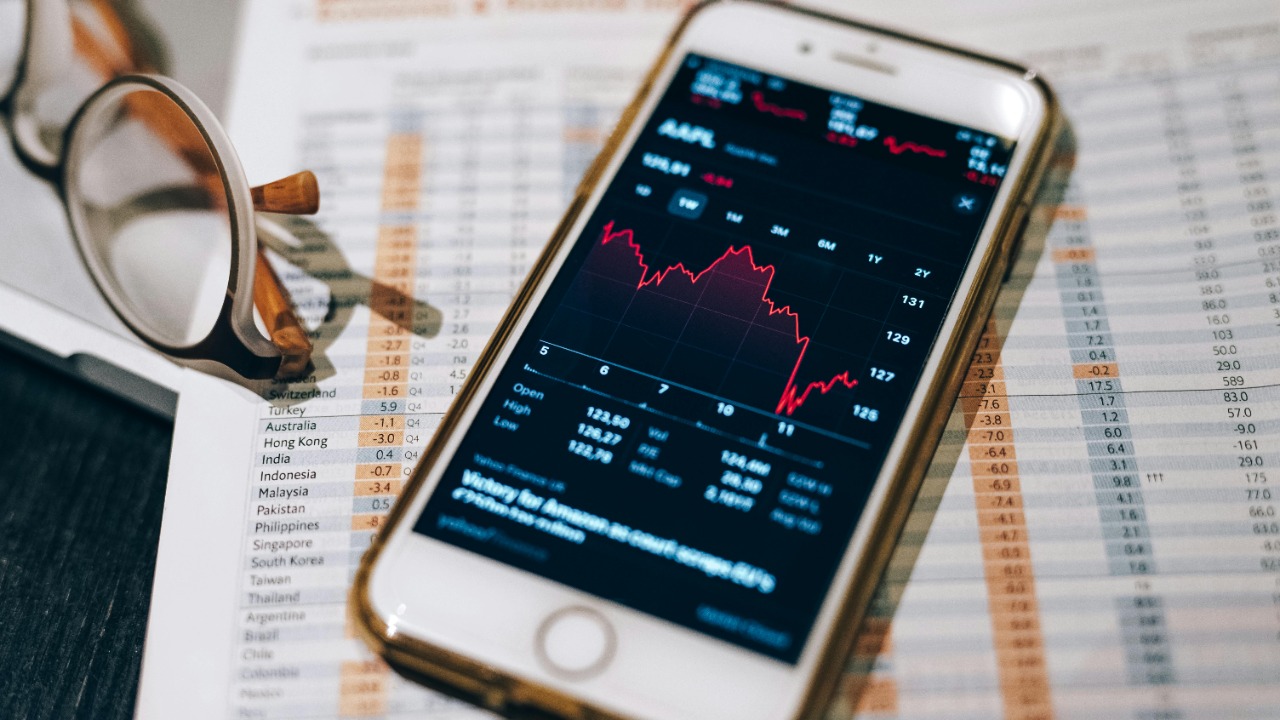
Apple stock opened the year trading around $260, with one detailed forecast noting that Apple stock traded at around $260 a share in early 2026 and suggesting it could end the year below $285 if growth stays modest. Real-time quote data show Apple Inc AAPL on the NASDAQ recently closing at 260.25, up 0.88, a 0.34%, move within a 52 week range of 169.21 to 288.62, which underlines how far the stock has already rebounded from last year’s lows. On a separate snapshot, the Chart for AAPL showed an Open of 259.41, with a Bid of 272.00 x 100 and an Ask of 274.97 x 400, reinforcing that the market is already pricing in a fair amount of optimism.
Despite that strength, Apple is no longer the most valuable listed company. At its current scale, Apple’s market capitalization sits around $3.9 trillion, while Nvidia has surged to roughly $4.6 trillion, a gap that Apple cannot close through multiple expansion alone. Some analysts argue that if investors refocus on profits rather than pure AI hype, Apple’s steadier earnings profile could look more attractive than Nvidia’s more cyclical chip business, especially if the feared AI bubble bursts and capital rotates back into durable cash generators. One recent analysis even suggested that Apple might outperform tech peers if the AI trade unwinds, precisely because the stock never fully participated in the most speculative phase of the rally, which could help it in bridging the gap by itself.
Growth outlook: Apple Expects double-digit Revenue Growth in 2026
The bullish case for a powerful 2026 move starts with fundamentals. Management guidance indicates that Apple Expects roughly 10% to 12% Revenue Growth in 2026, a notable acceleration that comes Amid AI Bubble Concerns and broader questions about whether the tech cycle is peaking. That target follows a turnaround in Fiscal 2025, when Growth tailwinds returned and Revenue for the company’s fiscal year rose about 6%, suggesting that the worst of the post-pandemic slowdown is behind it and that Apple is re-entering a more expansionary phase of its product cycle. If Apple can deliver on that 10% to 12% band, the earnings base supporting today’s valuation could look much more robust by the end of next year, giving the stock more room to run without stretching multiples to extremes.
There are early signs that demand is cooperating. Management has guided for double-digit growth in its important holiday quarter, and early data indicate that iPhone 17 sales are off to a strong start, which one analysis framed as part of the Key Points supporting the view that Management still sees Apple as a great buying opportunity for long-term investors. Another investor who described Apple as a “sleeping giant” heading into 2026 cited the same improving trajectory, arguing that AI could morph into a new layer of services revenue and could also accelerate device sales, a view laid out in a piece explaining why Apple is that author’s second biggest holding going into 2026 and why Revenue for the company could re-accelerate.
Product Roadmap: Fold, Mac and the 2026 hardware cycle
For Apple to justify a breakout, guidance must be backed by a compelling hardware and software slate. On that front, 2026 looks unusually dense. Industry analysis compiled by Macworld points to an extensive Apple product roadmap that includes a foldable iPhone Fold with a 7.8-inch display, alongside updates to iPad, Mac and Apple Watch, with the Fold concept in particular positioned as a marquee device for the first iPhone update built around new form factors. Separate reporting on Apple’s 2026 Roadmap describes The Most Exciting Upcoming Apple Devices and Biggest Apple Leaks for iPhone, Mac, iPad and Wearables, including rumors that Macs in 2026 could debut M5 or M6 silicon and usher in a new Mac era that reshapes Apple’s desktop story for years, which would give the company multiple hardware narratives to sell to consumers and investors at once.
These launches matter because they intersect directly with AI and services. If Apple can embed more on-device intelligence into a foldable iPhone Fold and next-generation Macs, it can potentially drive higher average selling prices and deeper engagement with iCloud, Apple Music, Apple TV+ and other recurring offerings. One early 2026 downgrade of the stock acknowledged that Perhaps such positives are easy to overlook given a trailing price-to-earnings ratio of 35.9, but it also highlighted catalysts such as the coming foldable iPhone that could reignite unit growth. In other words, the roadmap is not just about flashy gadgets, it is about creating a platform that supports the double-digit Revenue Growth Apple Expects while convincing the market that the current premium multiple is sustainable.
What Wall Street expects: targets, ratings and AI rotation
Analyst forecasts for AAPL in 2026 are constructive but not euphoric. One widely cited consensus shows that, According to analysts, AAPL price target is 292.64 USD with a max estimate of 350.00 USD and a min estimate of 215.00 USD, a range that implies upside from current levels but stops short of predicting a parabolic move. Another forecast notes that the current consensus is for Apple stock to end the year below $285, even though it traded at around $260 earlier in the year, which suggests that most professionals see a steady grind higher rather than an explosive rally. At the same time, some stock pickers are more enthusiastic, including Apple among their Key Data Points in lists of top stocks to buy in early 2026, arguing that as investors seek to rotate into potential AI winners that have not yet soared, they may turn to Apple as a way to participate in a new era of growth without paying nosebleed valuations.
There are, however, clear pockets of caution. Bears point out that Apple has experienced a year-over-year decline in sales in China by 3.6%, raising concerns about its competitive position in that crucial market and the risk that local rivals could pressure margins and share. Some analysts also emphasize that until Apple can start launching truly new product categories, rather than iterative updates, it may struggle to re-rate meaningfully above current levels, especially with a P/E multiple already near 35.9 and a market cap of $3.9 trillion that leaves less room for error. Even bullish commentators who call Apple a great buy for 2026 typically stress that investors should temper expectations for a sudden “moonshot” and instead focus on compounding returns from a high-quality franchise, a stance that aligns with the idea that high institutional holdings and attractive valuation metrics can coexist with short-term caution, as seen in other stocks analyzed for why they are falling or rising where the stock’s high institutional holdings and attractive fundamentals still leave some investors cautious in the short term, a pattern highlighted in a note on why is UPL moving.
Can Apple really reclaim the throne in 2026?
Putting these threads together, I see a credible path for Apple to outperform many peers in 2026, but a less certain path to an outright “explosion” that instantly restores it as the world’s largest company. The combination of 10% to 12% Revenue Growth Apple Expects, a stacked 2026 Roadmap featuring the Fold and new Mac and Wearables cycles, and the potential for AI to deepen the services ecosystem all support the idea that earnings and free cash flow can grow meaningfully from here. If the AI trade cools and investors rotate from high-flying names into more stable cash machines, Apple’s profile as a “sleeping giant” with strong iPhone 17 momentum and double-digit holiday-quarter guidance could look especially attractive, echoing the argument that Apple is a great buying opportunity laid out in analyses that highlight Key Points from Management about demand strength.
At the same time, the stock is not cheap, the China slowdown of 3.6% in sales is a real headwind, and Nvidia’s $4.6 trillion valuation advantage will not vanish overnight. Consensus targets around 292.64 USD and sub-$285 year-end forecasts imply that most professionals expect a solid, not spectacular, year, and any disappointment on the Fold, Mac or AI integration story could trigger volatility. For investors who understand that price data from platforms like Google Finance comes with important caveats, as spelled out in the Google Finance disclaimer, the more relevant question is whether Apple’s risk-reward profile justifies a long-term allocation rather than a short-term bet on fireworks. On that score, I lean toward yes: with institutional support, a clear product cycle, and a realistic chance to narrow the gap with Nvidia if the AI bubble deflates, Apple looks positioned for meaningful gains in 2026, even if the journey back to the very top of the world’s market-cap rankings proves more marathon than sprint.
More From TheDailyOverview

Grant Mercer covers market dynamics, business trends, and the economic forces driving growth across industries. His analysis connects macro movements with real-world implications for investors, entrepreneurs, and professionals. Through his work at The Daily Overview, Grant helps readers understand how markets function and where opportunities may emerge.

