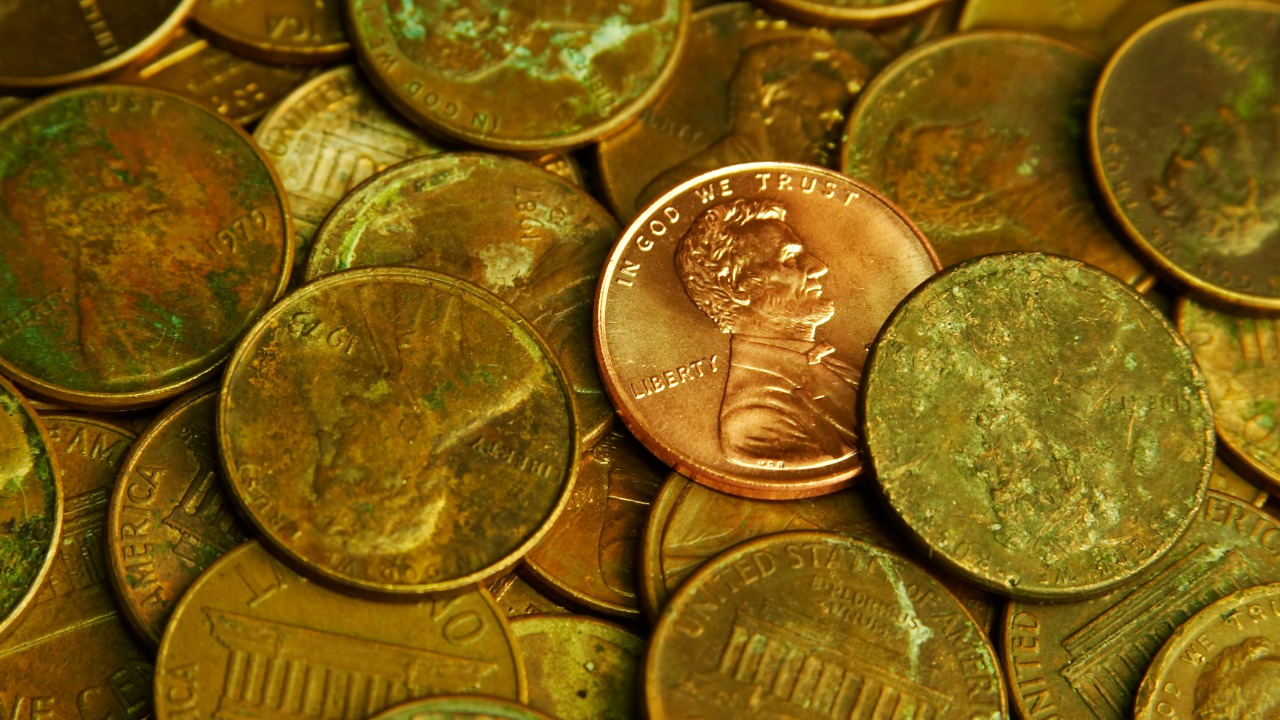
The last U.S. penny has rolled off the presses, and suddenly the most forgettable coin in your pocket has become the subject of fevered speculation. As production ends and jars of loose change come out of closets, the obvious question is whether any of those 1 cent pieces can realistically turn into serious money.
The short answer is that a tiny fraction of pennies already trade for hundreds or even thousands of dollars, while the overwhelming majority will never be worth more than face value. The real story is how to tell the difference, and what the end of new minting means for anyone sitting on a lifetime of spare change.
The penny era ends, but the coin lives on
The United States Mint has now produced its final batch of 1 cent coins, with officials expecting those last pieces to enter circulation in early 2026, even as the penny remains legal tender and continues to be accepted in everyday transactions, according to reporting that the penny “isn’t discontinued” but that production has been sharply scaled down in line with a broader cost cutting effort linked to Treasury policy. A separate broadcast recap notes that Nov. 12, 2025, is the day the 1 cent coin officially became a thing of the past from a manufacturing standpoint, underscoring how quickly a once ubiquitous denomination has shifted from everyday tool to historical artifact in the span of a single budget cycle, as the final penny coverage makes clear.
The political decision behind that shift traces back to President Donald Trump, whose administration ordered the end of new penny production, with 2026 marked as the first year the Treasury would not mint fresh 1 cent coins at all. That move has not only sparked nostalgia, it has also triggered a wave of opportunism, as collectors and casual savers alike rush to sort through their change in search of anything that might benefit from the sudden cap on supply.
Americans are sitting on billions of forgotten cents
For all the attention on rare dates and mint errors, the starting point is sheer volume: Americans collectively have an estimated $60 to $90 in loose coins per household sitting in jars, drawers, and glove compartments, according to one analysis of how much idle change is effectively stranded outside the banking system, a figure that highlights just how much small denomination money is hiding in plain sight when Americans finally decide to cash in. With the penny going away from the production line, that forgotten change is suddenly being treated less like clutter and more like a potential lottery ticket, even if the odds of hitting a jackpot coin remain slim.
Experts who study consumer behavior around coins say the end of minting is prompting people to finally roll and redeem their jars, but they caution that most of those cents will be worth exactly one cent each, even after the last new coin ships. Advice pieces aimed at ordinary savers stress that while it is worth scanning for obvious rarities, the rational default is to treat the bulk of those jars as spending money, not a retirement plan, a point echoed in consumer guidance that asks “What should I do with my pennies?” and concludes that they generally are not a strong investment, as According to financial experts.
Why most pennies will never be “rare”
Even with production halted, the supply of existing pennies is enormous, which is why numismatists are quick to tamp down expectations that every 1 cent coin will suddenly become a collectible. One widely cited overview of rare cents notes that, Probably not, but some certainly will, when asked whether ordinary pennies will turn into big money, and stresses that While a limited supply can drive prices higher, the sheer number of coins minted over decades means that most dates will never be scarce enough to command a premium, even if they survive in decent shape, as explained in a guide to rare pennies.
Another expert draws a comparison to the Eisenhower dollar coin, pointing out that even though some versions contain silver, most are only silver clad and Their value, according to Ferguson, may only be a few dollars above face despite the metal content and age, a cautionary example that discontinuation alone does not guarantee a windfall, as Ferguson notes. Consumer advisers echo that logic, warning that, According to experts, it is unlikely the penny’s value will significantly increase for typical coins, and that hoarding rolls of modern cents is not a compelling investment strategy compared with simply depositing or spending them, as summarized in the What guidance.
The small group of pennies already worth big money
Where the story changes is with specific key dates and mint marks that collectors have chased for generations, and which are now seeing renewed attention as the series effectively closes. Lists of the Top 10 Most Valuable Pennies highlight early 20th century issues like the 1909-S Indian Cent, which can bring $300 to $1,000 or more depending on condition, and the 1909-S VDB Lincoln Cent, which typically sells in the $600 to $1,300 range, illustrating how scarcity and historical significance can turn a 1 cent denomination into a three or four figure asset, as detailed in one breakdown of Most Valuable Pennies.
Another ranking aimed at collectors watching the end of production singles out the 1909-S VDB Lincoln Cent again, describing it as the holy grail for Lincoln cent specialists and noting that its value can range from $1,200 to $10,000 or more, depending on grade and market demand, a spread that reflects how much List of Services and similar guides emphasize the importance of both rarity and preservation when pricing a Lincoln Cent. These headline numbers are a reminder that while most pennies will never escape face value, a small subset has already made the leap from pocket change to serious collectible, and the end of new minting is only sharpening the spotlight on them.
Errors, Bronze oddities and the new obsession with Lincoln
Beyond famous dates, some of the most dramatic price tags attach to minting mistakes, where a coin was struck on the wrong metal or with a flawed die that created a distinctive variety. A detailed guide to what pennies are worth money in 2026 points to classic examples like 1943 Bronze cents, which were struck on Bronze planchets when the Mint was supposed to be using steel, and notes that such wrong metal pieces can command extraordinary sums because they combine rarity, a clear backstory, and intense collector demand, as outlined in the Bronze cent coverage. Broader overviews of error coins describe how some of the most valuable pieces show dramatic doubling or misstrikes that are visible without magnification, with High grade Mint State examples of these mistakes often selling for far more than their face value would suggest, as one primer on what are the Perhaps the most valuable error coins explains.
Within the Lincoln series specifically, Another famous Lincoln Wheat cent is the 1955 Doubled Die Obverse (DDO), where a doubled die produced a second, offset image on the same side of the coin, creating a dramatic visual effect that collectors can spot with the naked eye and that commands strong prices in higher grades, according to a detailed Lincoln Wheat reference. In 2026, that long standing interest in Lincoln errors has been supercharged by a wave of coverage describing how Coin collecting has entered a new era, with rare Lincoln error pennies capturing unprecedented attention from collectors who are willing to pay large sums for pieces that combine rarity, historical significance, and intense market demand, as one analysis of Lincoln error pennies puts it.
Last-year dates, copper value and the 2025 frenzy
While century old rarities and dramatic errors dominate auction headlines, the end of production has also created a more speculative market around the final years of ordinary pennies. Harker, a numismatic expert cited in coverage of the policy shift, says 2025 pennies will increase in value and that they are “being collected wildly right now,” arguing that People want to get the last year of issue and are snapping up rolls and bags of fresh coins in the hope that they will become modern key dates listed in standard references like the Book of United States Coins, as described in the Harker interview. A separate feature on rare pennies looking ahead to 2050 notes that Probably not, but some certainly will, when it comes to which modern dates might eventually command premiums, and emphasizes that While a limited supply can help, only coins in good condition with clear collector demand are likely to fetch thousands, reinforcing the idea that not every last year cent will become a prize, as one While analysis puts it.
At the same time, some penny holders are less focused on numismatic rarity and more interested in the metal itself, especially for older copper issues. A popular video aimed at small savers argues that copper prices are at all time highs and that your pennies are worth even more money now, urging viewers to think twice before bagging up their copper cents for the bank and instead consider holding them as a kind of mini bullion play, as the What are Pennies segment frames it. That pitch dovetails with broader advice to “save your copper,” particularly for pre 1982 cents with higher metal content, although it runs into the same practical constraints as any commodity bet made with small denomination coins, including storage, time, and the legal limits on melting U.S. currency.
Lessons from Australia and the power of condition
For a glimpse of how discontinued low value coins can behave over time, collectors often look abroad to markets that have already retired their smallest denominations. In Australia, for example, The Holy Grail of Aussie coins is a rare penny from the Great Depression era, with Only about 1,500 of these pennies minted due to a lack of demand, a combination of tiny mintage and historical context that has turned surviving examples into high value trophies for specialists, as detailed in a guide on how to spot Holy Grail of pieces. That experience suggests that when a coin is both scarce and tied to a compelling story, discontinuation can amplify its appeal, but it also underscores how extreme the numbers have to be before a once common denomination becomes truly rare.
Across all these markets, one principle keeps resurfacing: Condition Determines Everything Small differences in wear and preservation can create large value variations in coin appraisal, with the gap between “good” and “uncirculated” often translating into hundreds or thousands of dollars for the same date and mint mark, as one 2025 guide to valuable rare coins stresses. That reality is why serious collectors pay for professional grading and why casual savers hoping to cash in on the penny’s swan song are being urged to handle promising finds carefully, avoid cleaning them, and temper their expectations unless the coin in hand matches a known rarity in both type and state of preservation.
More From TheDailyOverview
*This article was researched with the help of AI, with human editors creating the final content.

Cole Whitaker focuses on the fundamentals of money management, helping readers make smarter decisions around income, spending, saving, and long-term financial stability. His writing emphasizes clarity, discipline, and practical systems that work in real life. At The Daily Overview, Cole breaks down personal finance topics into straightforward guidance readers can apply immediately.

