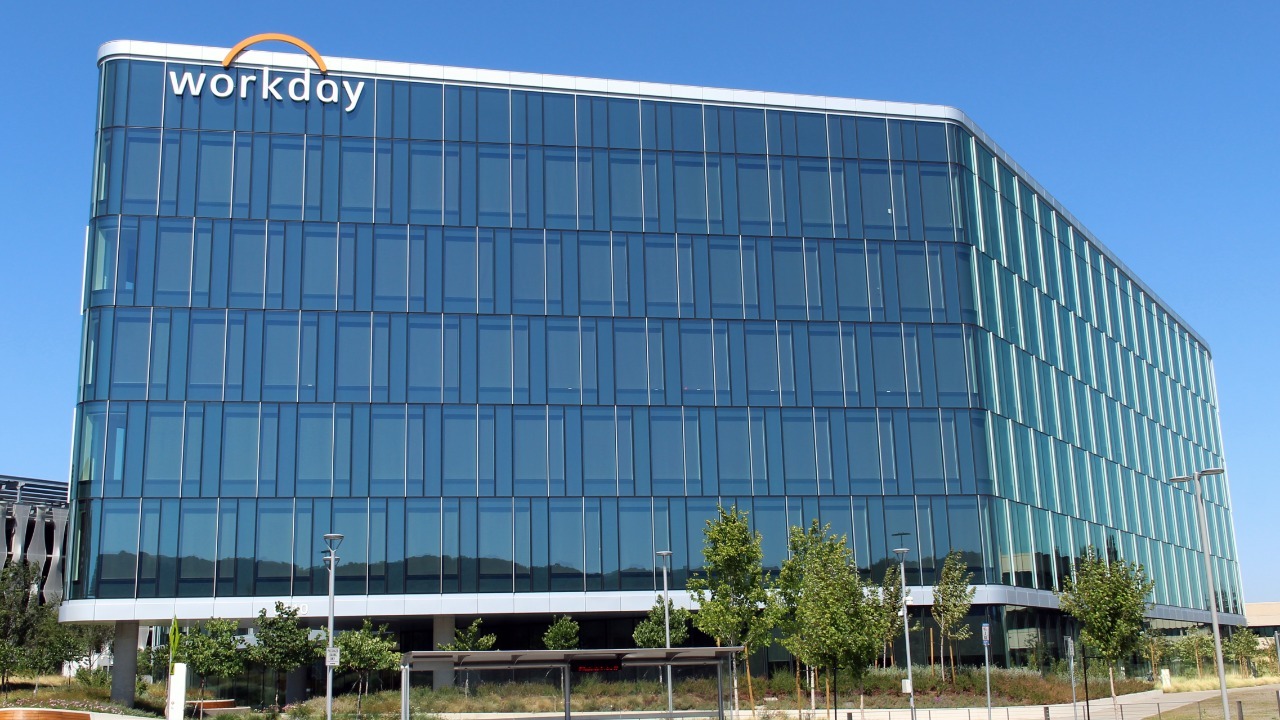
Workday has seen roughly $40B in market value erased after investors balked at its AI-era growth trajectory, turning a once high-flying enterprise software name into a cautionary tale about transition risk. Now cofounder Aneel Bhusri is stepping back in as CEO with a pay package worth about $138.8M, a comeback bet that ties his fortunes to whether he can steer the company through intensifying AI competition. The move, disclosed in a Feb. 4, 2026 Form 8-K and related filings, is already drawing scrutiny over governance, pay, and what comes next for Workday’s strategy.
Workday’s Turbulent Path to the Leadership Change
The leadership shake-up lands after a bruising stretch in which roughly $40B of Workday’s market value was wiped out when the company’s fiscal 2026 third-quarter subscription revenue guidance fell short of investor expectations. In its Q3 FY2026 financial results, Workday reported revenue, subscription revenue, backlog metrics, and both GAAP and non-GAAP margins that were paired with a cautious outlook, including a non-GAAP margin forecast that underwhelmed analysts on the November earnings call, according to the company’s third-quarter release. That mix of softer subscription guidance and margin commentary fed concerns that Workday was not converting AI demand into growth quickly enough, especially as larger rivals trumpet their own generative AI products.
Those financial jitters framed the tenure of Carl Eschenbach, who became CEO in 2023 and was tasked with leading Workday through an AI-focused transition period. By early February, however, Workday’s board had decided to change course, and a Form 8-K filing detailed that Eschenbach would resign from both the CEO role and the board effective Feb. 6, 2026. The same filing referenced the company’s earlier subscription revenue and non-GAAP margin outlook from Q3 FY2026 as the baseline that the leadership transition would now be measured against, underscoring how closely the CEO switch is tied to investor frustration with recent performance.
Aneel Bhusri’s Return as CEO
Aneel Bhusri, who co-founded Workday and previously served as CEO until 2023, is returning to the top job with an appointment effective Feb. 6, 2026. In the official transition announcement distributed to investors, Workday framed his comeback as a deliberate choice to bring back a founder who understands both the company’s culture and its long-term product roadmap, particularly as AI reshapes the enterprise software market. The company-hosted release notes that the leadership change aligns with the kickoff of Workday’s fiscal year 2027, signaling that the board sees this as the start of a new multi-year chapter rather than a short-term patch.
In a companion SEC exhibit, Workday’s board and Bhusri explicitly described his return as an “AI-era transition” decision, arguing that the company needs a founder’s hand to navigate the next wave of competition. The filed announcement, available in Exhibit 99.1, includes direct quotes from Bhusri and from directors who say the company is entering a new phase that requires renewed focus on product innovation and customer relationships. The document also confirms that Eschenbach will remain connected to Workday as a strategic advisor, a detail that suggests the board wants continuity in the transition even as it hands operational control back to the cofounder.
Breaking Down the $139M Compensation Package
Bhusri’s return is not just symbolic; it comes with a compensation package that rivals the largest in enterprise software. According to the detailed employment terms in Exhibit 10.1, his new agreement sets an annual base salary of $1.25M and a target cash bonus opportunity of up to 200% of that salary. On top of cash pay, the filing outlines time-based restricted stock units with a grant-date fair value of $60M, which will vest over a set schedule if he remains in the role, and performance-based equity awards worth $75M that hinge on Workday hitting specified stock-price targets. Those precise figures, including the 200% bonus opportunity, the $1.25M salary, and the $60M and $75M equity components, are spelled out verbatim in the SEC document.
External reporting has pegged the total value of the package at roughly $138.8M, with one analysis summarizing it as about $138M in aggregate equity and cash potential tied to Bhusri’s return. A detailed breakdown from Major coverage describes how the $138.8M headline figure is dominated by the $60M in time-based RSUs and the $75M in performance awards that depend on Workday’s stock price meeting specified thresholds. The SEC filing also sets out equity acceleration mechanics if Bhusri is terminated under certain conditions, providing for potential vesting of RSUs and performance stock units that would otherwise remain unvested, which effectively tightens the link between his upside and Workday’s share price over the coming years.
Eschenbach’s Exit and Severance Details
While Bhusri’s deal has drawn the most attention, the same set of filings spells out what happens to Carl Eschenbach as he steps aside. The Form 8-K filed with the SEC confirms that Eschenbach’s resignation from both the CEO position and the board is effective Feb. 6, 2026, and that he will transition into a strategic advisor role to Workday. In Exhibit 99.1, Workday’s board and Bhusri publicly thank Eschenbach for his contributions, highlighting his work during a period of rapid product expansion and the early stages of Workday’s AI investments, even as the company’s share price lagged expectations.
The financial terms of Eschenbach’s exit are detailed in a separate agreement that the company attached as an exhibit to the same SEC submission. According to the Form 8-K, Eschenbach will receive cash severance based on multiples of his base salary and target bonus, as well as reimbursement for estimated COBRA premiums to maintain health coverage for a defined period. The filing also describes how certain RSUs and performance stock units will accelerate or continue to vest under specified termination scenarios, clarifying that his equity treatment reflects both his past service and his ongoing advisory role. That level of detail is typical for high-profile CEO exits and gives investors a clearer sense of the total cost of the leadership change.
Why This Matters for Workday and Investors
For shareholders, the leadership reset is not just about personalities; it is about whether Workday can deliver on the growth and profitability targets it has already put on the record. In its official transition announcement, Workday told investors that it was reaffirming its outlook for fiscal year 2027, signaling that the board expects Bhusri to meet the same targets that had been communicated under Eschenbach. The Q3 FY2026 results, detailed in the company’s financial release, provide the baseline: subscription revenue growth, backlog levels, and both GAAP and non-GAAP margins that set expectations for how quickly Workday can scale its AI-infused products while protecting profitability. Reaffirming the FY2027 outlook despite the CEO change suggests that the board sees execution, rather than strategy, as the main problem to solve.
The size and structure of Bhusri’s pay package also raise governance questions, especially in the wake of a roughly $40B market-cap drawdown. The Major analysis of the $138.8M arrangement frames it as a test of how much control a founder can exert through compensation and equity design after a market stumble. On one hand, tying $75M of his awards to stock-price targets aligns Bhusri’s upside with shareholders who want the share price to recover. On the other, granting $60M in time-based RSUs and setting a 200% target bonus on a $1.25M salary in a post-dip environment invites scrutiny from investors who worry that founder-led boards may be too generous. That tension will likely shape proxy-season debates about board independence, pay-for-performance alignment, and whether Workday’s compensation committee has struck the right balance.
Uncertainties Ahead in the AI Software Landscape
Despite the detailed numbers in Bhusri’s deal, several aspects of Workday’s AI-era strategy remain hazy. The performance-based equity awards, for instance, are tied to stock-price targets, but the public filings reveal relatively thin information about the precise vesting hurdles and how they map to operational milestones such as subscription revenue growth or AI product adoption. The employment agreement in Exhibit 10.1 focuses on share-price thresholds and service conditions rather than detailed product or financial metrics, which leaves investors guessing about how directly Bhusri’s personal incentives track the success of Workday’s AI initiatives. At the same time, the company’s Q3 FY2026 outlook for subscription revenue and non-GAAP margins, as captured in the GAAP and non-GAAP disclosures, has already been challenged by skeptics who question whether Workday can accelerate growth while incumbents and startups crowd the AI software category.
There are also open questions about what additional restructuring or cost actions might appear in future SEC filings. The CEO transition announcement filed as Exhibit 99.1 explicitly points investors to the Feb. 4, 2026 Form 8-K for more detail on margins and any restructuring disclosures, suggesting that Workday may adjust spending or headcount to support its AI priorities. Until those details emerge, projections about the company’s subscription revenue growth and AI-related returns remain disputed, with some observers emphasizing the strength of Workday’s backlog and others highlighting the recent $40B drawdown as evidence that the market is unconvinced. The only certainty for now is that Bhusri’s $138.8M comeback bet, with its mix of $60M in time-based RSUs and $75M in performance-based awards, will be judged against whether Workday can restore confidence in its AI strategy and long-term growth profile.
More From The Daily Overview
*This article was researched with the help of AI, with human editors creating the final content.

Grant Mercer covers market dynamics, business trends, and the economic forces driving growth across industries. His analysis connects macro movements with real-world implications for investors, entrepreneurs, and professionals. Through his work at The Daily Overview, Grant helps readers understand how markets function and where opportunities may emerge.