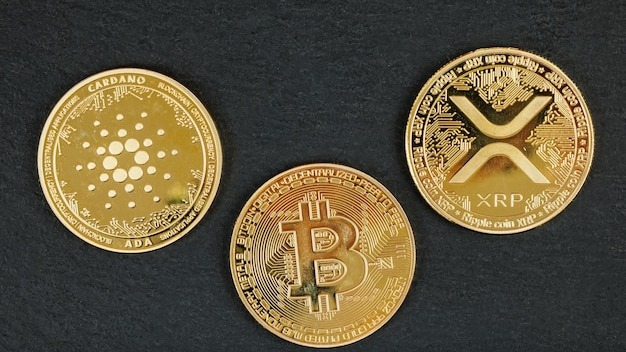
XRP is gaining ground against Bitcoin on a metric that matters most to institutional traders: liquidity. A combination of improved regulatory visibility after key court developments in the SEC’s case involving Ripple, the emergence of a spot XRP exchange-traded product framework, and measurable improvements in order-book depth across major centralized exchanges may be shifting the competitive dynamics between the two assets. Whether that momentum can translate into a sustained price breakout depends on how quickly institutional capital follows the structural improvements visible in the data.
Ripple Settlement Clears the Regulatory Fog
For years, the SEC enforcement action against Ripple Labs acted as a weight on XRP’s institutional adoption. That changed after the court issued its final judgment, with the Franklin XRP Trust prospectus documenting the August 7, 2024 date of that ruling. The prospectus also references appeals, cross-appeals, and stipulated dismissal language, all of which signal that the legal uncertainty that kept large allocators on the sidelines has been substantially resolved. Regulatory risk had been the single biggest discount applied to XRP relative to other large-cap digital assets, and its removal changes the calculus for portfolio managers evaluating the token.
Separately, SEC Commissioner Caroline Crenshaw published a statement on the Ripple matter that distinguished institutional sales from other sales discussed in the enforcement action. Framed as her perspective, the distinction is relevant because it highlights how the case treated different categories of XRP sales and market activity, which some market participants interpret as reducing uncertainty around secondary-market trading. The statement also discusses the penalty and injunction posture, adding detail on how the SEC viewed the outcome. For traders, the practical takeaway is that perceived legal overhang appears to have eased compared with prior years, and market-structure data may be beginning to reflect that shift.
Order-Book Depth Tells the Real Story
Liquidity is not an abstract concept. It shows up concretely in order-book depth, the volume of buy and sell orders resting at various price levels around the current midprice. Coin Metrics documents how these metrics are computed, measuring depth within defined percentage bands of midprice on an hourly basis. When depth is insufficient on a given exchange, the system returns null values, a useful signal for identifying thin markets. By this standard, XRP’s depth has been improving across several major venues, narrowing the gap with Bitcoin in ways that were not visible even a year ago.
CoinGecko’s 2025 liquidity research quantifies centralized-exchange order-book depth across eight major venues and finds that XRP liquidity is concentrated across a handful of exchanges including Bitget, Binance, and Coinbase, with one-sided depth at defined price bands that rivals some of Bitcoin’s own metrics. Bitcoin still leads on median depth within tight absolute price ranges, but XRP’s concentration on high-volume platforms means that large orders can be executed with less slippage than the headline market-cap gap between the two assets would suggest. For institutional desks that care about execution quality rather than just price, this convergence is significant.
Kaiko Ranks XRP Alongside Ethereum
Perhaps the most telling signal comes from Kaiko’s scoring framework, which goes beyond a simple liquidity ranking to assess tradability, market maturity, and custody infrastructure. Bitcoin tops the Kaiko Crypto Asset Ranking, but ETH and XRP are tied for second with a score of 95 out of 100. That parity with Ethereum is notable because ETH already has a well-established spot ETF market and years of institutional infrastructure built around it. XRP reaching the same score suggests that the token’s market structure has matured faster than many analysts expected, driven in part by improved regulatory visibility that may be encouraging additional custody and trading support.
The Kaiko ranking evaluates factors that matter to compliance-conscious allocators: exchange availability, order-book quality, custody support, and regulatory status. Scoring 95 out of 100 on that composite measure puts XRP in a different category from most altcoins, which tend to suffer from thin books, limited exchange coverage, or unresolved legal questions. The practical implication is that asset managers building diversified crypto portfolios now have fewer structural reasons to exclude XRP, especially when the liquidity data supports tighter spreads and deeper books than smaller competitors can offer.
The ETF Factor and Institutional Plumbing
Franklin Templeton’s proposed spot XRP ETF structure adds another layer to this story. The fund’s SEC-filed prospectus documents custody providers and uses the CME CF XRP-Dollar Reference Rate, New York Variant, as its pricing benchmark. That choice of benchmark matters because the CME CF reference rates are the same family of indices used to price Bitcoin and Ethereum ETFs, giving institutional investors a familiar valuation framework. If approved and adopted, an ETF wrapper could create an additional access channel for some investors who prefer regulated vehicles over holding the token directly.
The broader context here involves what happens when regulatory clarity, improved liquidity, and new investment products arrive at roughly the same time. Bitcoin went through a similar sequence in late 2023 and early 2024, when spot ETF approvals triggered large inflows and a sustained price rally. XRP’s setup is not identical, as Bitcoin benefits from a much larger installed base of holders and a deeper derivatives market, but the structural ingredients are similar. The question is whether the liquidity improvements already visible in the order-book data will attract enough new capital to shift XRP from a structurally discounted asset into one that trades more in line with its on-chain activity and market infrastructure.
Institutional Sentiment and the Path Ahead
Sentiment among professional investors is beginning to reflect this changing backdrop. In a widely circulated television segment, Ripple’s leadership used a business news interview to emphasize that the settlement and ensuing developments have opened the door for more traditional capital to enter the XRP market. While such appearances are inherently promotional, they matter because they signal that large financial institutions are now part of the target audience, not just crypto-native traders. The messaging aligns with the structural shifts visible in liquidity statistics and ETF product development, reinforcing the narrative that XRP is moving into a more institutionally compatible phase.
From here, the path ahead will be defined less by court filings and more by measurable market behavior. If order-book depth continues to rise on top-tier exchanges, spreads remain tight, and ETF volumes build steadily, XRP’s relative position versus Bitcoin and Ethereum could strengthen further. Conversely, if ETF flows disappoint or macro conditions turn risk-off, the recent gains in liquidity could plateau, leaving XRP as a niche allocation rather than a core holding. For now, the combination of regulatory clarity, credible liquidity metrics, and functioning institutional plumbing has given XRP its best chance in years to compete with Bitcoin on the dimension that large traders care about most: the ability to move size without moving the market.
More From The Daily Overview
*This article was researched with the help of AI, with human editors creating the final content.

Grant Mercer covers market dynamics, business trends, and the economic forces driving growth across industries. His analysis connects macro movements with real-world implications for investors, entrepreneurs, and professionals. Through his work at The Daily Overview, Grant helps readers understand how markets function and where opportunities may emerge.

