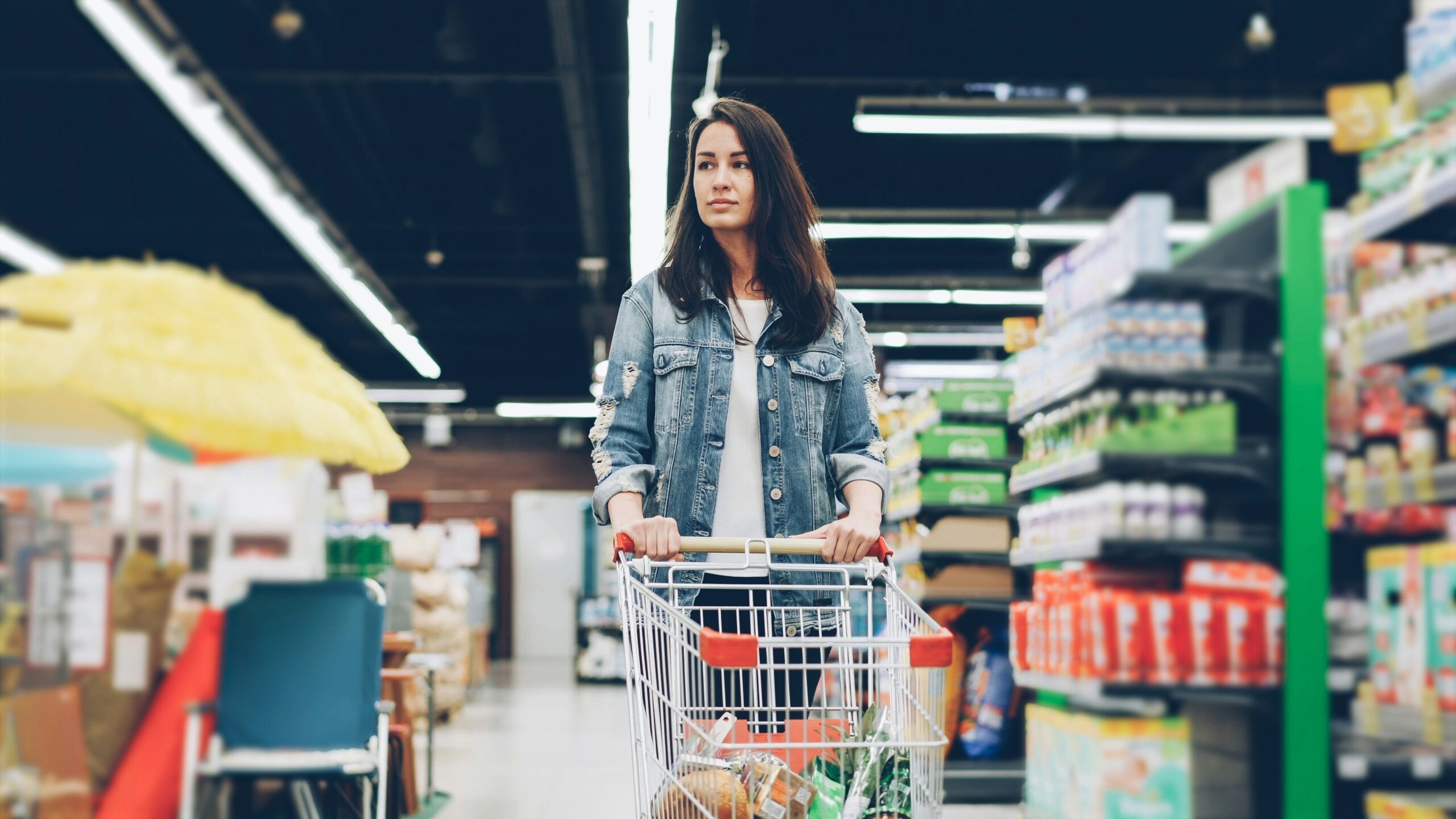
Your grocery run is turning into a live data feed. Across supermarket chains, the familiar paper tags are being swapped for tiny screens that can change prices in seconds, turning a once predictable bill into something far more dynamic. The shift promises fewer errors and faster discounts, but it is also raising pointed questions about how far retailers will push this new power over the numbers on the shelf.
As electronic labels spread from big-box aisles to neighborhood stores, shoppers are discovering that the real disruption is not just digital hardware, it is the software and data behind it. I see a tug of war emerging between efficiency and trust, with your receipt caught squarely in the middle.
From paper tags to live screens
What used to be a slow, manual process of swapping paper labels is rapidly turning into a centralized, software driven system. Large grocers are rolling out electronic shelf labels, or ESLs, that function as small digital screens tied directly into store pricing databases, a trend that has been described as taking over U.S. grocery stores. Instead of sending workers aisle by aisle with stacks of paper, retailers can now push out a price change to thousands of items at once, turning what used to take days into a matter of minutes.
These systems are designed around digital price tags that communicate wirelessly with a central server, so the number you see on the shelf is supposed to match what rings up at the register. One vendor describes this as part of a broader shift to Real Time Price, where retailers can update promotions, correct mistakes, or respond to supplier changes without waiting for overnight resets. For shoppers, that means fewer mismatched tags, but it also means the price of your cereal is no longer anchored to a piece of paper that sits still for weeks.
Why retailers love the new tags
From the store’s perspective, the appeal is obvious. Electronic shelf labels, described as Electronic screens that can be changed remotely, cut labor costs and reduce the risk of human error when employees rush to keep up with weekly ads. One analysis notes that Efficiency, Employees, and automation are central selling points, since staff no longer need to peel and stick thousands of labels by hand. That time can be redirected to stocking, customer service, or online order picking, all of which matter more to a retailer’s bottom line than paper shuffling.
Advocates also argue that digital labels can improve the shopping experience by making prices clearer and more consistent. A comparison of electronic shelf labels and traditional tags highlights how paper is prone to misprints, outdated promotions, and missing labels that leave shoppers guessing. In one section labeled 4.1, the analysis stresses that Customer Experience and hinge on Readability and Visibility, because Shoppers make split second decisions. When the shelf and the scanner always match, retailers say, trust should go up, not down.
Surge pricing fears and what the data shows
For many customers, though, the first reaction is not convenience, it is anxiety about surge pricing creeping into the grocery aisle. One agricultural policy group invites readers to Imagine watching the price of milk change in real time as demand spikes, a scenario that feels less like a sale and more like a ride hailing app. A public television segment captured similar unease, with John Yang noting that During a period when American families are already stretched, the idea that prices could jump between morning and evening feels like one uncertainty too many.
So far, the best available evidence suggests those worst case fears are not yet playing out at scale. Researchers who examined stores using electronic labels found that digital labels did not produce the kind of demand based spikes that define surge pricing. One summary of the work notes that if such tactics were widespread, you would expect to see a clear pattern of prices rising at peak shopping times, but Instead, the data showed no meaningful difference between stores with and without the technology. A separate report from WASHINGTON reached a similar conclusion, stating that Digital price labels, which are rapidly replacing paper tags, have not yet led to broad demand based pricing in supermarkets.
AI, data and the “watching eyes” in the aisle
Even if prices are not surging hour by hour, the infrastructure now in place gives retailers new ways to experiment with data driven pricing. Advocacy groups warn that Corporations are combining digital shelf labels with loyalty data and artificial intelligence to fine tune how much they can charge for staples. One recent analysis argues that While corporations work toward personalized offers and algorithmic promotions, the same systems can be used to push higher base prices and keep them updated on shelves almost instantaneously.
Privacy advocates also point out that digital labels rarely arrive alone. The same Digital Price Tags report describes how cameras, shelf sensors, and app based tracking can be layered on top of ESLs to monitor how long shoppers linger, which brands they pick up, and how they respond to promotions. Combined with the ability to change prices in real time, that kind of surveillance raises the specter of what the report calls Explained “watching eyes” that quietly test how much each neighborhood will tolerate. For now, most pricing still appears to be set at the store or chain level, but the technical barrier to more granular experiments is shrinking fast.
Shoppers, lawmakers and the fight over fairness
Consumers are not powerless in this transition, and some are already pushing back. A national grocery feature asked What and where these systems are being deployed, noting that Electronic shelf labels are already live in several Idaho stores and spreading quickly. In interviews, shoppers described feeling uneasy when they saw a price change mid trip, even if the adjustment was a markdown. Another report quoted a researcher explaining that Grocery stores study when people shop the most, and that the temptation to nudge prices up when carts are fullest is an obvious concern.
Lawmakers are starting to respond, particularly where inflation has already eroded trust. In Congress, Representative Rashida Tlaib has promoted a proposal framed as a Stop Price Gouging measure aimed at supermarkets. In a statement highlighted by her office, a supporter identified as Jones warned that With the cost of living rising, the last thing families need is Techn driven price gouging when they visit their local store. At the state level, one report notes that in Jun, a Democratic lawmaker in Arizona raised similar concerns about how quickly digital labels could be used to raise prices without shoppers noticing.
Regulation alone will not settle the question of fairness. Retailers still control how transparent they are about price changes, how often they adjust base prices, and whether they use the new tools to pass along savings as aggressively as they pass along increases. A study that looked at Jul data from stores in Arizona, Rhode Island and Maine found no systemic surge pricing, but it did not rule out more subtle strategies that could emerge as the technology matures. For now, the most immediate safeguard is still an old fashioned one: shoppers watching their receipts as closely as retailers watch their data.
More From The Daily Overview
*This article was researched with the help of AI, with human editors creating the final content.

Alex is the strategic mind behind The Daily Overview, guiding its mission to uncover the forces shaping modern wealth. With a background in market analysis and a track record of building digital-first businesses, he leads the publication with a focus on clarity, depth, and forward-looking insight. Alex oversees editorial direction, growth strategy, and the development of new content verticals that help readers identify opportunity in an ever-evolving financial landscape. His leadership emphasizes disciplined thinking, high standards, and a commitment to making sophisticated financial ideas accessible to a broad audience.