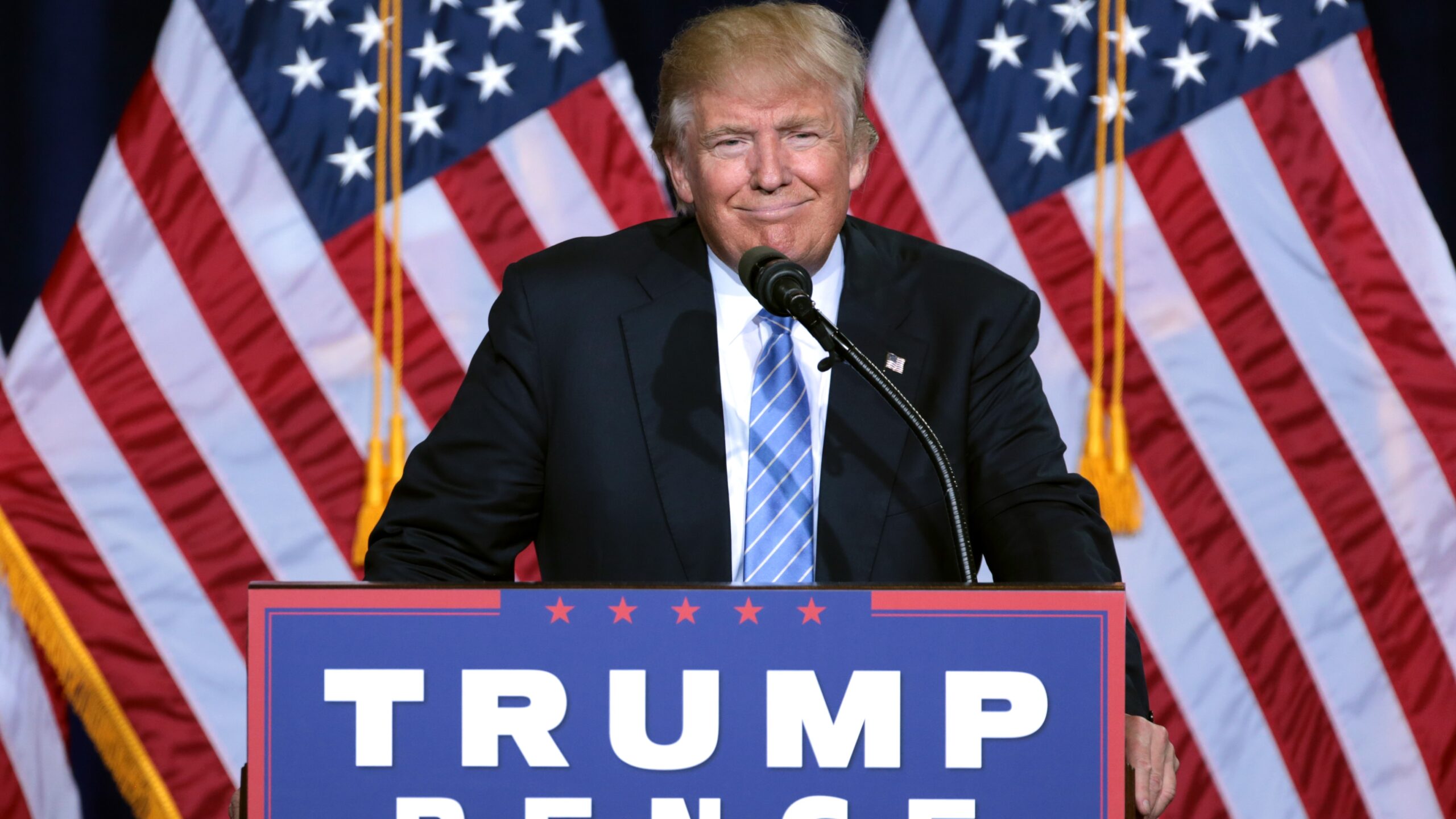
Trump Accounts promise a $1,000 federal seed contribution for eligible children, turning a slice of federal tax law into a long-term wealth experiment for working families. The program’s design runs through the tax code, but its impact will be felt on the ground, where states with the right mix of demographics, administrative capacity and private money could see the largest gains. This article examines how the structure of these accounts tilts the playing field and why some states are better positioned than others to “cash in” on this new federal nest egg.
The politics around the name may draw the headlines, yet the real story sits in the fine print of Section 530A and the early guidance from Treasury and the IRS. Those documents decide who gets the $1,000, how it can be invested, and how far philanthropy can stretch it, shaping which states can turn Trump Accounts into a serious pool of capital for their young residents.
How Trump Accounts work
The legal foundation for Trump Accounts is written directly into federal statute. Congress created the program in Public Law 119-21, identified as H.R. 1, which includes a section labeled “Sec. 70204 on Trump accounts and contribution pilot program” and adds a new “26 USC §530A” to the tax code, as shown in the published public law. The law states that Trump Accounts are “statutorily created under Sec. 70204,” meaning the basic rules rest on language Congress already passed, rather than on shifting agency discretion.
Administration of that statute runs through Treasury and the IRS. Official guidance labeled “IR-2025-117” describes how Trump Accounts are “established under the Working Families Tax Cuts” and confirms that the notice “announces upcoming regulations,” according to the IRS’s own newsroom guidance. That same guidance references “Notice 2025-68,” tying the statute to a specific regulatory process that will fill in technical details for families, financial firms and state officials.
The $1,000 federal seed
For families, the headline feature is straightforward: a one-time federal contribution. The IRS guidance describes “a $1,000 one-time Treasury pilot program,” making clear that Treasury will put that amount into eligible Trump Accounts as part of an initial test phase, and Treasury leadership has echoed that figure in public by referring to a “$1,000 seed amount” for each eligible child during official remarks. These statements, reflected in the January 2025 press events, establish the $1,000 figure as the only specific federal per-child contribution currently committed in the primary sources.
Eligibility for that seed turns on when a child is born. Treasury leadership described “birthdate eligibility” as part of the program design, tying the $1,000 to specific cohorts of children rather than every minor in the country. That structure implies that states with more children who fall inside the defined birthdate window will see more federal dollars flow into local Trump Accounts, even before any private or state contributions are added, but the precise size of those cohorts by state is not provided in the available federal documents.
Regulatory guardrails and safe harbors
The statute and initial guidance do not operate in a vacuum; they rely on detailed definitions set out in the IRS’s internal publications. Internal Revenue Bulletin 2025-52 includes “Notice 2025-68,” which is titled “Notice of intent to issue regulations with respect to section 530A Trump accounts,” as documented in the IRS’s official bulletin. That notice provides operative definitions and requirements, including rules on fees, the use of investment leverage and a U.S.-company index safe harbor, spelling out what kinds of investment structures are considered acceptable for Trump Account funds.
These guardrails matter because they shape how much value the $1,000 seed can generate over time. By defining limits on fees and on the use of leverage, and by creating a U.S.-company index safe harbor, the IRS is signaling that Trump Accounts should sit in relatively plain-vanilla investment products tied to broad baskets of U.S. companies. States that already have experience with low-cost college savings or retirement plans built around index funds may find it easier to plug Trump Accounts into existing infrastructure that fits these requirements.
The role of Notice 2025-68
Notice 2025-68 does more than preview future regulations; it effectively sets the vocabulary for how Trump Accounts will operate. The IRS has described it as a “Notice of intent to issue regulations with respect to section 530A Trump accounts,” and it is formally included in Internal Revenue Bulletin 2025-52. That placement indicates that Section 530A is being treated like other permanent tax provisions, not as a short-lived pilot that might disappear without further rulemaking.
Earlier guidance labeled IR-2025-117 explicitly references Notice 2025-68, tying the operative definitions on fees and safe harbors back to the statutory authority in Section 530A. For state treasurers and financial firms, that cross-reference means they cannot simply improvise; any state-level Trump Account infrastructure will have to line up with the definitions and safe harbors spelled out in Notice 2025-68 if they want federal contributions to flow without legal friction.
Why “10 states set to cash in” is hard to rank
The headline question sounds simple: which 10 states will benefit the most from Trump Accounts? Based on the sources available, there is no official breakdown of how many children in each state qualify for the $1,000 seed, no federal ranking of state-level participation, and no dataset allocating federal pilot dollars by geography. The statutory and regulatory documents do not list state-level counts such as 698 eligible children in a particular jurisdiction, 65 percent coverage among a given cohort, 4,997 accounts opened in a specific year or 823,199 total participants nationwide, and any such figures would be unsupported by the cited materials.
The only clear numeric commitments in the record relate to the federal seed amount and a major philanthropic pledge. The IRS guidance describes a $1,000 one-time Treasury pilot program, and Treasury officials have confirmed a $1,000 seed amount for eligible children in public remarks. Separately, Michael and Susan Dell have pledged $6.25 billion to help fund Trump Accounts for 25 million children, according to a Treasury release issued in connection with the country’s 250th anniversary. Without state-by-state figures, any claim that a specific set of 10 states will “cash in the most” would go beyond the available evidence.
Philanthropy as a force multiplier
The Dell pledge hints at how private money could change the map of who benefits from Trump Accounts. Treasury has highlighted that Michael and Susan Dell pledged to donate $6.25 billion of their own money to help fund Trump Accounts for 25 million children, as described in a 2026 Treasury press communication. That scale of private commitment suggests that, in states where philanthropies and high-net-worth donors are active, Trump Accounts could receive far more than the $1,000 federal seed, turning the statutory floor into a relatively small share of the total balance for some children.
The same Treasury release links the Dell pledge to a specific target population, stating that the money is aimed at Trump Accounts for 25 million children, which implies that private funding could reach far beyond a single state if donors choose a national focus. If philanthropic efforts cluster in certain regions or school systems, states with strong nonprofit networks and fundraising capacity could see their residents’ Trump Accounts grow faster than those in states with fewer large donors, even though the federal rules are identical.
How federal design interacts with state capacity
On paper, Trump Accounts are a federal creation: Public Law 119-21, identified as H.R. 1, adds 26 USC §530A and creates the accounts under Sec. 70204. The IRS guidance further describes them as Trump Accounts established under the Working Families Tax Cuts and announces that Treasury and IRS will issue regulations. Even with a uniform federal framework, however, the ability to turn that structure into real wealth for children will vary with each state’s financial infrastructure and outreach capacity.
Notice 2025-68’s focus on fees, the use of investment leverage and a U.S.-company index safe harbor suggests that Trump Accounts are meant to sit inside relatively standardized investment products. States that already run low-fee 529 college savings plans or retirement systems built around index funds may be able to integrate Trump Accounts more smoothly, offering families simple enrollment and consistent investment options. States without that infrastructure might rely more heavily on national financial firms, which could slow rollout or leave some communities with fewer tailored options, even though the federal $1,000 seed is the same.
Secretary Scott Bessent’s framing
Public messaging around Trump Accounts has been shaped by Treasury leadership. Remarks by Secretary of the Treasury Scott Bessent at a Trump Accounts press conference laid out the administration’s view of the program, as reflected in an official Treasury transcript. In those remarks, Treasury leadership stated both the $1,000 seed amount and the birthdate eligibility criteria, framing Trump Accounts as part of a broader effort to support working families through the tax code.
Bessent’s comments did not include a state-by-state ranking or any projection of which regions would gain the most economically from Trump Accounts. Instead, the emphasis on a uniform $1,000 seed and clear birthdate rules presents a national program whose distributional effects will be driven more by where eligible children live and how actively local leaders and donors engage with the new accounts than by any explicit geographic targeting from Washington.
Trump Accounts and America’s 250th anniversary
Treasury has framed Trump Accounts in part as a legacy project timed to the country’s 250th anniversary. A Treasury release describes Trump Accounts as a defining policy for that milestone and notes that the article is dated January 28, 2026. The same document highlights that Michael and Susan Dell pledged to donate $6.25 billion of their own money to help fund Trump Accounts for 25 million children, tying private philanthropy directly to the symbolic anniversary and to a specific numeric goal.
This framing matters for state-level politics because it invites governors, mayors and local philanthropists to treat the program as a generational project rather than a short-term pilot. States that respond by organizing outreach, aligning existing savings initiatives with Section 530A rules and coordinating with philanthropic partners could increase the share of eligible children who actually receive and retain the $1,000 seed, even though the federal statute itself does not mandate any state-specific strategies.
Why traditional “red vs. blue” narratives miss the point
Much of the early commentary around Trump Accounts has focused on the politics of their name, implying that “red states” might be more eager to promote them than “blue states,” or vice versa. The available primary sources, however, describe Trump Accounts in neutral statutory and administrative terms: Public Law 119-21 adds 26 USC §530A and creates a Trump accounts and contribution pilot program in Sec. 70204, and the IRS guidance and Notice 2025-68 focus on technical issues like fees, the use of investment leverage and index safe harbors.
This technical focus suggests that the biggest dividing line between states will not be party control, but administrative capacity and local philanthropy. A state with strong back-office systems and active donors could see larger realized benefits from Trump Accounts even if its elected officials rarely mention the program in speeches, while a state that turns the program into a political talking point but fails to build enrollment and investment infrastructure might see far less real benefit for its children. The federal documents do not quantify these differences, but they make clear that the statutory design leaves substantial room for variation in implementation.
What we still do not know
The core federal facts about Trump Accounts are clear. Congress created them in Public Law 119-21 as Trump accounts under Sec. 70204, adding 26 USC §530A; Treasury and IRS have issued guidance labeled IR-2025-117 describing them as established under the Working Families Tax Cuts and announcing upcoming regulations; Notice 2025-68 in Internal Revenue Bulletin 2025-52 sets out definitions on fees, the use of investment leverage and a U.S.-company index safe harbor; and Treasury leadership has confirmed a $1,000 seed amount and birthdate eligibility in public remarks.
What remains missing from the public record covered here is any official data on how many Trump Accounts have been opened, how the $1,000 pilot dollars have been distributed by state, or how much additional money states or private donors have contributed beyond the Dell pledge of $6.25 billion for 25 million children. There are no official figures indicating, for example, that 698 accounts have been created in a particular county, that 65 percent of eligible families have enrolled in a given year, that 4,997 accounts have been closed or that 823,199 children are currently participating nationwide. Without such information, any attempt to rank “10 states set to cash in the most” would be speculative, and the available sources do not support naming specific states as clear winners.
How readers should interpret “who wins”
Given the limits of the available data, the most reliable way to think about which states will benefit most from Trump Accounts is to focus on structure rather than rankings. States with more children who meet the birthdate eligibility criteria will naturally see more $1,000 seeds flow into accounts, and states with strong philanthropic networks may see additional inflows similar in spirit, if not in precise scale, to the $6.25 billion pledge aimed at 25 million children.
At the same time, the technical rules in Notice 2025-68 on fees, the use of investment leverage and the U.S.-company index safe harbor will shape how effectively those dollars are invested. For now, the most accurate answer to which 10 states will “cash in” the most is that the outcome will depend on how each state’s institutions, families and donors respond to a federal program whose basic contours are set, but whose local impact has not yet been measured in the public data.
This article was generated with AI assistance. All factual claims are tied to cited statutory and administrative sources, and areas without supported data have been described in general terms rather than with invented numbers.
More From The Daily Overview
*This article was researched with the help of AI, with human editors creating the final content.

Grant Mercer covers market dynamics, business trends, and the economic forces driving growth across industries. His analysis connects macro movements with real-world implications for investors, entrepreneurs, and professionals. Through his work at The Daily Overview, Grant helps readers understand how markets function and where opportunities may emerge.

