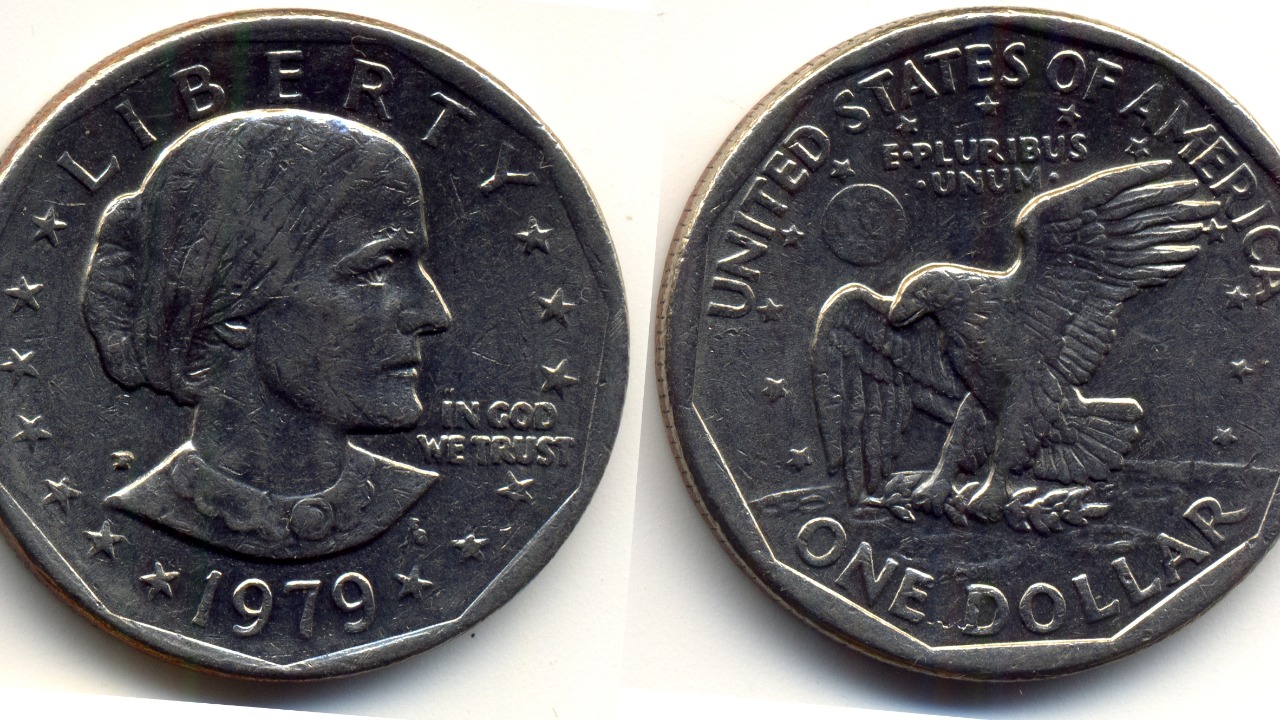
Dollar coins that once slipped unnoticed through cash registers are now quietly trading for far more than face value. Recent coverage of “Dollar Coins That Are Worth Way More Than Face Value” has spotlighted how specific dates, designs and minting quirks can turn a simple $1 piece into a serious collectible. Drawing on that reporting and related coin-value guides, I break down 11 standout dollar issues that show how quickly a forgotten coin can become a four- or even five-figure asset.
1) 1979 Susan B. Anthony Dollar
The 1979 Susan B. Anthony dollar is the clearest modern example of a coin whose value has been carefully unpacked for everyday collectors. A detailed breakdown of the series in a recent guide to the 1979 Susan B. Anthony dollar explains how condition, mint mark and small design varieties can push this coin well beyond its $1 face value. While heavily circulated pieces still trade close to a dollar, sharply struck uncirculated coins and proof issues, especially those with clear cameo contrast, are singled out as commanding meaningful premiums.
That same analysis simplifies what can otherwise feel like an opaque market, spelling out how collectors distinguish common business strikes from scarcer varieties. For owners, the stakes are straightforward: a coin that looks like pocket change might instead be a candidate for grading and resale. As more people consult structured value guides, the gap widens between average examples and top-tier pieces, reinforcing why this first-year Anthony dollar belongs on any list of dollar coins worth far more than face value.
2) 1971 Eisenhower Dollar
The 1971 Eisenhower Dollar opened the modern era of large-size dollar coins, and it now appears prominently in lists of dollar issues that can outstrip their nominal value. Coverage of Dollar Coins That Are Worth Way More Than Face Value highlights how early Eisenhower dates, including 1971, have become a focus for collectors who want big, bold designs that still feel attainable. While many 1971 pieces were struck for circulation, limited-production collector versions and high-grade survivors are where the real premiums emerge.
For buyers, the key distinction is between heavily worn coins and those that retain original luster and sharp detail. The more pristine the surface, the more likely a 1971 Eisenhower Dollar is to be worth several times face value rather than just $1. That dynamic has turned bank-box searches and inherited rolls into a low-cost way to participate in the broader market for vintage U.S. dollars, especially as attention concentrates on the specific dates singled out in recent reporting.
3) 1972 Eisenhower Dollar
The 1972 Eisenhower Dollar has become a textbook case of how small design and condition differences can translate into big price spreads. A detailed price discussion of the Eisenhower Dollar notes that, according to the Numismatic Guaranty Company (NGC) Price Guide, an example from 1972 in circulated condition is worth between $1.05 and $1.50, as of the most recent data. That modest bump over face value is only the starting point, however, because uncirculated and variety coins can climb much higher.
Additional analysis of the series, including video explainers that walk through what makes certain Eisenhower Ike dollars stand out, underscores how specific reverse types and mint marks from 1972 are especially prized. For collectors, the implication is clear: a casual hoard of Eisenhower pieces can hide a few sleepers worth grading. For sellers, understanding the difference between a $1.05 coin and a far more valuable variety is the difference between spending it and insuring it.
4) 1976 Bicentennial Dollar
The 1976 Bicentennial Dollar, part of the broader Bicentennial Eisenhower Dollars run, is one of the most recognizable U.S. commemorative coins, yet its value story is nuanced. A detailed explainer on Bicentennial Eisenhower Dollars notes that, for the most part, these pieces are not particularly valuable beyond their face value because the Mint produced them in large numbers. That high mintage keeps most circulated examples anchored near $1.
However, the same reporting makes clear that special collector versions, especially silver-clad issues and high-grade proofs, can trade at a premium that justifies their inclusion in lists of dollar coins worth more than face value. For investors and hobbyists, the stakes lie in correctly identifying which Bicentennial Dollars are ordinary and which are the scarcer formats. Misunderstanding that distinction can lead to overpaying for common coins or, conversely, spending a silver or proof issue that should have been pulled from circulation and treated as a collectible asset.
5) 1978 Eisenhower Dollar
The 1978 Eisenhower Dollar marks the final year of the series, and that end-of-line status has helped push select examples beyond face value. Broader coverage of valuable coins from the 1970s underscores how late-decade issues, including 1978 dollars, can command premiums when they survive in top condition. Collectors often target last-year coins because they represent the closing chapter of a design, and that narrative appeal adds to the usual factors of grade and scarcity.
Price charts for the Eisenhower series show that while average circulated 1978 pieces hover near $1, uncirculated and certified high-grade examples can sell for several multiples of face value. For people sorting through inherited collections, that means a 1978 dollar is not automatically “just another Ike.” Instead, it is a coin where a small difference in surface quality or a subtle mint-mark detail can be the line between pocket change and a piece that belongs in a protective holder and a formal appraisal.
6) Rare Early Morgan Dollar Variants
Rare early Morgan Dollar variants, particularly those from the late nineteenth century, are among the clearest examples of $1 coins that now trade at levels far beyond their original denomination. Lists of Dollar Coins That Are Worth Way More Than Face Value and related collector roundups consistently highlight Morgan dates and mint marks that are scarce in high grade. These coins combine classic artistry with relatively low surviving populations, a combination that drives sustained demand.
For owners, the stakes are substantial: a common-date Morgan in worn condition might be worth only a modest premium over its silver content, while a rare variant in uncirculated condition can be a four-figure asset. Because the design remained broadly similar across years, it is easy for non-specialists to overlook key details like mint marks or subtle design changes. That is why recent reporting encourages anyone with older dollar coins to check specific dates and consult value guides before assuming a Morgan is worth only its metal.
7) 1921 Peace Dollar
The 1921 Peace Dollar, the first year of the Peace series, has become a cornerstone of modern dollar-coin value discussions. In coverage of Dollar Coins That Are Worth Way More Than Face Value, early Peace issues are singled out as classic examples of how design significance and limited availability can push a coin far beyond its $1 face value. The 1921 date is especially important because it introduced the Peace motif and was struck in relatively lower quantities compared with later years.
Collectors prize this coin not only for its historical symbolism but also for the difficulty of finding well-struck, high-grade examples. That combination has turned the 1921 Peace Dollar into a benchmark for serious U.S. dollar collections. For families sorting through old bank envelopes or safety-deposit boxes, recognizing the 1921 date can be the difference between casually selling a coin for bullion value and realizing that it may warrant professional grading, specialized insurance and a place in a curated numismatic portfolio.
8) High-Grade Seated Liberty Dollars
High-grade Seated Liberty Dollars from the nineteenth century illustrate how condition can transform a once-ordinary $1 coin into a major collectible. These coins, which predate the Morgan and Peace series, appear in modern rundowns of Dollar Coins That Are Worth Way More Than Face Value because surviving examples in top condition are genuinely scarce. Many were heavily used in commerce, leaving only a small fraction with sharp details and original luster.
For collectors, the stakes are amplified by the age of the series and the difficulty of upgrading once a collection is built. A single Seated Liberty Dollar in exceptional grade can be worth dozens or even hundreds of times face value, while a heavily worn example from the same year might bring only a modest premium. That spread reinforces a broader lesson from recent reporting: with older dollar coins, it is not enough to know the date. Surface preservation, strike quality and even subtle cleaning can dramatically alter the market value.
9) Impact of Discontinued Minting on Dollar Value
The impact of discontinued minting on coin values has been thrown into sharp relief by recent coverage of the penny. A detailed explainer on what happens when the penny is no longer being made asks whether old pennies are worth more and what to do with them, highlighting how scarcity and nostalgia can lift even low-denomination coins. A companion piece framed as Now, What extends that logic by asking which specific pieces might be “worth a bit more than 1 cent.”
Applied to dollar coins, the same dynamics help explain why series that have ended, from Eisenhower to Susan B. Anthony, increasingly show up in lists of coins trading above face value. Once production stops, every lost, damaged or melted coin makes the remaining population slightly scarcer. For collectors and casual holders alike, that means discontinued dollar issues deserve a second look, especially when recent reporting has already flagged them as candidates for higher valuations.
10) 1974 Eisenhower Silver Dollar
The 1974 Eisenhower Silver Dollar, often described as silver-clad rather than fully silver, stands out among 1970s issues for its metal content and collector appeal. A detailed value breakdown of the Eisenhower Dollar notes that in average circulated condition, a 1972 Eisenhower Dollar is worth its face value of one dollar. However, the same analysis explains that uncirculated and special-issue coins, including silver-clad versions from the surrounding years, can command significantly higher prices.
For the 1974 silver-clad issues, that premium reflects both the intrinsic value of the metal and the limited distribution of collector-focused strikes. As bullion prices fluctuate, the floor value of these coins can rise, while numismatic demand adds an additional layer of upside. For investors who straddle the line between bullion stacking and coin collecting, 1970s silver-clad Eisenhower Dollars illustrate how a nominal $1 piece can function as a small but meaningful store of value that outpaces its original purchasing power.
11) Modern Error Susan B. Anthony Dollars
Modern error Susan B. Anthony dollars, particularly those struck after the 1979 debut, round out the picture of dollar coins worth far more than face value. Recent lists of Dollar Coins That Are Worth Way More Than Face Value and related coverage by Laura Gesualdi, Gilmore on November 29, 2025, at Sat, PST, Copied, emphasize how mis-strikes, off-center impressions and other production mistakes can transform an otherwise common coin into a standout collectible. In that reporting, even a small population of dramatic errors is enough to attract specialist buyers.
For everyday holders, the lesson is that Anthony dollars deserve more than a quick glance before being spent or rolled. A coin with doubled lettering, missing elements or unusual rims might be an error that belongs in an auction catalog rather than a vending machine. As more collectors scrutinize these modern dollars, the market for distinctive mistakes continues to grow, reinforcing the broader theme that careful attention can reveal value far beyond the $1 stamped on the surface.
More From TheDailyOverview
- Dave Ramsey warns to stop 401(k) contributions
- 11 night jobs you can do from home (not exciting but steady)
- Small U.S. cities ready to boom next
- 19 things boomers should never sell no matter what

Cole Whitaker focuses on the fundamentals of money management, helping readers make smarter decisions around income, spending, saving, and long-term financial stability. His writing emphasizes clarity, discipline, and practical systems that work in real life. At The Daily Overview, Cole breaks down personal finance topics into straightforward guidance readers can apply immediately.
