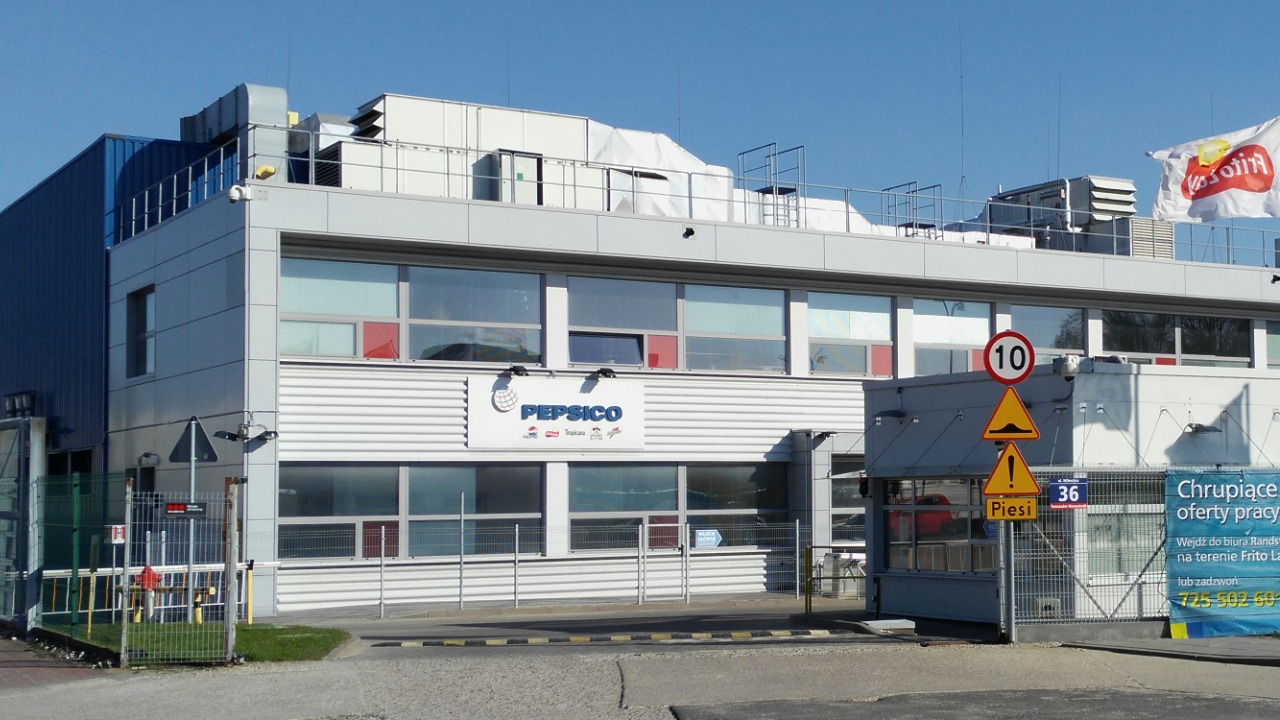
PepsiCo has shuttered its Frito-Lay plant in Orlando, Florida, a facility that operated for 60 years before closing on November 18, 2025. The closure results in layoffs for workers at the site, marking the end of a legendary Pepsi-owned operation in the US city and underscoring how shifting manufacturing strategies are reshaping long-standing industrial anchors.
Plant’s Historical Significance
The Frito-Lay plant in Orlando was established six decades ago as a cornerstone of PepsiCo’s snack production network, evolving into a key PepsiCo production site for Frito-Lay products over its 60-year lifespan. Over that period, the facility became closely identified with the city’s industrial base, serving as a steady employer and a visible symbol of the company’s national snack brands in central Florida. Its long run meant that multiple generations of local families worked on the same production lines, and the plant’s continuity helped stabilize household incomes through economic cycles that hit other sectors of Orlando’s tourism-driven economy much harder.
Local officials and business leaders frequently pointed to the Orlando Frito-Lay operation as proof that large-scale food manufacturing could coexist with the region’s service and hospitality sectors, and the plant’s longevity gave it a reputation as a “legendary” Pepsi-owned facility in the city. Over the decades, the site expanded its capabilities to keep pace with consumer demand for packaged snacks, adding new product lines and modernizing equipment to support a broader range of Frito-Lay offerings. Each expansion or upgrade reinforced its role as a long-term anchor employer, and the plant’s consistent presence helped attract related logistics, packaging, and maintenance businesses that relied on its steady flow of production work.
Announcement of the Closure
The end of that 60-year run arrived when PepsiCo confirmed that the Orlando Frito-Lay plant would close on November 18, 2025, with the company’s official announcement serving as the trigger for the plant’s shutdown. According to reporting on the “legendary Pepsi-owned facility” that has now vanished from the city, the company’s decision marked a definitive break from years of speculation and periodic rumors about the site’s long-term future. Once the closure was announced, operations at the plant halted, and PepsiCo began shifting production to other facilities in its network, a move that effectively removed Orlando from the company’s core manufacturing map for Frito-Lay products.
In the immediate aftermath of the announcement, PepsiCo outlined transition plans for ongoing production, indicating that snack output previously handled in Orlando would be absorbed by other plants that the company considers more efficient or better aligned with its current logistics strategy. The confirmation that the facility was closing after six decades carried particular weight because earlier chatter about potential downsizing had never materialized into a full shutdown. By formally declaring the end of operations at the Orlando site, PepsiCo signaled that this was not a temporary pause or restructuring but a permanent exit from a plant that had been part of its manufacturing footprint for 60 years, a shift that underscores how even long-established facilities can be vulnerable when corporate strategies change.
Impact on Workforce
The closure of the Orlando Frito-Lay plant directly translates into layoffs for the workers who staffed the facility, with the shutdown eliminating the jobs that had sustained many families over multiple generations. Reporting on the plant’s final days emphasizes that the decision to close the 60-year-old Florida facility is not a simple operational adjustment but a human disruption that affects employees who built their careers around the stability of a PepsiCo manufacturing job. Each position lost at the plant represents a worker who must now navigate a tight labor market, often with specialized skills tied to snack production lines, packaging systems, and quality control processes that may not transfer easily to other local employers.
PepsiCo has indicated that affected Frito-Lay workers in Orlando will receive severance or support packages, although the specific terms and duration of that assistance are tied to internal company policies and individual employment histories. Those measures can soften the immediate financial blow, but they do not fully replace the long-term security that many employees associated with a job at a major food manufacturer. Union representatives and worker advocates have responded by highlighting the broader stakes of the closure, arguing that the loss of these positions reduces the number of stable, benefits-eligible manufacturing jobs in the region and increases pressure on public workforce programs that will now be tasked with helping laid-off employees retrain or relocate. For many workers, the plant’s final day is not only the end of a job but the end of a workplace community that had formed over decades of shared shifts and collective experience.
Reasons Behind the Decision
PepsiCo has framed the decision to close the 60-year-old Florida facility as part of a broader effort to align its manufacturing footprint with current efficiency standards and market dynamics. In coverage of the Orlando shutdown, the company’s rationale centers on the need to optimize production across its network, which can involve consolidating operations into newer plants that offer lower per-unit costs, more advanced automation, or better access to key transportation corridors. As consumer preferences shift and retailers demand faster, more flexible deliveries, older facilities that were designed for a different era of distribution can become less competitive within a large corporate portfolio.
The closure of the Orlando plant fits into a pattern of plant adjustments that PepsiCo has undertaken in other regions, where the company has rebalanced its mix of manufacturing sites to support updated supply chain strategies. By moving production out of Orlando and into other facilities, PepsiCo is signaling that its 2025 shutdown is driven by time-sensitive changes in how it sources ingredients, manages inventory, and serves national retailers. The company’s explanation underscores a central tension in modern manufacturing: investments in efficiency and network optimization can improve overall performance for shareholders and customers, yet they often come at the cost of long-standing local operations that no longer match the company’s preferred model. In that sense, the Orlando closure is both a specific corporate decision and a case study in how global brands recalibrate their physical footprints in response to evolving market pressures.
Community and Economic Fallout
The disappearance of the Pepsi-owned plant from Orlando’s industrial landscape has immediate and visible consequences for the local economy, which now loses a long-standing source of manufacturing wages, tax revenue, and secondary business activity. For six decades, the Frito-Lay facility supported not only its direct workforce but also a network of suppliers, contractors, and service providers that depended on the plant’s steady demand for everything from packaging materials to equipment maintenance. With the plant now closed, those businesses must either replace that lost volume or absorb a hit to their own revenue, a ripple effect that can be especially challenging for smaller firms that built their operations around the predictable needs of a large, stable client.
City officials and residents have reacted to the facility’s vanishing after 60 years with a mix of disappointment and concern about what the closure signals for Orlando’s industrial base. The plant’s long tenure had made it a familiar landmark and a symbol of blue-collar opportunity in a city better known for theme parks and tourism, so its absence raises questions about how diversified the local economy truly is. Economic development leaders now face the task of determining how the site will be redeveloped, whether as another industrial operation, a logistics hub, or a completely different use such as mixed-use commercial space. Reporting on the “legendary Pepsi-owned facility” that has now closed notes that the stakes extend beyond a single property, since the outcome will help shape perceptions of Orlando’s ability to attract and retain large-scale employers in an era when companies like PepsiCo are reconfiguring their manufacturing networks to prioritize efficiency, automation, and supply chain agility. As the community absorbs the shock of the layoffs and the loss of a 60-year institution, the debate over the plant’s legacy and the city’s economic future is likely to intensify, with residents, workers, and officials all weighing in on what should replace the role the Frito-Lay facility once played.
Coverage of the shutdown, including the report titled “Legendary Pepsi-owned facility vanishes from US city after 60 years,” underscores how the closure crystallizes broader anxieties about the stability of long-established industrial employers. The Orlando plant’s fate illustrates that even facilities with deep community roots and decades of continuous operation can be vulnerable when corporate strategies shift toward newer, more centralized production hubs. For local stakeholders, the challenge now is to convert a moment of loss into an opportunity to rethink how manufacturing, logistics, and other sectors can coexist in a city that has long been defined by tourism, while ensuring that workers displaced by the Frito-Lay shutdown are not left behind in the transition.
More From TheDailyOverview
- Dave Ramsey warns to stop 401(k) contributions
- 11 night jobs you can do from home (not exciting but steady)
- Small U.S. cities ready to boom next
- 19 things boomers should never sell no matter what

Grant Mercer covers market dynamics, business trends, and the economic forces driving growth across industries. His analysis connects macro movements with real-world implications for investors, entrepreneurs, and professionals. Through his work at The Daily Overview, Grant helps readers understand how markets function and where opportunities may emerge.