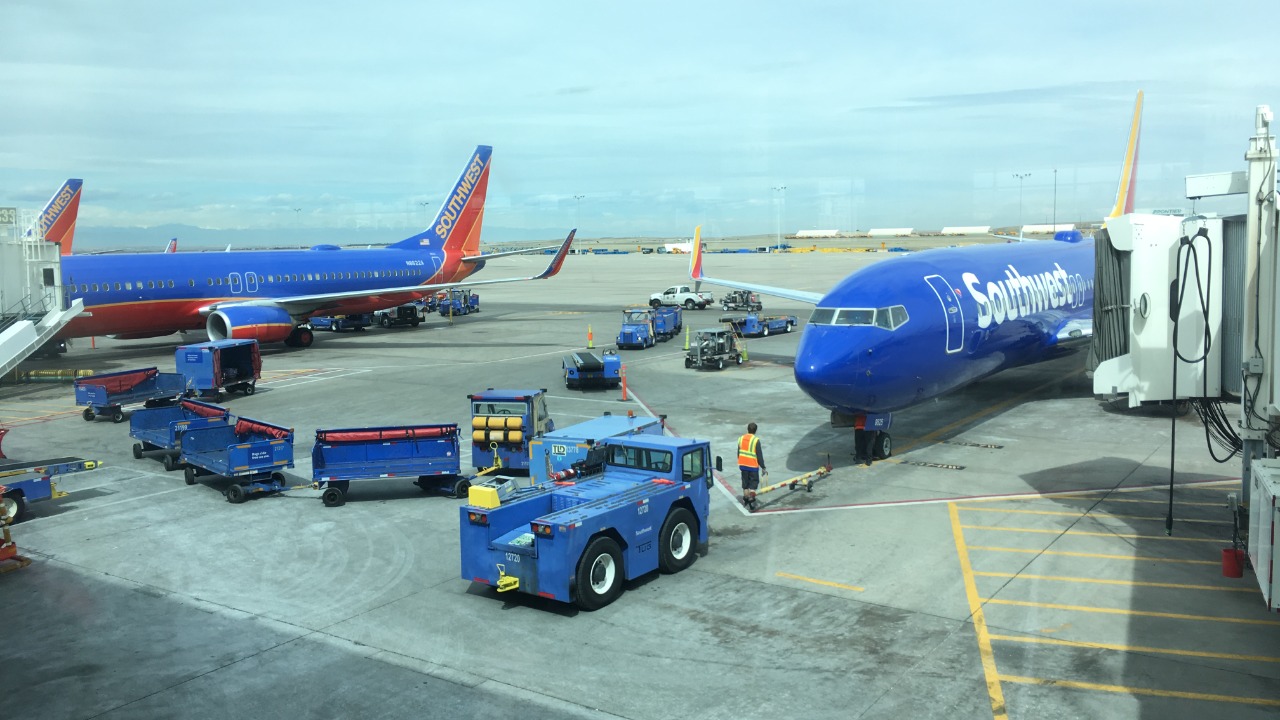
The U.S. Department of Transportation has wiped away the final $11 million slice of a record penalty tied to Southwest Airlines’ 2022 holiday meltdown, turning what was billed as a tough enforcement action into something closer to a performance bonus. The move raises a sharper question than any press release: when regulators erase a cash punishment, are they rewarding good behavior or signaling that even the worst disruptions carry limited financial risk for big carriers?
By forgiving the last piece of the fine, the government is betting that technology upgrades and new passenger protections will matter more than a check to the Treasury. I see a different tension emerging, between a system that wants to incentivize better operations and passengers who remember ruined trips and wonder why the airline at the center of it all is effectively getting a discount.
The meltdown that broke Southwest’s holiday schedule
The controversy over the erased penalty starts with the scale of the breakdown that triggered it. During a winter storm in December 2022, Southwest’s network did not just suffer weather delays, it buckled under the strain, with operations in Denver and Chicago and other hubs effectively paralyzed. The carrier’s point-to-point route structure, which usually gives it flexibility, instead amplified the chaos as crews and aircraft ended up scattered and out of position.
That collapse cascaded into thousands of cancellations and stranded travelers across the country, turning what began as a weather event into a systemic failure of scheduling software and crew management. Regulators later concluded that the disruption was not just about snow and ice, but about an airline that had underinvested in the tools needed to recover from a shock, a judgment that set the stage for the record enforcement action that followed.
How the record penalty was structured
When the Department of Transportation first announced its response, officials framed it as a landmark case that would reset expectations for how airlines treat passengers during mass disruptions. The total package was described as the largest penalty the agency had ever imposed on a carrier, but only a fraction of that sum was destined for the government itself. Most of the fine required Southwest to upgrade its technology and procedures to improve reliability and to compensate passengers for delays and cancellations caused by the airline, a structure that blended punishment with mandated investment in better service.
Within that framework, the cash component was relatively modest. The government said that $35 million would go directly to the Treasury, while the rest of the headline figure would be satisfied through refunds, reimbursements and system improvements. Most of the money went toward compensation for travelers, but Southwest agreed to pay $35 m to the Treasury as a straightforward civil penalty, with a final $11 million installment originally due at the end of January 2026.
DOT’s decision to waive the final $11 million
The twist came when the Department of Transportation quietly decided that Southwest would not have to write that last check. In a move described in agency documents as a recognition of the airline’s progress, regulators said they would waive the remaining $11 million if the company met certain performance benchmarks. The decision effectively converted the tail end of the punishment into a conditional reward, contingent on the carrier delivering more reliable operations and better treatment of passengers.
According to reporting from Dallas, the agency’s enforcement office concluded that the airline had already poured substantial resources into modernizing its systems and that the public would be better served by continued investment than by another transfer to the government. In that account, the department’s action is framed as DOT Waives Final US $11M Penalty of Southwest 2022 Meltdown, with officials pointing to gains linked to a systems overhaul as justification for letting the last tranche go.
Why regulators say Southwest earned a break
From the government’s perspective, the waiver is not a favor so much as a policy experiment. Officials have argued that if an airline spends heavily to fix the root causes of a meltdown, regulators should acknowledge that effort rather than insist on every dollar of a previously announced fine. In this case, the Department of Transportation has highlighted a package of technology upgrades, new customer service commitments and operational reforms that it says will reduce the risk of another mass cancellation event.
Agency staff have also pointed to the scale of Southwest’s broader spending as evidence that the company is taking the crisis seriously. Internal estimates cited by the government say the carrier has committed roughly $1 billion in infrastructure upgrades, a figure that Department of Transportation officials referenced when explaining why Southwest Airlines could avoid the final $11 million fine tied to the 2022 holiday meltdown. In that telling, the waiver is a way to reinforce a message: invest in resilience and the regulator will meet you partway.
Passenger anger and the limits of compensation
For travelers who spent nights on airport floors or watched family gatherings evaporate, the idea that the airline is now being spared part of its punishment is a hard sell. Nevertheless, no reason was enough to atone for the ruined holiday plans of the millions of passengers who saw flights canceled, bags lost and itineraries shredded during the buzzing holiday season. Many of those customers did eventually receive refunds, vouchers or reimbursements for hotels and rental cars, but money after the fact rarely erases the stress of a missed wedding or a once-a-year reunion.
Southwest paid out substantial sums in the aftermath, both under its own policies and under pressure from regulators, and the company has emphasized that it went beyond legal requirements in some cases. Yet the emotional ledger is different from the financial one. As one critical account of the decision to waive the final penalty put it, Southwest being let off the hook with a reduced cash penalty does little to change how those passengers remember the chaos, and it risks reinforcing a perception that large airlines can weather even historic breakdowns with limited long term consequences.
From Biden-era enforcement to Trump-era leniency
The politics around the waiver are as important as the policy details. The original enforcement action was crafted under President Joe Biden’s administration, which had made a point of talking tough on airline consumer protections and highlighting record fines as proof. The decision to erase the final $11 million, by contrast, arrived under President Donald Trump, whose administration has generally signaled a more business friendly approach to regulation and has been less inclined to celebrate large corporate penalties as a policy win.
That shift in tone matters because it shapes how both airlines and passengers interpret the government’s posture. When a Biden-era fine is partially unwound by a Trump administration, critics see a familiar pattern of deregulatory instincts reasserting themselves, while supporters argue that the change reflects a more pragmatic focus on operational improvements rather than symbolic checks to the Treasury. The Department of Transportation, caught between those narratives, has tried to present the waiver as a technocratic adjustment rather than a political reversal, but the timing and framing make it hard to separate the two.
What the waiver signals to the airline industry
Inside the industry, the message is more nuanced than a simple green light to cut corners. By tying the waiver to specific performance metrics and documented investments, regulators are effectively telling carriers that the path out of a crisis runs through better operations, not just better public relations. If an airline can show that it has modernized its crew scheduling, upgraded its communications systems and strengthened its customer care policies, it may find a more receptive audience in Washington when asking for flexibility on penalties.
At the same time, the structure of the Southwest case could encourage other airlines to push for similar treatment after future meltdowns. If a carrier knows that a portion of any headline fine might later be forgiven in exchange for investments it would likely have made anyway, the deterrent effect of those penalties weakens. The Department of Transportation has tried to counter that concern by emphasizing that this waiver is tied to specific, verifiable improvements, but the precedent is now on the books, and executives across the sector will be watching how it plays out.
How Southwest is trying to rebuild trust
For Southwest itself, the regulatory drama is only one piece of a larger effort to repair its reputation. The airline has long marketed itself as a friendly, no nonsense carrier with free checked bags and a folksy culture, and the 2022 meltdown cut directly against that brand. In response, executives have rolled out a slate of changes, from new crew scheduling software to expanded call center capacity, and have tried to reassure customers that the worst of the old system is gone.
The company has also leaned into public messaging about its investments, highlighting the scale of its infrastructure spending and the operational metrics it says are improving. In that context, the government’s decision to waive the final $11 million becomes part of the narrative: a sign that regulators see progress and are willing to acknowledge it. Whether passengers accept that story will depend less on press releases and more on what happens the next time a major storm hits the network and the airline’s revamped systems are put to the test.
A new template for “carrot and stick” enforcement
Stepping back, the Southwest case hints at a broader shift in how transportation regulators think about penalties. Instead of treating fines as purely punitive, the Department of Transportation is experimenting with a hybrid model that uses the threat of cash payments to push airlines toward specific operational goals. In practice, that looks like a large headline figure, a relatively small direct payment to the government and a much larger bucket of required spending on technology, staffing and customer care, with the possibility of partial forgiveness if the carrier delivers measurable improvements.
Some consumer advocates worry that this approach risks blurring the line between enforcement and partnership, especially if the details of performance benchmarks and waivers are not fully transparent. Others see potential in a model that turns penalties into leverage for long term change rather than one off punishments. What is clear is that the Southwest decision will be studied closely, both by airlines looking to understand the new rules of the game and by passengers who want to know whether the next meltdown will carry consequences that feel commensurate with the disruption it causes.
Will passengers actually see better service?
The ultimate test of the erased $11 million is not how it looks on a balance sheet, but whether travelers notice a difference the next time they fly. If the investments that helped earn the waiver translate into fewer cancellations, faster rebookings and more responsive customer service during irregular operations, the government’s bet on incentives over strict punishment may look justified. If, instead, the industry slides back into familiar patterns of overstuffed schedules and brittle operations, the Southwest case will stand as a cautionary tale about the limits of regulatory leniency.
For now, the Department of Transportation is signaling that it wants to be seen as both tough and flexible, willing to impose record penalties but also to adjust them when airlines demonstrate real change. The choice to let the final $11 million go, highlighted in coverage that noted how Southwest Airlines saw its remaining fine waived by DOT, captures that balancing act in a single, controversial number. Whether that number comes to represent a smart use of regulatory leverage or a missed opportunity to hold a major carrier fully accountable will depend on what happens in the skies, and in the terminals, in the busy holiday seasons still to come.
The risk of mixed messages from DOT
There is one more complication in how this story lands with the public. Different accounts of the case have emphasized different aspects of the enforcement, with some focusing on the waived cash payment and others on the scale of mandated investments and compensation. One report framed the situation by noting that Most of the fine required Southwest to upgrade its technology and procedures and to compensate passengers, while another highlighted the symbolic weight of the government stepping back from collecting the final $11 million. Those differing emphases can leave travelers unsure whether to see the outcome as a win for consumers or for the airline.
For a regulator that wants to deter future misconduct, that ambiguity is a problem. If passengers come away thinking that even a historic meltdown ends with a relatively small check and a partial waiver, trust in the enforcement regime erodes. If airlines interpret the same case as proof that serious failures will trigger intrusive oversight and costly mandates, the deterrent effect may still hold. The Department of Transportation, and the Department of Transportation leadership that signed off on the waiver, will have to navigate that perception gap carefully if they want future penalties to carry both real bite and credible incentives for change.
More From TheDailyOverview
- Tennessee loses $2.6B megafactory and faces major layoffs
- Retired But Want To Work? Try These 18 Jobs for Seniors That Pay Weekly
- What to do with your pennies after the U.S. stops minting them
- Home Depot CEO warns of a troubling customer trend in stores

Julian Harrow specializes in taxation, IRS rules, and compliance strategy. His work helps readers navigate complex tax codes, deadlines, and reporting requirements while identifying opportunities for efficiency and risk reduction. At The Daily Overview, Julian breaks down tax-related topics with precision and clarity, making a traditionally dense subject easier to understand.


