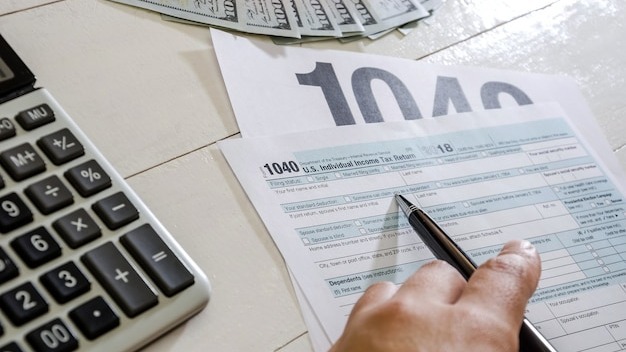
The Internal Revenue Service warned taxpayers about “ghost” tax return preparers in its 2025 Dirty Dozen list of tax scams, saying these paid preparers may lure filers with promises of inflated refunds, then disappear without signing the return or leaving traceable identification. The scheme shifts full legal liability onto the taxpayer while the preparer pockets a fee and walks away. During tax-filing season, the warning carries real stakes for anyone shopping for low-cost tax help in storefronts, community centers, or online ads.
How the Ghost Preparer Scam Works
A ghost preparer is someone who charges to prepare a tax return but refuses to sign it or include a Preparer Tax Identification Number, known as a PTIN. The IRS says paid preparers generally must obtain a PTIN. By skipping that step, the preparer becomes effectively invisible to the IRS, leaving no paper trail that connects them to the filing. The taxpayer, meanwhile, is the only name on the return and bears sole responsibility for whatever it claims, even if they never saw the numbers that were entered.
The pitch typically follows a pattern: the preparer promises a big refund, then fabricates income, credits, or deductions to inflate the amount. Fees are often calculated as a percentage of the refund rather than a flat rate, giving the preparer a direct financial incentive to exaggerate. Cash-only payment demands are another hallmark, because they eliminate a transaction record and make it harder to trace the person later. These preparers often advertise through flyers at community centers, houses of worship, and neighborhood bulletin boards, targeting areas where residents may have limited access to credentialed professionals or may not be comfortable navigating online tax-preparer directories.
Real Consequences for Taxpayers and Preparers
Taxpayers who unknowingly file a fraudulent return typically discover the problem only when an IRS letter or audit arrives months later, according to the Taxpayer Advocate Service. At that point, the ghost preparer is often long gone, and the filer is left to explain fabricated deductions or credits they never authorized and may not even understand. The fallout can include repayment of the inflated refund, accuracy-related penalties, and interest, all charged to the taxpayer rather than the person who prepared the return. In some cases, a pattern of false information can trigger questions about potential civil fraud, adding stress and complexity to an already confusing situation.
Enforcement does catch up with some ghost preparers. A Union City, California, operator was sentenced to prison for fraudulently seeking over $4 million in COVID-19 employment tax credits through a ghost preparation business that filed returns in other people’s names. That case illustrates the scale these schemes can reach. But the IRS penalty framework under IRC 6695(b) and 6695(c) targets preparers who fail to sign returns or furnish identifying numbers, and the process described in the Internal Revenue Manual depends on being able to identify and locate the preparer. Ghost operators, by design, make that difficult by using disposable phone numbers, temporary locations, and word-of-mouth referrals instead of traceable business structures.
Why the IRS Directory Has Limits
One common piece of advice is to check a preparer against the IRS information on tax return preparer credentials and qualifications and the IRS Directory of Federal Tax Return Preparers with Credentials and Select Qualifications. That directory lists attorneys, CPAs, enrolled agents, and Annual Filing Season Program participants who have met specific education and licensing standards. It is a useful starting point because it allows taxpayers to confirm that a preparer holds recognized credentials and is in good standing with the IRS. For people who can search by name, ZIP code, or credential type, the tool can quickly narrow the field to established professionals.
But the directory has a blind spot that ghost preparers exploit: a legitimate paid preparer who holds only a PTIN, without additional credentials or AFSP participation, will not appear in the directory at all. That gap means a clean search result does not confirm fraud, and absence from the list does not prove it. Ghost preparers thrive in this ambiguity, especially in communities where tax help is sought through word of mouth rather than online credential checks, or where internet access is limited. The IRS recommends checking a preparer’s history with consumer watchdogs and asking whether they belong to a professional organization, but those steps assume the preparer is operating under a real, consistent business name in the first place. For someone advertising with a handwritten sign at a local church or working out of a temporary booth in a shopping center, those verification tools simply do not apply in the same way.
Warning Signs and How to Report Fraud
The IRS’s 2025 Dirty Dozen notice distills the red flags into a short checklist: fees based on refund size rather than the complexity of the return, a preparer who will not sign the finished product, no PTIN displayed anywhere on the paperwork, and insistence on cash payment without a receipt. Any one of those signals should prompt a taxpayer to walk away before sharing Social Security numbers or income documents. A legitimate preparer will always sign the return, provide a copy, and include their PTIN on every filing, whether it is submitted electronically or on paper. They will also be willing to explain how the refund was calculated and answer questions about any credits or deductions that appear on the return.
Taxpayers who suspect they have already been victimized can submit a complaint about a tax return preparer through the IRS online, by fax, or by mail. The formal mechanism is Form 14157, the Return Preparer Complaint form, which includes specific checkboxes for ghost-style misconduct such as failing to sign, omitting a PTIN, or promising to file a return and never doing so. The IRS also provides a separate online version of Form 14157 that guides filers through each section and allows them to attach supporting documents like copies of returns, receipts, or text messages with the preparer. The Taxpayer Advocate Service recommends filing a police report when appropriate and keeping detailed notes of all interactions, which can help strengthen the case if the IRS or another agency pursues civil or criminal action.
More From The Daily Overview
*This article was researched with the help of AI, with human editors creating the final content.

Julian Harrow specializes in taxation, IRS rules, and compliance strategy. His work helps readers navigate complex tax codes, deadlines, and reporting requirements while identifying opportunities for efficiency and risk reduction. At The Daily Overview, Julian breaks down tax-related topics with precision and clarity, making a traditionally dense subject easier to understand.