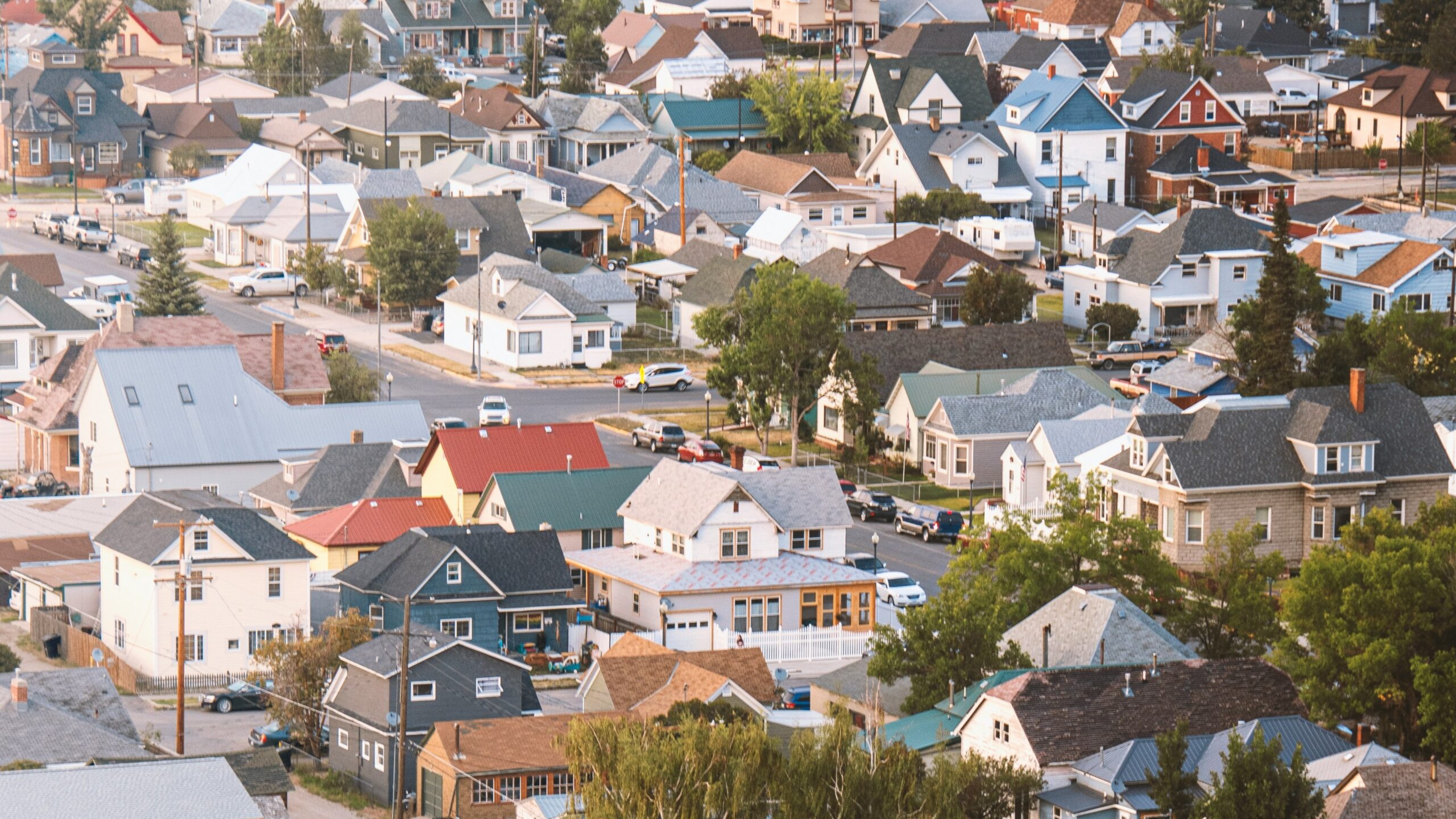
Four small American towns are drawing fresh attention from budget-conscious remote workers who want reliable internet, low housing costs, and enough local character to make a move worthwhile. Lafayette, Louisiana; Pella, Iowa; Chattanooga, Tennessee; and Fairlawn, Ohio each combine affordable rents with the kind of broadband infrastructure that larger cities take for granted. As popular remote-work hubs like Austin and Boise push living costs higher, these lesser-known alternatives offer a practical path for workers whose paychecks no longer depend on proximity to an office.
Why Smaller Towns Are Gaining Ground
The shift toward working from home has been documented at the federal level, with the Bureau of Labor Statistics’ time-use tables showing that a meaningful share of employed Americans now work from home on a typical day. Those 2024 averages break out remote work by factors such as education and full- or part-time status, underscoring that location flexibility is no longer limited to a narrow slice of tech workers. For many households, that flexibility makes it possible to consider places that would once have been dismissed as “too small” or “too remote” for a professional career.
At the same time, the geography of remote work has been skewed by attention. Lists of “best places” often focus on mid-size metros that already attract newcomers. A widely cited ranking of affordable hubs highlights cities investing heavily in connectivity and amenities, but rising demand in those markets can quickly push up rents. Smaller towns with similar infrastructure can fly under the radar longer, keeping costs down for residents who are willing to do their own research instead of following the latest listicle.
Lafayette, Louisiana: Cajun Culture Meets Low Rents
Lafayette stands out as one of four towns singled out for combining tech readiness with relatively inexpensive housing. Located in south-central Louisiana, it offers the amenities of a small city, including regional healthcare, a university, and a lively restaurant scene, without coastal price tags. Prospective renters can ground-test the anecdotes by looking at HUD’s Fair Market Rents, which estimate 40th-percentile rents for local housing markets using county-level benchmarks. Because those figures are built from American Community Survey data, local surveys, and federal metropolitan definitions, they provide a more consistent baseline than the ever-shifting averages on private listing sites.
Connectivity is another of Lafayette’s selling points. Louisiana’s broadband buildout is reflected in the FCC’s National Broadband Map, which relies on provider-submitted fixed availability records to show which technologies and speeds reach specific addresses. For remote workers, that level of detail matters more than statewide averages; a neighborhood with fiber and cable options can feel very different from one that depends on a single DSL provider. Once basic needs are met, Lafayette’s Cajun food, live zydeco, and university-driven arts scene add the kind of local flavor that can make a long-term move feel like an upgrade rather than a compromise.
Pella, Iowa: A Micropolitan Sweet Spot
Pella, Iowa, offers a contrasting model: a compact town with a strong sense of place and a regional economic footprint. Because its population falls below the 65,000 threshold used for the Census Bureau’s 1-year American Community Survey estimates, it does not appear in the more current single-year tables that many analysts rely on. Instead, data users must consult the 5-year ACS products, which smooth conditions over a longer period and can lag recent changes. The Census Bureau’s own release notes emphasize these coverage rules, which helps explain why places like Pella are often missing from quick national roundups of “best small cities.”
Despite that statistical invisibility, Pella shows up clearly in federal geography and commuting data. The USDA’s Rural-Urban Commuting Area system, updated in 2025 and built from 2017 to 2021 commuting flows, classifies tracts into metro, micropolitan, small town, and rural categories to capture how people actually move for work. A micropolitan designation signals that Pella anchors a local labor market large enough to support retail, healthcare, and services without the cost pressures of a major metro. For remote workers, that can mean short drives to essentials, low congestion, and a quieter social scene. Pella’s Dutch-inspired architecture and Tulip Time festival give it a distinctive identity, making it feel more like a cohesive community than a generic exurb.
Chattanooga, Tennessee: Gigabit Internet as a Selling Point
Chattanooga, Tennessee, has spent more than a decade branding itself around fast internet, and that groundwork is paying off with remote workers. The city’s municipally owned fiber network delivers gigabit speeds citywide, a level of service that many larger metros still struggle to match reliably. Analysts highlighting ideal towns for remote work routinely cite Chattanooga’s combination of bandwidth and affordability, noting that the city’s infrastructure was built with the explicit goal of attracting high-skill jobs and tech-oriented residents.
Population data suggests those efforts are changing where people live. The IRS tracks county-to-county moves through annual migration statistics derived from address changes on individual tax returns, providing a proxy for inflows and outflows over time. Hamilton County, which includes Chattanooga, has posted net gains in recent years, indicating that more taxpayers are arriving than leaving. On the cost side, the Bureau of Economic Analysis publishes Regional Price Parities that compare local price levels, including housing rents, across metro areas; recent parity estimates place Chattanooga below the national average. For a remote worker earning a salary set in a higher-cost market, that gap can translate into more disposable income and savings without sacrificing connectivity.
Fairlawn, Ohio: Quiet Suburb, Strong Value
Fairlawn, Ohio, is the smallest and least nationally known community in this group, but its fundamentals are strong. Tucked into Summit County near Akron, Fairlawn functions as a close-in suburb with access to a larger metro’s amenities and job base. Because its population is modest, many standard data tables aggregate it into county-level totals, and detailed characteristics must be pulled from the Census Bureau’s 5-year American Community Survey files. The agency’s public API lets users query those 5-year datasets directly for variables such as median rent, income, and educational attainment, giving a clearer picture than third-party sites that may round or repackage the numbers.
Renters can cross-check those figures against HUD’s 50th Percentile Rent Estimates, which approximate median contract rents for the same areas used in Fair Market Rent calculations. Those median benchmarks for FY 2025 and FY 2026 show Summit County’s rents well below those in larger Ohio metros and far under coastal markets. For remote workers, that means the option of a quiet neighborhood, access to regional airports and healthcare, and a cost structure that leaves room in the budget for travel or savings. Fairlawn’s position on the edge of a mid-sized city also offers a compromise for households that want suburban schools and parks without giving up urban cultural options entirely.
How to Verify a Town Before Moving
Marketing around remote-work destinations can be glossy, but the underlying research tools are straightforward. Before committing to a lease, workers can start with federal data to answer three basic questions: Can I get reliable internet at my address, what will housing actually cost, and how big is the community I’m moving into? The FCC’s broadband map provides address-level coverage information, while HUD’s Fair Market Rents and 50th-percentile estimates outline typical rent ranges. For population and income, the ACS 1-year and 5-year products, accessed through standard tables or the 2024 gazetteer and related geography files, can confirm whether a “small town” is really a suburb of a larger metro or a more isolated community.
Beyond static data, it helps to understand how a town fits into broader relocation trends. Some cities and states now offer payments or tax incentives to attract remote workers, as documented in guides to cash offers aimed at new residents. Travel and lifestyle coverage of digital nomad hotspots notes that remote professionals can find a high quality of life in a wide range of locations, from global capitals to smaller cities, as long as they prioritize basics like safety, healthcare, and connectivity; one overview cites expert advice from travel-industry leaders who stress matching lifestyle expectations with local realities. Applying that same mindset to domestic moves (checking hard numbers, visiting if possible, and talking to current residents) can help remote workers decide whether towns like Lafayette, Pella, Chattanooga, or Fairlawn align with their budgets and daily routines before they pack up and go.
More From The Daily Overview
*This article was researched with the help of AI, with human editors creating the final content.

Elias Broderick specializes in residential and commercial real estate, with a focus on market cycles, property fundamentals, and investment strategy. His writing translates complex housing and development trends into clear insights for both new and experienced investors. At The Daily Overview, Elias explores how real estate fits into long-term wealth planning.