The Small Business Administration has quietly triggered the largest exclusion in its history, freezing thousands of borrowers out of future federal aid after uncovering what it says is roughly $400 million in suspect COVID relief loans. The move turns a sprawling Minnesota lending scandal into a national test of how aggressively Washington will claw back money from the Paycheck Protection Program and the Economic Injury Disaster Loan system. I see it as a turning point, not just for pandemic accountability, but for how the government will police emergency aid in the next crisis.
The $400 million red flag in Minnesota’s pandemic lending
At the center of the crackdown is a cluster of pandemic loans that federal officials now believe never should have been approved. The Small Business Administration has identified approximately $400 million in potentially fraudulent Paycheck Protection Program and Economic Injury Disaster Loan awards tied to nearly 7,000 Minnesota borrowers, a figure that underscores how deeply the COVID relief system was exploited in a single state. According to internal reviews, those borrowers were collectively approved for about 7,900 loans, totaling roughly $400 million, a concentration of risk that transformed what looked like routine small business support into a statewide fraud probe.
From my perspective, the scale of the suspected abuse shows how the rush to move money during the pandemic left gaping holes in basic verification. The Small Business Administration has now publicly linked the suspicious activity to both PPP and EIDL, describing the roughly $400 m in question as part of a broader effort to recover misused pandemic relief funds, and investigators say the Minnesota borrowers were collectively approved for approximately 7,900 loans, totaling roughly $400 million, before the alarms went off. Those figures, laid out in federal summaries of the $400 m exposure and echoed in separate descriptions of the 7,900 approvals, frame the Minnesota case as one of the most concentrated fraud risks in the entire COVID-era portfolio.
The biggest SBA ban ever: nearly 7,000 borrowers sidelined
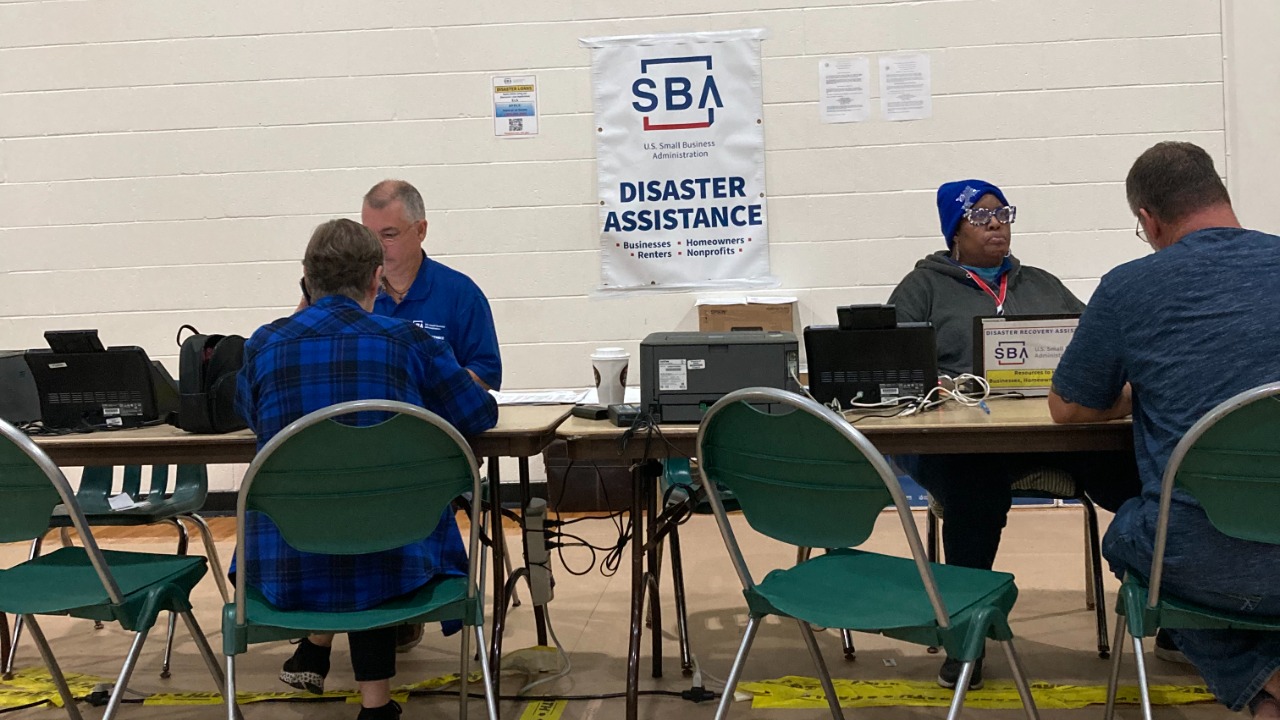
Once the pattern of suspect loans came into focus, the enforcement response was swift and sweeping. On Thursday, Administrator of the Small Business Administration Kelly Loeffler announced from WASHINGTON that the agency was barring nearly 7,000 Minnesota borrowers from all SBA loan programs, a step that effectively locks those businesses and individuals out of future federal small business support while their files are scrutinized. In practical terms, that means no new SBA-backed mortgages for a Main Street storefront, no disaster loans after a flood, and no routine working-capital credit lines until the cloud of suspected fraud is resolved.
I read that decision as a deliberate signal that the agency is willing to use its bluntest tool, the power to exclude, to protect its balance sheet. The ban, described as covering nearly 7,000 Minnesota borrowers in a formal notice that originated in WASHINGTON and was relayed through KTTC, is being framed internally as the largest single suspension action in the agency’s history, and officials have emphasized that it applies across all Small Business Administration programs, not just pandemic-era products. That breadth is clear in the language used when Administrator of the agency described the move as a ban from SBA loan programs, rather than a narrow PPP or EIDL freeze.
Inside the 6,900–7,000 borrower sweep
Behind the headline numbers is a messy and contested picture of who, exactly, is being punished. Agency officials have said that Today their enforcement teams took action to suspend 6,900 M Minnesota borrowers amid suspected fraudulent activity, language that suggests a broad dragnet rather than a series of case-by-case determinations. That figure, 6,900 M, appears alongside the description of Minnesota borrowers whose pandemic-era loans are being reviewed for fraud, and it highlights a tension that I see running through the entire operation: the need to move quickly to protect taxpayer money, set against the risk of sweeping up borrowers who may have made paperwork mistakes rather than intentionally gaming the system.
The numbers themselves are not perfectly aligned, which is telling. In some accounts, officials describe suspending 6,900 M Minnesota borrowers, while in others they refer to nearly 7,000 Minnesota borrowers or a total of 7,000 M borrowers tied to the suspected $400 exposure. One summary of the enforcement action notes that SBA suspends nearly 7,000 Minnesota borrowers over suspected $400 in pandemic loan fraud, while another recounts how Today the agency took action to suspend 6,900 M Minnesota borrowers amid suspected fraudulent activity. Those discrepancies, reflected in the way different reports cite 6,900 M and in a separate reference to 7,000 M borrowers, underscore how fluid the count remains as investigators sort through overlapping loan files and related entities.
How the SBA is framing the crackdown
From the agency’s vantage point, the Minnesota sweep is not just about one state, it is a template for a national cleanup. Officials have described the action as the first in a series of state-level reviews, with one internal account quoting an SBA representative saying Minnesota is just the first state, a clear warning that similar audits could soon hit other regions that saw heavy PPP and EIDL usage. In that telling, the 6,900 to nearly 7,000 suspensions are less an outlier than a pilot project, a way to stress-test new data tools and investigative partnerships before they are deployed across the full pandemic loan portfolio.
I see that framing reflected in how the agency has talked about its own role. One report notes that SBA suspends thousands of pandemic-era loan borrowers approved by Minnesota over potential fraud, and credits the SBA with leading a broader federal push to identify patterns of abuse in COVID lending. The same account, attributed to reporter Riley Moser and signed as Ril, emphasizes that the SBA is working closely with law enforcement to refer the most egregious cases for prosecution and repayment, a detail that aligns with the description of how SBA officials see Minnesota as a starting point rather than an endpoint. In parallel, another summary of the Minnesota probe notes that, in response to these findings, federal authorities have opened additional investigations into related schemes in Minnesota, reinforcing the idea that the ban is one piece of a larger enforcement mosaic that will likely stretch on for years.
What this means for borrowers, taxpayers and future crises
The immediate fallout is already visible on the ground in Minnesota, where thousands of borrowers now find themselves in limbo. Some are accused of outright fabrication, such as inflating payrolls or inventing employees to qualify for larger PPP checks, while others insist they followed the rules and are now being punished for the state’s lax oversight. The Minnesota faces $400 million fraud probe over COVID-era pandemic lending programs has become a political flashpoint, with critics arguing that state officials failed to vet applications properly and supporters countering that the priority at the time was to keep small businesses alive. In that context, the federal description of borrowers collectively approved for approximately 7,900 loans, totaling roughly $400 million, has become a shorthand for the state’s pandemic-era gamble on speed over scrutiny, a gamble that is now being revisited in forensic detail through the $400 million fraud probe.
For taxpayers, the stakes are both financial and institutional. The $400 million at issue in Minnesota is a fraction of the total PPP and EIDL spending, but it is large enough to shape public perceptions of whether pandemic aid was a lifeline or a boondoggle. I find it telling that the same federal ecosystem that is now scrutinizing Minnesota borrowers is also fielding consumer lawsuits on seemingly unrelated fronts, such as a Jan complaint in which a Florida woman in Hillsborough County, identified as Cynthia Kelly, sued Hershey’s over allegedly misleading ads for faces on Reese’s Peanut Butter Cups and other holiday-themed chocolate. That case, which accuses the company of deceptive sales practices in a class action lawsuit, shows how aggressively Americans are now testing the boundaries of corporate and government accountability, from candy packaging to COVID loans, and it is captured in the detailed description of the Florida woman who took Hershey’s to court.
Looking ahead, I expect the Minnesota crackdown to shape how future emergency programs are designed. The Trump administration, which oversaw the launch of PPP and EIDL, has already faced questions about how quickly it relaxed safeguards to push money out the door, and the Minnesota case will likely fuel calls for tighter identity checks, more robust income verification and clearer penalties that can be applied in real time rather than years after the fact. As the Small Business Administration continues to sift through the $400 m in suspect loans and enforce the biggest ban in its history, the lesson for policymakers is stark: in a crisis, speed matters, but so does the integrity of the system that taxpayers are asked to trust.
More From The Daily Overview

Grant Mercer covers market dynamics, business trends, and the economic forces driving growth across industries. His analysis connects macro movements with real-world implications for investors, entrepreneurs, and professionals. Through his work at The Daily Overview, Grant helps readers understand how markets function and where opportunities may emerge.