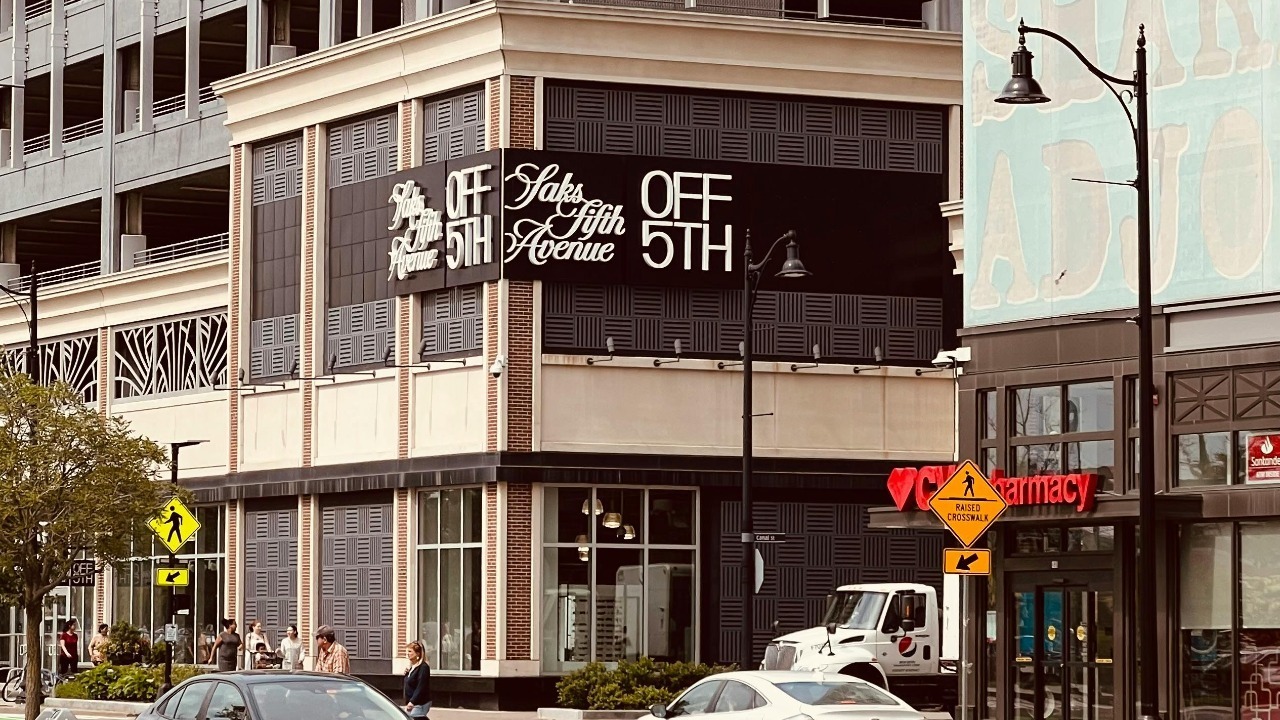
The off-price arm of Saks is shrinking dramatically as its parent company restructures under bankruptcy protection, with more than 50 Saks Off stores slated to close and only a small core of locations left standing. The move marks a sharp retreat from a discount strategy that once promised to bring luxury labels to outlet malls and suburban power centers, and it raises urgent questions about what comes next for shoppers, landlords and rival retailers that have been circling the same customers.
As Saks Global unwinds much of its off-price footprint, the company is betting that a leaner network of outlets and a stronger balance sheet will protect its flagship banners, including Saks Fifth Avenue, Neiman Marcus and Bergdorf Goodman. I see this as a pivotal test of whether traditional luxury groups can still make outlet chains work in an era when online flash sales and resale platforms already flood the market with marked-down designer goods.
The scale of the Saks Off retreat
The most striking number in this restructuring is the one that defines the new size of the outlet chain. Saks Global has confirmed that it will close 57 Saks OFF Fifth locations, leaving only 12 in operation across the United States. That means the vast majority of the off-price network is being dismantled, a far more aggressive pullback than a typical pruning of underperforming stores. The company is also winding down remaining Last Call outlets, a reminder that its earlier experiment with discounting Neiman Marcus merchandise is ending alongside this broader reset.
Executives have framed the closures as part of a deliberate plan to simplify the business and focus on a smaller, more profitable store base. Internal messaging has emphasized that Saks Global wants to preserve what it calls an iconic portfolio of brands while exiting formats that no longer fit that vision, a point underscored when Saks OFF leaders confirmed that almost all stores would close and detailed how sales dates and return policies would work during the wind down. For shoppers who treated Saks OFF as a regular stop for discounted designer denim or handbags, the message is blunt: the outlet era is ending in most of the places they know it.
Bankruptcy, debt and the $1.75 billion lifeline
The store closures are inseparable from the financial strain that pushed Saks Global into court. Earlier this year, the company filed for bankruptcy protection after years of heavy leverage and an ambitious acquisition spree that brought Saks Fifth Avenue, Neiman Marcus and Bergdorf Goodman under the same corporate roof. In its own explanation of the restructuring, Saks Global described a sweeping transaction that, On January 13, was pitched as a way to position the business for long term stability while it worked through the Chapter 11 process in the Southern District of Texas.
To keep operating through that process, the retailer has lined up a significant financial backstop. The company has said it secured a commitment of approximately $1.75 billion in new funding, a mix of debtor in possession financing and exit capital that is meant to reassure vendors, landlords and employees that the lights will stay on while the balance sheet is repaired. Court filings and company statements describe this as a bridge to a more sustainable capital structure, but the price of that bridge is steep: shuttering dozens of outlets, cutting jobs and shrinking the company’s physical footprint in markets where it once saw growth potential.
How Saks Off closures will hit shoppers and cities
For consumers, the immediate impact is practical and emotional at once. Regulars at Saks Off locations are already being told that their local store is entering a going out of business phase, with signage advertising steep discounts on apparel, shoes and accessories. Company communications and local reports describe promotions that can reach up to 85 percent off as part of the liquidation, a pattern reflected in coverage of how Saks Off is handling markdowns. I see that as a short term boon for bargain hunters, but it also signals that these stores are not coming back once the shelves are cleared.
The geographic spread of the closures means the fallout will be felt in outlet centers and suburban shopping corridors across the country. Lists of Which Locations Are show Saks Off stores disappearing from major markets and tourist hubs, from Las Vegas to dense metro suburbs that relied on the chain as an anchor tenant. Landlords now face the challenge of backfilling large boxes with new retailers at a time when some apparel chains are also retrenching. For local economies, the closures translate into job losses and less foot traffic for neighboring businesses, a familiar pattern whenever a big box retailer pulls out of a center.
The strategy shift behind abandoning most outlets
Stepping back from the immediate closures, I read this as a strategic pivot away from a model that blurred the line between luxury and discount. Saks Global has been explicit that it wants to concentrate on its core banners, and its own restructuring narrative highlights how Saks Fifth Avenue, Neiman Marcus and Bergdorf Goodman sit at the center of its future. The acquisition of Neiman Marcus in 2024 added scale but also debt, and analysts have noted that the combined company struggled under that load, particularly as higher interest rates and uneven luxury demand squeezed margins.
Within that context, the outlet network looks like collateral damage in a broader effort to simplify. Reports on the restructuring describe how Saks Global is shuttering most of its off price empire as part of its Chapter 11 plan, and how the parent of Saks Fifth Avenue will keep only a dozen Off 5th locations open while maintaining a digital outlet presence. One filing noted that all but a of the discount stores will close, while the Saks Off 5th online business continues to operate. That suggests the company believes it can still serve value oriented customers digitally without the overhead and complexity of a sprawling brick and mortar outlet chain.
What this means for luxury retail’s next chapter
The unraveling of Saks Off is also a story about how the luxury sector is adapting to a more fragmented, digital first marketplace. Over the past decade, shoppers who once relied on outlet centers for deals have shifted to online platforms, from flash sale sites to resale apps that offer pre owned Gucci or Saint Laurent at steep discounts. Coverage of the closures has noted that Saks Global is still promoting online access to marked down merchandise, encouraging customers to shop digital channels even as physical stores wind down. In my view, that underscores a broader industry belief that discounting can be managed more flexibly on the web, where inventory can be pooled and pricing tweaked in real time.
The bankruptcy also reflects how ownership changes and financial engineering have reshaped the company’s trajectory. The filing came roughly a year after Canada based conglomerate Hudson Bay Co completed a deal to spin off its U.S. luxury assets, including Saks, into the structure that became Saks Global. Analysts have pointed out that the combined group, which had already absorbed Neiman Marcus, entered this year in a precarious financial situation, a point echoed in reporting that described how the purchase of Neiman Marcus left the company floundering under a heavy debt load. Against that backdrop, the decision to close most outlets looks less like a surprise and more like a delayed acknowledgment that the numbers no longer worked.
More From The Daily Overview
*This article was researched with the help of AI, with human editors creating the final content.

Grant Mercer covers market dynamics, business trends, and the economic forces driving growth across industries. His analysis connects macro movements with real-world implications for investors, entrepreneurs, and professionals. Through his work at The Daily Overview, Grant helps readers understand how markets function and where opportunities may emerge.

