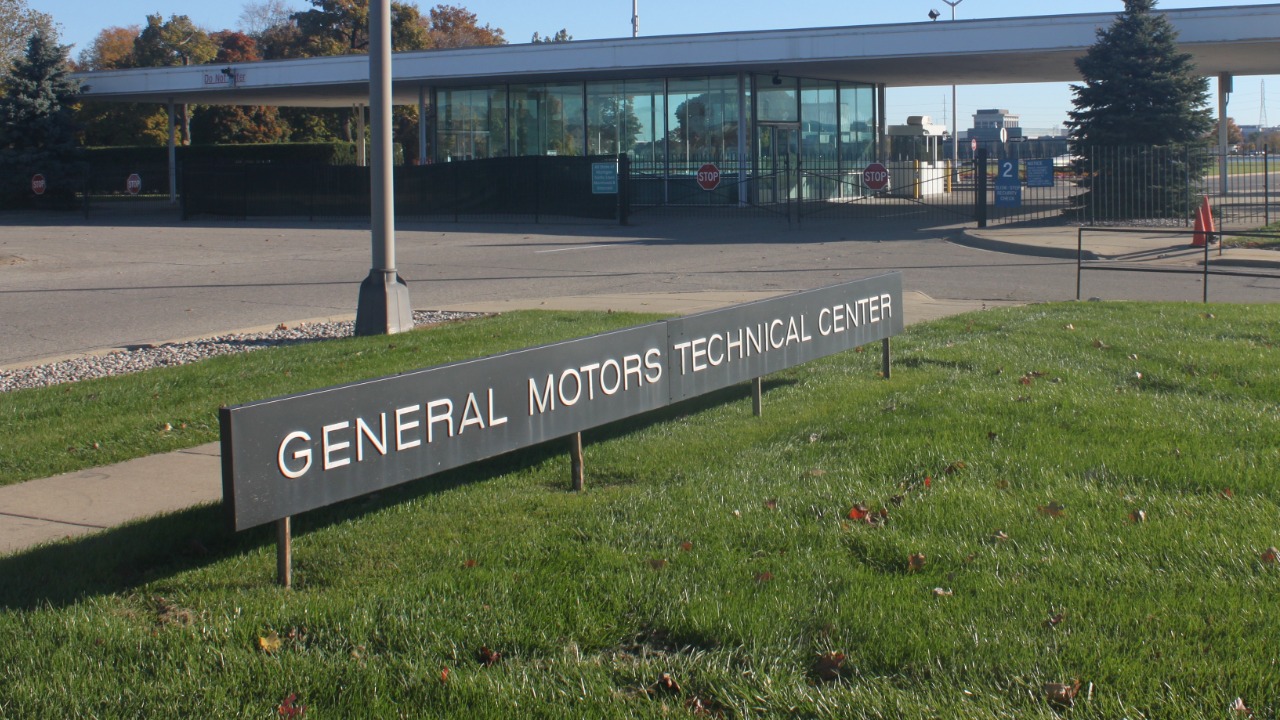
General Motors is absorbing a tariff hit of up to 5 billion dollars on vehicles and parts built in Mexico, and that bill is now reshaping where the company builds cars and how much American drivers pay for them. As GM pulls key production back across the border, the cost advantages that once kept sticker prices in check are eroding, setting up a new era of higher prices and tougher choices for buyers and workers alike.
I see the shift as more than a corporate logistics story. It is a test of how far trade policy can push a global automaker before it rewires its entire manufacturing map, with ripple effects from factory towns in Mexico to dealerships in the Midwest and coastal EV showrooms.
The 5 billion dollar tariff shock that broke GM’s Mexico math
General Motors had long treated Mexico as a cornerstone of its North American cost structure, but the latest wave of tariffs has turned that advantage into a liability. The company has warned that President Donald Trump’s trade measures could hit its business with between 4 billion and 5 billion dollars in extra costs, a range that effectively wipes out the margin on many mass market models that rely on cross border supply chains. When a single policy shift adds a multibillion dollar line item to the income statement, the logic of building lower priced vehicles in Mexico starts to collapse.
Those projected costs are not abstract. GM has directly tied the 4 billion to 5 billion dollar figure to the tariffs that the administration has imposed on the auto industry, a burden that falls heavily on vehicles and components moving between the United States and Mexico. In internal planning, that kind of recurring hit is indistinguishable from a permanent increase in labor and material costs, which is why executives have framed the tariffs as a structural shock rather than a temporary nuisance. The company’s expectation that President Donald Trump’s policies could cost General Motors up to 5 billion dollars in this way has become the financial backdrop for every subsequent decision about where to build cars, as reflected in its warning that the tariffs could cost its business up to 5 billion.
How Trump’s tariff strategy cornered GM’s cross border playbook
The tariff shock did not arrive in a vacuum. President Trump has used a mix of blanket tariffs and targeted executive orders to pressure automakers to build more inside the United States, while still leaving room to adjust the pressure when it threatens to backfire. Earlier in the cycle, the White House set a 25 percent tariff on automobiles and auto parts, a level that made every imported vehicle or component a potential liability on a company’s balance sheet. That same strategy later included executive orders that relaxed some of those 25 percent tariffs, signaling that the administration was willing to fine tune the policy as the market reacted.
For GM, the message was clear. The president could dial tariffs up or down, but the baseline risk of relying on Mexico had permanently increased. Even when President Trump signed orders that softened parts of the 25 percent levy, the company still had to plan for a world in which a future order could restore or expand the higher rate. That is why GM’s public comments have framed the tariff environment as a persistent headwind rather than a one off shock, and why the company has treated the evolving mix of 25 percent duties and partial relaxations as a reason to re anchor more production in the United States. The dynamic is captured in reporting that President Trump used executive orders to adjust his 25 percent tariffs on automobiles and auto parts, even as those tariffs remained a central pressure point for GM.
From Mexico to Michigan, GM’s 4 billion dollar reshoring bet
Faced with a tariff bill that could reach 5 billion dollars, GM has started to rewire its production footprint, and the centerpiece of that shift is a massive investment in the United States. General Motors has announced that it will put 4 billion dollars into its Lake Orion assembly plant in Oakland County, Michigan, turning that facility into a hub for vehicles that had previously been slated for Mexico. By committing that level of capital to a single site, the company is signaling that it expects the tariff regime, or at least the political pressure behind it, to last long enough to justify a multiyear payback period.
The Lake Orion plan is not just an accounting response to tariffs, it is a physical relocation of jobs, tooling, and supplier contracts. GM has said that the 4 billion dollar investment will support new production starting at the Michigan plant, effectively substituting domestic capacity for what had been planned south of the border. That shift aligns with the broader narrative that the company is moving some production from Mexico to the United States as it weighs tariffs, electric vehicle demand, and factory flexibility. The decision to pour 4 billion dollars into Lake Orion in Oakland County, Michigan, and to position that plant for new production that had been tied to Mexico, is detailed in GM’s plan to invest 4 billion dollars at Lake Orion.
GM’s partial retreat: what “out of Mexico” really means
Headlines about GM being forced out of Mexico capture the scale of the tariff shock, but the underlying reality is more nuanced. The company is clearly scaling back some of its Mexican operations in response to a 5 billion dollar tariff bill, especially for models where thin margins cannot absorb a 25 percent hit on imported vehicles or parts. That retrenchment is what has fueled reports that a 5 billion dollar tariff bill is pushing GM out of Mexico and setting the stage for higher car prices nationwide, a narrative that reflects the company’s own warnings about the cost of President Donald Trump’s trade policy.
At the same time, GM is not abandoning Mexico entirely. The company has confirmed that it will continue to build certain electric vehicles there, even as it shifts other lines back to the United States. Executives have acknowledged that, despite the uncertainty surrounding President Trump’s tariffs on the automotive industry, GM still sees value in producing Mexico based electric vehicles, particularly where supply chains and local cost structures remain competitive. That is why the story of GM being forced out of Mexico by a 5 billion dollar tariff bill, as described in coverage of the 5B tariff bill that forces GM out of Mexico and raises car prices, sits alongside GM’s own confirmation that it will keep building Mexico based electric vehicles despite tariff concerns, a position the company has outlined while noting that Mexican EV production will continue.
Inside GM’s calculus: tariffs, EV demand, and factory flexibility
When I look at GM’s moves, I see a company trying to solve a three variable equation: tariff exposure, electric vehicle demand, and plant flexibility. The tariffs have raised the cost of importing vehicles and parts from Mexico, but the company also has to contend with an EV market that is not growing as fast as once anticipated. That slower demand makes it risky to lock in too much dedicated EV capacity in any one country, especially if that capacity is exposed to a 25 percent tariff when vehicles cross the border into the United States.
General Motors has responded by shifting some production back to the United States while keeping enough flexibility in Mexico to adjust as EV demand evolves. Reporting on the company’s strategy notes that GM weighs tariffs, EV demand, and factory flexibility as it moves some production to the United States, and that for years General Motors had counted on Mexico as a low cost base before the tariff shock changed the equation. The company’s internal calculus now treats Mexican plants as part of a broader portfolio rather than a default destination, a shift captured in analysis of how GM is moving some production from Mexico to the U.S. while reassessing EV growth.
Dodging tariffs with a production shuffle
GM’s response to the tariff squeeze has not been limited to writing checks and issuing warnings. The company has actively restructured its production map to minimize the number of vehicles that cross tariff lines, effectively using geography as a hedge against policy risk. By moving certain models from Mexican plants to U.S. facilities like Lake Orion, GM can sell those vehicles domestically without triggering the 25 percent tariff on imported automobiles, while reserving Mexican capacity for exports or for models where the economics still work.
Executives have been explicit that this production shuffle is about more than just dodging tariffs, but they also acknowledge that tariffs are a key piece of the puzzle. In public comments, GM leaders have described a recent announcement about shifting production from Mexico to the United States as being worth much more than just the tariff side, even as they concede that the tariffs are obviously a piece of the decision. That framing underscores how the company is trying to present the move as a strategic upgrade in flexibility and EV readiness, while still using it to blunt the impact of trade policy. The logic of using a production shift from Mexico to the U.S. to dodge tariffs is laid out in a discussion where GM notes that its announcement is worth more than just the tariff side, even though the tariffs are obviously a piece of it.
Why American buyers are bracing for higher sticker prices
For American drivers, the most immediate consequence of GM’s tariff driven reshuffle is higher prices in the showroom. When a company absorbs up to 5 billion dollars in extra costs tied to tariffs, it has limited options: accept lower profits, cut costs elsewhere, or pass some of the burden on to buyers. In practice, automakers tend to do a mix of all three, but the scale of the tariff hit makes it almost inevitable that a portion will show up in monthly payments and lease quotes, especially on models that were heavily reliant on Mexican production.
Independent pricing analysts have already warned that tariffs on cars and parts will translate into higher costs for American car buyers, even if the exact timing varies by model and inventory cycle. They note that tariffs raise the baseline cost of building a vehicle, which then flows through to the final transaction price unless offset by discounts or lower input costs elsewhere. For shoppers, that means fewer bargains on new vehicles and a stronger case for considering used options or smaller trims. The expectation that tariffs will increase prices for American car buyers, and that You may have to adjust by buying a used car or delaying a purchase, is reflected in guidance explaining that with tariffs, car prices will increase for American buyers.
Jobs, wages, and the politics of moving plants north
The reshoring of GM production from Mexico to the United States is already being cast as a political win for the White House, but the labor story is more complicated than a simple tally of jobs gained or lost. On one side of the border, workers in Mexican plants that once built high volume GM models now face uncertainty as production shifts north in response to tariffs. On the other side, communities around plants like Lake Orion in Oakland County, Michigan, see the 4 billion dollar investment as a lifeline that could secure jobs and wages for years, even if the mix of roles changes as EVs and new technologies take hold.
From my perspective, the politics of this shift hinge on whether the new U.S. jobs match or exceed the total employment that GM is trimming in Mexico, and on how the wage and benefit packages compare. President Trump can point to the tariffs and the resulting 4 billion dollar investment in Lake Orion as evidence that his pressure campaign is working, while critics may argue that the policy simply moved production from one set of workers to another without addressing broader affordability issues. What is clear is that General Motors has explicitly linked its reshoring moves to the tariff environment, and that the company’s expectation of up to 5 billion dollars in tariff related costs has become a central talking point in debates over how trade policy affects both Mexican and American workers, a link underscored by GM’s warning that President Donald Trump’s tariffs could cost General Motors up to 5 billion dollars and by the company’s decision to channel 4 billion dollars into Lake Orion in response.
What GM’s tariff saga signals for the next car you buy
Looking ahead, I expect GM’s experience to serve as a template for how other automakers navigate a world where trade policy can add or subtract billions from their cost base almost overnight. The company’s decision to move some production from Mexico to the United States, to keep building certain electric vehicles in Mexico despite tariffs, and to invest 4 billion dollars in a single Michigan plant, all point to a future in which manufacturing footprints are more fluid and more closely tied to political risk. For buyers, that means the country of origin on a window sticker will be less about long term corporate strategy and more about how a company is managing its tariff exposure at any given moment.
For the next car you buy, the practical takeaway is that pricing, availability, and even model lineups will be shaped by the same forces that pushed GM to absorb a 5 billion dollar tariff bill and rethink its reliance on Mexico. If tariffs remain high or become more volatile, automakers will continue to shift production, adjust content, and, when necessary, raise prices to protect their margins. GM’s reshuffling of its Mexico operations, its 4 billion dollar bet on Lake Orion, and its ongoing calculation about where to build electric vehicles are all early signals of how the industry is adapting. As General Motors and its peers weigh tariffs, EV demand, and factory flexibility, the trade offs they make will show up not just in corporate earnings, but in the monthly payment on the vehicles parked in American driveways.
More From TheDailyOverview

Grant Mercer covers market dynamics, business trends, and the economic forces driving growth across industries. His analysis connects macro movements with real-world implications for investors, entrepreneurs, and professionals. Through his work at The Daily Overview, Grant helps readers understand how markets function and where opportunities may emerge.

