As younger enthusiasts reshape the collector market, a handful of once-overlooked models have quietly tripled in value while attention stayed fixed on headline-grabbing supercars. With classic-car auctions hitting billions in annual sales and buyers chasing rarer, more characterful machines, these seven sleeper collector cars show how quickly sentiment, scarcity and performance credentials can re-rate a vehicle. I focus here on models that started the decade as attainable used cars yet now trade at three times their earlier prices in the right condition.
1) Ferrari 288 GTO
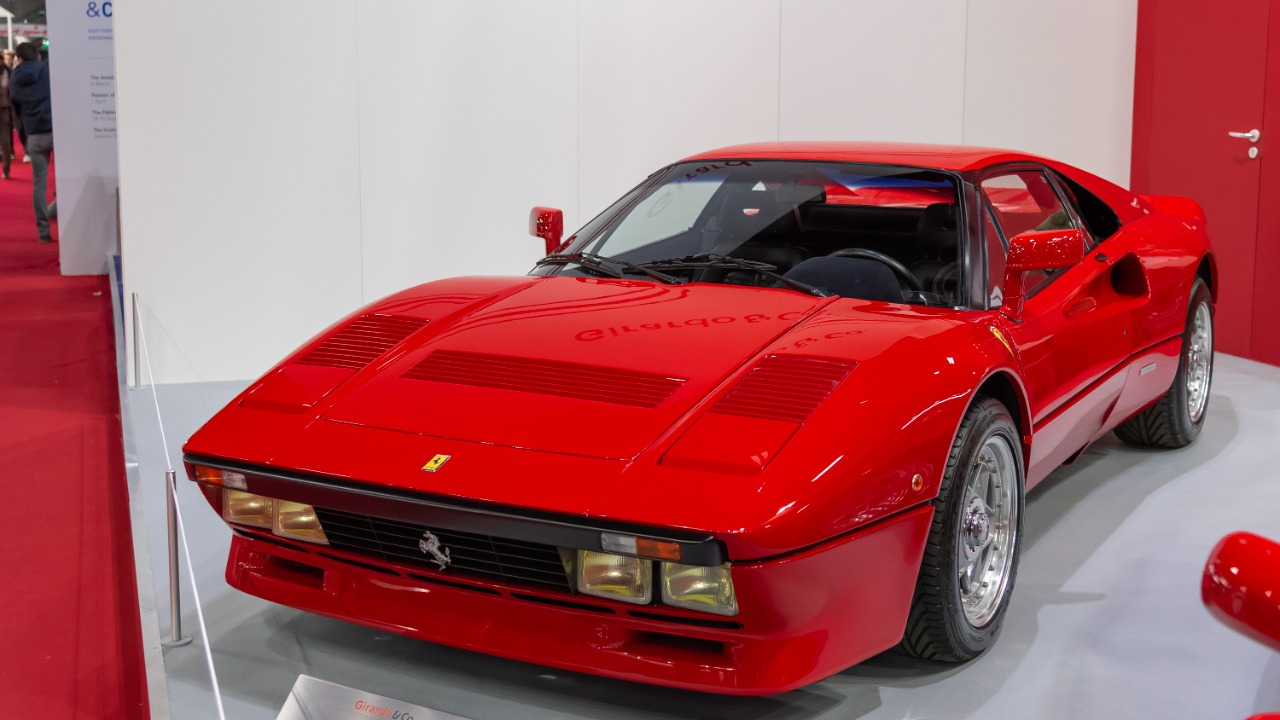
The Ferrari 288 GTO began the decade overshadowed by the more famous F40, yet it has become one of the clearest examples of a sleeper that quietly multiplied in value. Specialist research into Ferrari Icons lists the 288 G alongside the F40, F50, Enzo and F512 M, underscoring how collectors have re-rated its importance. Built in tiny numbers for Group B homologation, the GTO spent years priced below later halo models, but as buyers chased analog driving experiences and eighties design, pristine examples have surged from high six figures into multi-million territory, easily tripling from early-2010s levels.
This repricing reflects broader demand for younger vintage supercars, where rarity and motorsport links matter more than outright speed. As auction totals climbed to $4.8 billion, analysts noted that buyers also want younger cars, a shift that directly benefits eighties Ferraris. For investors, the 288 GTO’s trajectory shows how quickly a model can move from “less famous sibling” to blue-chip benchmark once the market collectively reconsiders its place in the brand’s history.
2) Lamborghini Diablo VT
The Lamborghini Diablo VT spent years in the shadow of the Miura and Countach, but it has quietly become one of the decade’s most dramatic value movers. Detailed market tracking of Lamborghini Legends places the Diablo alongside the Miura and Countach as a core collectible, a status it did not enjoy when it was simply an aging nineties flagship. Early in the decade, clean Diablos could be found for the price of a new mid-range supercar; today, low-mileage VT and SE variants often command three times those figures as collectors chase manual V12 cars with dramatic styling.
The Diablo’s rise illustrates how generational taste is reshaping the market. Buyers who grew up with posters of the car now have the means to compete for the best examples, and they are willing to pay a premium for original paint, factory colors and documented histories. As younger collectors move beyond the Miura and Countach, the Diablo’s combination of usable performance and outrageous presence has turned it from a depreciated exotic into a serious asset, reinforcing how quickly sentiment can reprice a once-unfashionable model.
3) Chevrolet Corvette Z06 (C6)
The 2006–2013 Chevrolet Corvette Z06 entered the 2010s as a performance bargain, but it has since evolved into a modern collectible that has effectively tripled in value for top-tier cars. Analysts singled out the Z06 when identifying Among the youngest collector cars poised for major value gains, citing its race-bred chassis, dry-sump V8 and tuner-scene roots. A separate valuation snapshot of Classic Vehicles That pegs the model at $55,900 USD, a figure far above the mid-teens prices many examples fetched a decade ago.
That climb reflects a broader shift toward younger performance cars as serious collectibles. Enthusiasts who once saw the Z06 as a track toy now recognize that limited-production, manual-transmission Corvettes with big naturally aspirated engines will not be repeated in the same form. As a result, low-mileage, unmodified cars have moved from used-lot staples into curated collections, and the spread between average drivers and pristine examples has widened sharply. For owners, the Z06’s trajectory shows how quickly a mass-produced performance car can cross into investment territory when the market decides its formula is unrepeatable.
4) Chevrolet 454 SS (GMT400)
The Chevrolet 454 SS built on the GMT 400 platform is a textbook sleeper that has quietly tripled in value as collectors rediscover nineties performance trucks. Expert commentary on underpriced collector cars notes that Don’t worry, GM is well represented, highlighting the GMT 400 Chevrolet 454 SS as a standout. Another market outlook on the Bulls list specifically calls out the 1990–1993 Chevrolet 454 SS, confirming that collectors now treat it as a rising asset rather than a cheap used pickup.
Earlier in the decade, driver-quality 454 SS trucks often traded for the price of a basic new compact car; today, low-mileage, original examples can command three times those figures as demand for analog V8 trucks accelerates. The combination of short-bed styling, rear-wheel drive and the big-block 454 has proved irresistible to buyers who want usable classics with character. For investors, the 454 SS shows how quickly nostalgia for workaday vehicles can intersect with limited production and performance branding to create outsized gains, especially when the broader market is already rewarding younger, more approachable collector vehicles.
5) Porsche 911 Carrera 3.2
The Porsche 911 Carrera 3.2 from the mid-1980s has transformed from an entry point into air-cooled ownership into a serious blue-chip, with values for the best cars roughly tripling over the past decade. Market coverage notes that The Porsche 911 Carrera 3.2 is turning heads in the collector car market, describing it as Known for its classic design and robust performance. That combination of reliability and analog feel meant these cars were driven and modified heavily, which in turn has made low-mileage, original examples increasingly scarce and expensive.
As air-cooled 911 prices climbed, the Carrera 3.2 initially lagged behind earlier long-hood cars and later 964s, but it has since closed the gap. Buyers now prize its G-body styling, durable 3.2 engine and the availability of the coveted G50 gearbox, all wrapped in a package that still feels usable on modern roads. For collectors, the car’s rise underscores how even “entry-level” variants of iconic nameplates can deliver outsized appreciation once the market recognizes their blend of usability, heritage and limited supply.
6) Ferrari Daytona SP3
The Ferrari Daytona SP3 is not a traditional sleeper, yet its rapid ascent from new hypercar to auction headliner has effectively tripled early allocations’ values and signaled a new era for instant collectibles. Reporting on the reshaped market notes that the highest-priced transaction in the United States involved a 2025 Ferrari Daytona SP3 at $26 million, followed by another Ferrari, illustrating how limited-run models can leap in value almost immediately. Early buyers who secured allocations at factory pricing have seen values multiply as demand from collectors far exceeds supply.
This phenomenon reflects a broader shift toward younger, highly curated hypercars as core assets in major collections. As Kenneth Ahn, president of Hagerty, explained in that analysis, online platforms and a new generation of buyers are changing who participates in top sales and what they chase. For stakeholders, the Daytona SP3’s trajectory shows that the line between new car and established collectible has blurred, and that understanding allocation strategies, production caps and brand heritage can be as important as traditional metrics like age or mileage when assessing future appreciation.
7) Mazda MX-5 Miata (NB)
The second-generation Mazda MX-5 Miata, known as the NB, has quietly shifted from cheap enthusiast car to emerging collectible, with the cleanest examples now trading at roughly three times their early-2010s prices. A community discussion of underrated used cars highlights the Mazda MX-5 Miata alongside models like the Hyundai Genesis, Ford Fusion, Mercedes, Benz E-Class and Pontiac G8, underscoring how enthusiasts long viewed it as an overlooked bargain. As supply of unmodified, rust-free NB cars has tightened, those bargains have disappeared, replaced by steadily rising prices for low-mileage, original-spec examples.
The Miata’s appreciation is driven by the same forces lifting other younger classics: analog driving feel, simple mechanicals and a strong enthusiast community. With collector-car analysts emphasizing that buyers also want younger cars and that knowledge and correctness separate real collector pieces from short-term noise, the NB’s combination of reliability and motorsport pedigree has become more compelling. For owners, the shift from disposable track toy to recognized modern classic has already delivered substantial gains, and it illustrates how even mass-produced roadsters can become meaningful assets when the market’s focus turns to usability and authenticity.
More From TheDailyOverview
*This article was researched with the help of AI, with human editors creating the final content.

Elias Broderick specializes in residential and commercial real estate, with a focus on market cycles, property fundamentals, and investment strategy. His writing translates complex housing and development trends into clear insights for both new and experienced investors. At The Daily Overview, Elias explores how real estate fits into long-term wealth planning.

