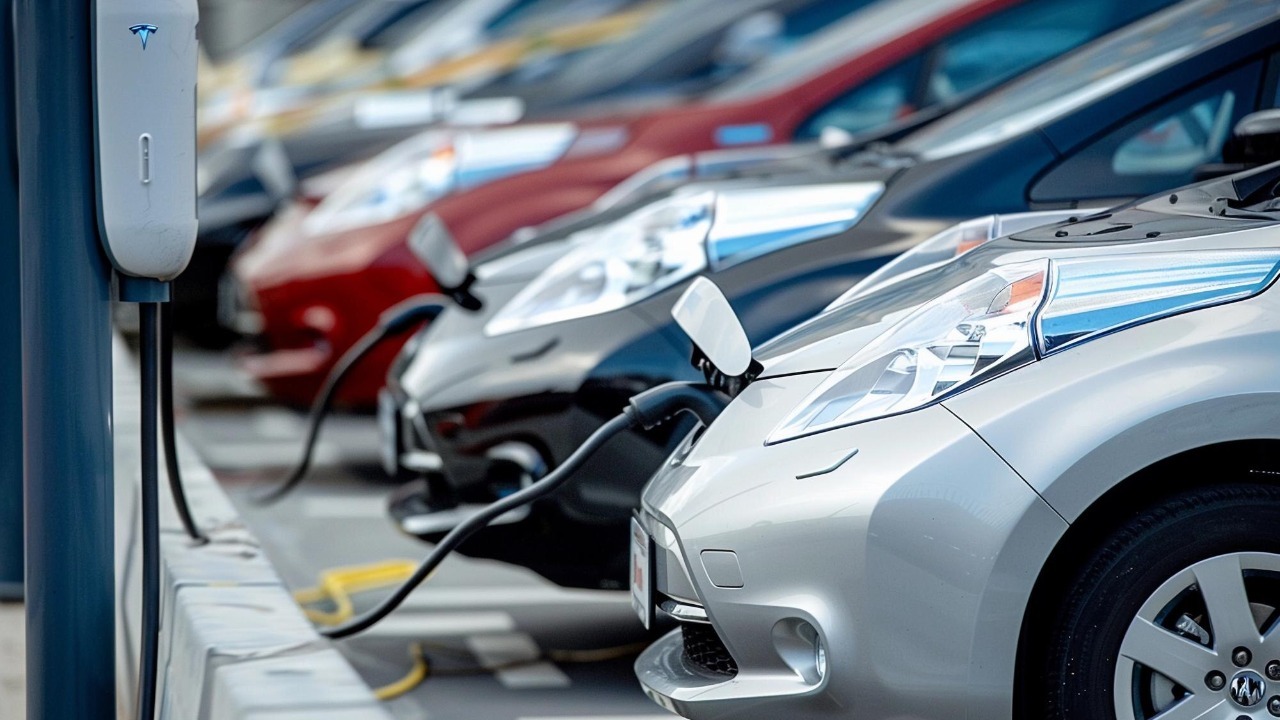
Electric cars have just crossed a symbolic line in Europe, overtaking pure petrol models in new sales across the European Union for the first time. After years of policy nudges, infrastructure buildout, and falling battery costs, the region’s car buyers have finally tipped the balance toward plug-in power. The shift is not a blip in a single market but a structural change across the bloc that is already reshaping manufacturers’ strategies and the global auto race.
Behind the headline milestone is a deeper story about how quickly consumer preferences, industrial policy, and international competition can move once the economics of a cleaner technology start to work. I see this moment less as a surprise and more as confirmation that the combustion era in Europe has entered managed decline, even as hybrids and gasoline models still hold large slices of the market.
The numbers that broke petrol’s dominance
The clearest signal of the shift comes from the European Union’s own registration data, which show that new car registrations in the bloc grew by 1.8% in 2025 while battery-electric cars grabbed a record share of that expanding market. Battery electric vehicles accounted for a 17.4 per cent share of all new European Union car registrations, meaning nearly one in five new cars sold in the bloc now runs solely on electricity. That is a dramatic jump from just a year earlier, when the comparable share was 13.6%, a gain that would be hard to explain without a fundamental change in buyer expectations about range, charging, and resale value.
The tipping point was especially visible in the final month of the year. In December 2025, there were 217,898 battery electric vehicles registered in the EU, an increase of 51 percent compared with the same month a year earlier. That surge was enough to push fully electric models ahead of petrol cars in monthly sales for the first time, a milestone that detailed analysis of EU registrations confirms as a structural break rather than a statistical quirk. Once the United Kingdom and the countries in the European Free Trade Association, including Iceland and Liechtenste, are added to the picture, electric cars’ lead over pure gas models becomes even clearer in the wider European market.
Hybrids, plug-ins and the messy middle of the transition
Even as battery-only cars surge, the data show that Europe’s transition is not a simple flip from petrol to pure electric. Hybrid-electric models now account for 34.5% of the total EU market, making them the single largest powertrain category. That dominance of hybrids reflects how many drivers still want the familiarity and perceived security of an internal combustion engine, even as they begin to rely more on electric drive for daily commuting. Registrations of plug-in hybrid electric cars also continue to grow, as Registrations of these models benefit from tax incentives and company-car policies that reward lower official emissions.
From a policy perspective, this “messy middle” is exactly what many European governments anticipated when they set long term phaseout dates for combustion engines but allowed plug-in hybrids, range extenders and conventional hybrids to remain on sale for longer. Detailed policy analysis of the EU’s clean car rules notes that such vehicles can still play a role in cutting emissions if they are driven and charged as intended, although their real world impact depends heavily on how often drivers plug in rather than rely on the engine or braking to recharge batteries. I see the current mix as a transitional portfolio, one that gives manufacturers time to scale up electric platforms while consumers adjust to new charging habits.
China’s rise and Europe’s new industrial reality
The shift in European demand is not happening in a vacuum, it is colliding with a global supply chain that is already dominated by Chinese manufacturers. The ACEA figures show that Chinese brands continued to make substantial gains in the European market last year, with BYD more than doubling its registrations as it pushes aggressively into the region. That expansion is part of a broader pattern in which China now accounts for more than half of all EVs sold globally, reinforcing its role as the engine behind the world’s electric transition. For European incumbents like Volkswagen, Stellantis and Renault, the new competition is as much about software and battery integration as it is about price.
Europe’s policy response has been to double down on its own industrial strategy while keeping the door open to imported models that help cut emissions quickly. The same registration data that confirm electric cars have overtaken petrol models also show that fully electric vehicles, plug-in hybrids and other low emission options together now account for a large minority of the market, with battery-only vehicles at 17.4 per cent and hybrids at 34.5 per cent of sales. In practice, that means European factories are retooling for high volume EV production at the same time as they face a wave of competitively priced imports from BYD and other Chinese groups that have already reached scale in their home market in Europe. I read the current moment as a test of whether Europe can translate its early regulatory lead into a durable manufacturing advantage.
Why Europe is surging while the US stalls
The contrast with the United States is striking. Electric vehicle sales in the European Union have now surpassed gasoline powered cars for the first time in 2025, while in the US, EV demand has cooled and some automakers are delaying investment. Reporting on both markets notes that Electric vehicle sales remain more popular than EVs in Europe when measured as a share of total new registrations, a gap driven by fuel prices, urban density and policy incentives. In the European Union, tighter fleet emission standards and looming bans on new combustion car sales have created a clear long term signal that manufacturers and consumers can plan around.
By contrast, the US market is wrestling with political polarization over climate policy, patchy charging infrastructure and a buyer base that is more skewed toward large pickups and SUVs. Analysts who track both regions point out that once you factor in the United Kingdom and the European Free Trade Association, including Iceland and Liechtenste, electric cars’ share of the wider European market climbs even higher, while in the US, EVs still account for only a single digit share of new sales Once. From my vantage point, Europe’s experience suggests that consistent regulation, high fuel taxes and dense charging networks can move the needle faster than one off subsidies or short term promotional pushes.
What this means for drivers and the next phase of the shift
For everyday drivers, the headline that electric cars have overtaken petrol models in EU sales translates into a rapidly changing showroom and used car landscape. Models that were niche curiosities a decade ago, from compact hatchbacks like the Renault Zoe to crossovers like the Volkswagen ID.4, now sit alongside a growing wave of Chinese entrants and premium offerings from BMW and Mercedes. Commentators who have tracked the market for years argue that dead petrol engines should not surprise anyone anymore, noting how battery electric vehicles have climbed from basically nothing to a double digit market share in a relatively short time Finally Outsell Gas. I expect that as more used EVs enter the market and charging becomes as routine as home internet, the psychological barriers that still hold some buyers back will erode further.
More From TheDailyOverview
*This article was researched with the help of AI, with human editors creating the final content.

Grant Mercer covers market dynamics, business trends, and the economic forces driving growth across industries. His analysis connects macro movements with real-world implications for investors, entrepreneurs, and professionals. Through his work at The Daily Overview, Grant helps readers understand how markets function and where opportunities may emerge.

