The grocery-price problem that has followed Republicans all year finally got a presidential answer on Friday, and the answer landed on the wrong people. Donald Trump announced that the United States would waive the out-of-quota tariff on as much as 300,000 metric tons of imported product for ground beef over the next ninety days, in exchange for a commitment that the meat sell at 25 percent below current market prices. Within hours the loudest objections were not coming from Democrats. They were coming from cattlemen, from a Republican senator who is one of the president’s closest allies, and from the ranching families who have voted Republican in every cycle anyone can remember.
What Trump Actually Promised, and What Has Not Happened Yet
The announcement came on Truth Social, not from a podium. “Today, I concluded a deal to substantially lower the price of ground beef for working American families,” Trump wrote, adding that for ninety days the United States would allow up to 300,000 metric tons of product for ground beef to be imported with no out-of-quota tariff, and that he had secured a commitment the beef would sell 25 percent under prevailing prices. “This deal will reduce prices for Americans while giving space for our Great American Beef Herd to grow again,” he continued.
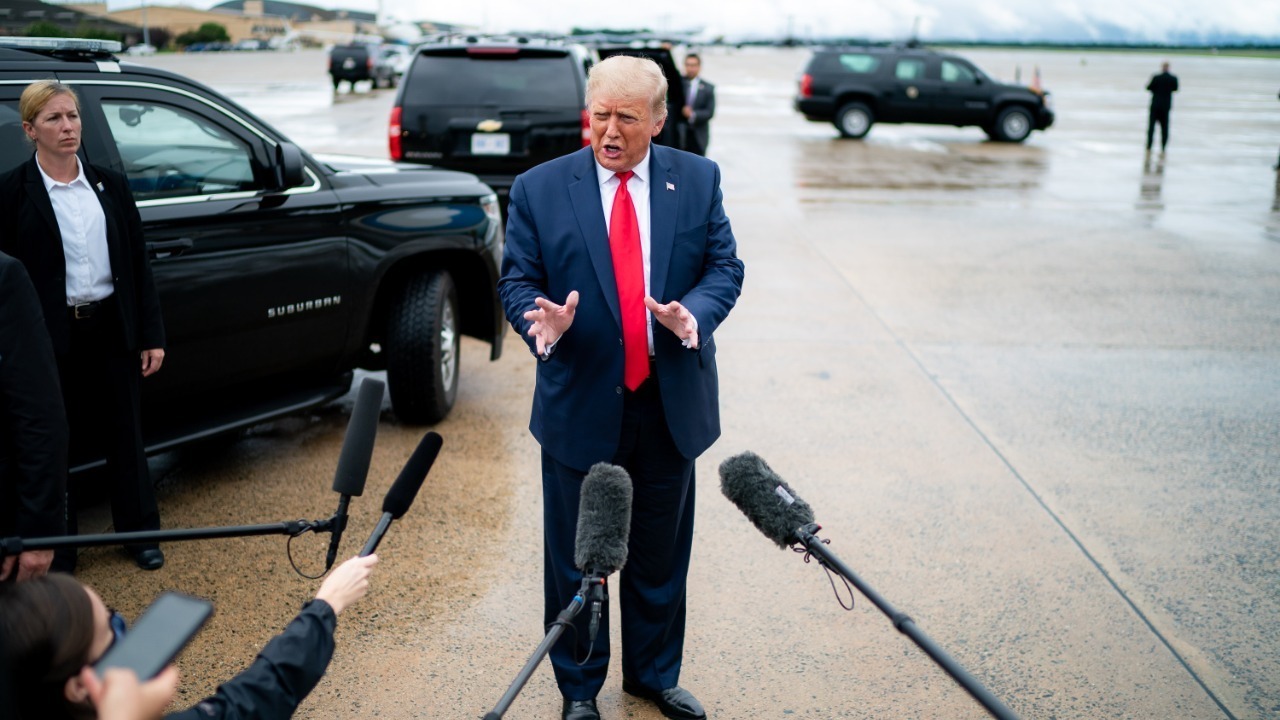
Two things about that are worth pinning down before anyone plans a cheaper cookout. Trump declined to say which countries are party to the arrangement, telling reporters at Joint Base Andrews only that “there are a few countries” and that they would be sending in high-quality product. And the policy does not exist yet as law. A White House official said the president intends to sign an executive order implementing the tariff-free quota within the next two weeks. Until that signature happens, this is a promise about beef, not beef.
The Cattlemen Answered the Same Morning
The National Cattlemen’s Beef Association did not wait for the executive order. Chief Executive Officer Colin Woodall issued a statement the same day saying his organization was “disappointed by the President’s statement,” and the rest of it reads like a warning shot from an ally who has run out of patience.
“While America’s cattle producers share the goal of keeping groceries affordable for consumers, flooding the market with government-subsidized, below-market beef is not the way to rebuild the American cattle herd,” Woodall said. He noted that cattle markets had “already turned sharply lower this morning, to the detriment of farmers and ranchers,” and that the timing could hardly be worse, because late summer is when producers decide whether to hold heifers back and expand or sell into the market and stay small. His closing line was the sharpest: the announcement and other market interventions “throw cold water on the prospect of herd expansion and sacrifices long-term stability for short term messaging.”
This is not a hostile trade group. The NCBA’s political action committee and its individual donors have directed at least 89 percent of their federal campaign contributions to Republicans in elections dating back to 2012, and 95 percent in the 2024 cycle, according to figures compiled by Roll Call from OpenSecrets data. When a group with that record calls a policy short-term messaging, it is a family argument, not opposition research.
Republican Senators From Cattle Country Broke With Him in Public
Montana Senator Tim Sheehy, among the president’s steadiest defenders on Capitol Hill, said he had been telling Trump not to do this for a year. American ranchers “have been struggling against the packer monopoly for decades, and this will further harm them,” Sheehy wrote, “most of whom are MAGA Republicans.” He allowed that the president’s heart was in the right place on wanting lower prices, then delivered the verdict anyway: the action “will make it more difficult for American ranchers to rebuild our herd and bring prices down for the American people.”
Nebraska’s two Republican senators followed. Pete Ricketts said flooding the market with lower-quality beef “compromises Nebraska farmers and ranchers,” who “should be enabled to grow herd sizes and meet consumer demand.” Deb Fischer, who ranches cattle herself, put the tradeoff plainly, saying grocery prices cannot be brought down “at the expense of American producers,” because flooding the market with foreign beef “hurts our livestock industry and undermines the long-term solution: growing the U.S. cattle herd to meet demand.”
Trump pushed back that afternoon and did not give an inch. “We want to get the beef prices down, so we’ll get them down a little bit, and that’s what people want. That’s what the voters want, and that’s what I want,” he told reporters. “The ranchers are great, they’re my people.”
February’s Argentina Proclamation Is Why Nobody Is Surprised
Ranchers have been here before, and the record is public. Proclamation 11010, signed February 6 and published at 91 FR 7107, temporarily raised the in-quota volume of lean beef trimmings by 80,000 metric tons for calendar 2026 and allocated every ton of it to Argentina, released in four quarterly tranches of 20,000 tons each. The document leans on section 404 of the Uruguay Round Agreements Act, which lets a president expand a tariff-rate quota after determining that supply will be inadequate to meet domestic demand at reasonable prices because of natural disaster, disease, or major market disruption.
The proclamation’s own findings are the case for the ranchers, not against them. It catalogs the 2022 drought across Texas, Oklahoma, Missouri, Nebraska, South Dakota and Kansas, the wildfires that took western grazing land, and the New World screwworm detections in Mexico in May 2025 that shut off imported feeder calves. Those are the reasons the herd is small. None of them is fixed by cheaper foreign trimmings, and the ranchers absorbing the losses are the only people who can fix them.
A Shrinking Herd and a $6.885 Pound of Hamburger
The numbers behind the panic are not in dispute. The Bureau of Labor Statistics put the average price of a pound of 100 percent ground beef at $6.885 in July 2026, up from $6.701 in March and above the $6.69 that February’s proclamation identified as the highest figure since the Labor Department began tracking beef prices in the 1980s. Ground beef has set a record, then broken it again, and every household buying it knows.
The supply side is turning, slowly. The Agriculture Department’s July report counted 94.2 million head of cattle and calves on American farms as of July 1, with cattle on feed up 2 percent from 2025. But beef cows fell another 1 percent to 28.5 million and the calf crop dropped 2 percent to 32.5 million head. Rebuilding a herd takes years of retained heifers and forgone income, and it only happens when a rancher believes prices will still be there when the calves are. That belief is exactly what Friday’s announcement put in question, ten weeks before an election in which Republicans need rural turnout more than they need a cheaper package of hamburger.
This article was produced with AI assistance and reviewed by an editor.

Grant Mercer covers market dynamics, business trends, and the economic forces driving growth across industries. His analysis connects macro movements with real-world implications for investors, entrepreneurs, and professionals. Through his work at The Daily Overview, Grant helps readers understand how markets function and where opportunities may emerge.


