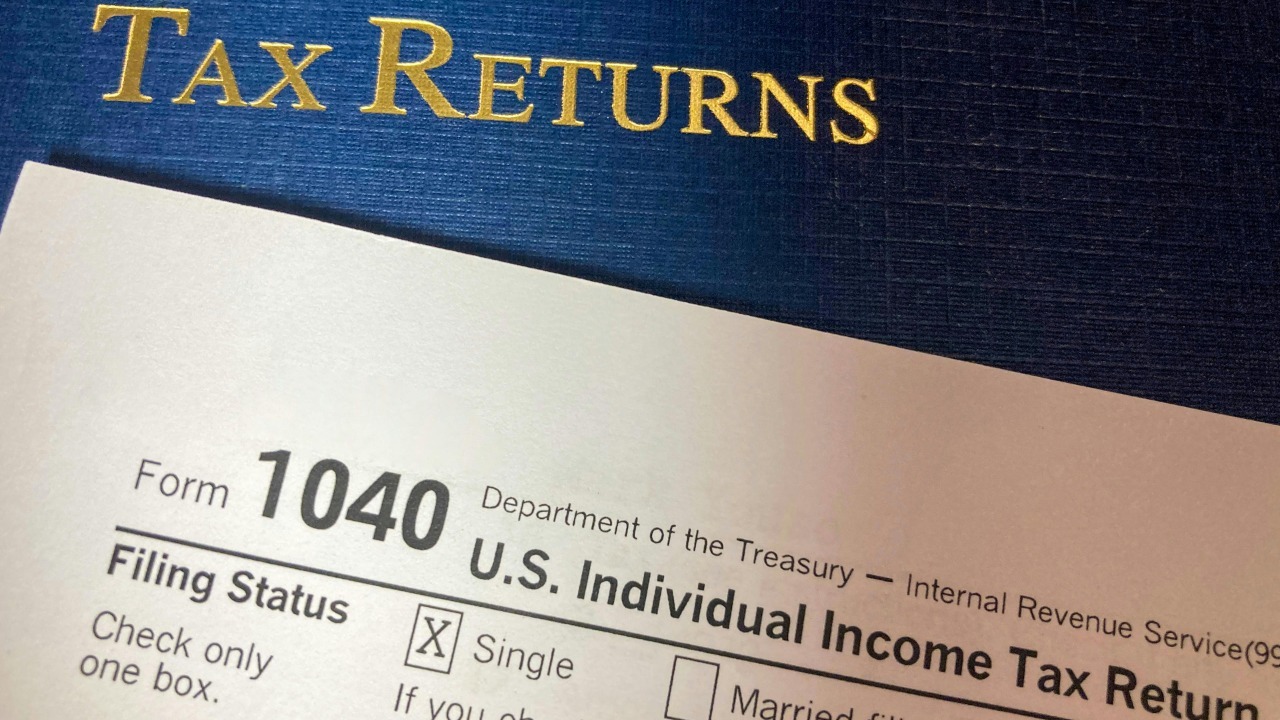
The Internal Revenue Service mailed more than 4.2 million notices this year to people who filed a tax return without bank account details, and it held their refunds for the longest time the law allows while it waited for an answer, a federal watchdog has found.
The notices were the IRS’s main tool for enforcing a 2025 executive order that ended routine paper refund checks. The watchdog’s report describes a rollout that started late, confused many of the people it reached and left hundreds of thousands calling the IRS for help.
What the watchdog found
The Treasury Inspector General for Tax Administration laid out the numbers in a snapshot report dated September 14 on the agency’s paperless transition. As of May 2026, the IRS had issued more than 4.2 million CP53E notices, the letter sent when a return claims a refund but includes no direct deposit information.
To push filers toward electronic payment, the report says, the IRS elected to hold refunds for the maximum time allowed on every return that lacked direct deposit details. The general holding period runs up to 45 days from the return’s due date.
The letters generated a heavy call load. By March 28, the IRS toll-free line for the notice had taken nearly 352,000 calls. The report also notes that media coverage described the notice as having unclear instructions.
What a CP53E letter actually asks for: The notice gives 30 days to add a bank account or request an exception, and a household that misses the window waits for a paper check on a later clock. A notice decoder that sorts which letter calls for which reply is set out in The IRS Refund Recovery Kit.
Why paper refund checks stopped
The change traces to Executive Order 14247, “Modernizing Payments To and From America’s Bank Account,” signed March 25, 2025. It directed the Treasury to stop issuing paper checks for federal disbursements, explicitly including tax refunds, effective September 30, 2025, with limited exceptions.
According to the inspector general, the IRS did not issue a press release on the change until late September 2025, one week before that deadline, and outreach between September and January was limited. That left the 2026 filing season as the first real test of the rule for people who had always taken their refund by check.
What the CP53E notice requires
The IRS’s own guide to the CP53E notice, last updated May 11, gives recipients 30 days from the date on the notice to add or update bank account information or to request an exception that allows a paper check.
The update is made through an IRS online account, under the notifications section, and the agency says changes take about two to five business days to appear. For filers who do not respond at all, the IRS says it will issue a paper check after six weeks.
That is the trade-off the report describes. A filer who acts quickly gets a direct deposit sooner. A filer who ignores the letter still gets paid, but only after a wait that stacks on top of the hold already applied to the return.
Who got exceptions, and how
Paper checks did not disappear entirely. The report counts 300,537 exceptions granted as of March 30, 2026.
Most came without any action from the taxpayer: 261,816 were granted automatically using information the IRS already held. Another 14,373 were granted by phone, 12,203 through online accounts and 12,145 after a taxpayer failed identity verification, which the report shows as its own category.
That last group is a reminder of the hurdle the online route creates. Updating a bank account through the IRS website requires an online account, and creating one means passing third-party identity verification. The report notes that some filers had to set up an account, verify their identity, open a bank account or visit a Taxpayer Assistance Center in person.
What comes next
By the IRS’s own measure the policy largely worked: the report says 98 percent of refunds had been issued electronically by April 2, 2026. The snapshot was informational, made no recommendations and contained no formal IRS response.
For the people who were caught by it, the practical lesson is about timing. A return filed with complete direct deposit information avoids the notice entirely, while a return filed without it starts the clock on a letter, a 30-day window and, if the window passes, a longer wait for a check.
The letter behind a slow refund
The inspector general’s count of 4.2 million CP53E letters shows how often a refund this year stalled on a missing bank account rather than on anything in the return itself. A filer holding that notice has a 30-day window, then a six-week paper-check clock, and a refund that can still go missing in the mail after that.
The IRS Refund Recovery Kit includes a notice decoder, a refund status tracker spreadsheet and the refund-trace steps (Form 3911), so the date of the notice, the reply and the refund’s later status can be followed in order.
Open the notice decoder in The IRS Refund Recovery Kit.
This article was created with AI assistance and reviewed for accuracy against the Treasury Inspector General for Tax Administration report and IRS guidance.

Julian Harrow specializes in taxation, IRS rules, and compliance strategy. His work helps readers navigate complex tax codes, deadlines, and reporting requirements while identifying opportunities for efficiency and risk reduction. At The Daily Overview, Julian breaks down tax-related topics with precision and clarity, making a traditionally dense subject easier to understand.