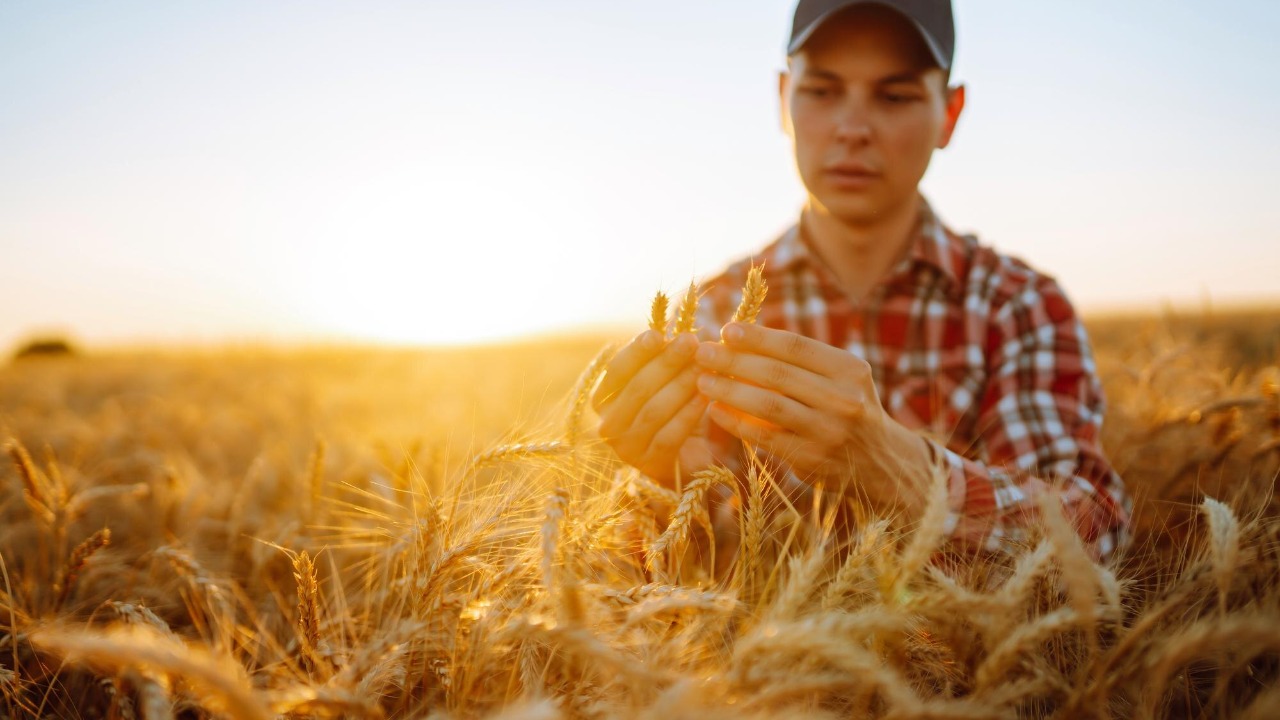
The collapse of a major Nebraska grain dealer has left farmers staring at empty mailboxes where their checks should be, and regulators scrambling to contain the fallout. A company that once handled hundreds of millions of dollars in grain is now in Chapter 11, with producers and other creditors lined up in bankruptcy court instead of at the scale house.
At the center of the crisis is a $500 million tangle of unpaid obligations, disputed grain tickets, and hard questions about how a cornerstone of the state’s farm economy could unravel so quickly. I see in this failure not just a single corporate implosion, but a stress test of how well Nebraska’s safeguards really protect the people who grow the grain that keeps the system running.
How a powerhouse grain dealer ended up in Chapter 11
The Nebraska grain firm at the heart of this story, Hansen-Mueller, did not look like a candidate for collapse when trucks were still lining up at its elevators earlier this year. Court filings now show the company in Chapter 11, with unpaid obligations to farmers and other creditors that reach up to $500M, a staggering figure for a regional grain dealer that once appeared solidly entrenched in the market. In the bankruptcy paperwork, the list of the 20 largest unsecured creditors alone underscores how deeply producers are exposed to a single buyer when they deliver grain on open account, a risk that only becomes visible when the checks stop arriving and the bins are already empty, as detailed in one Business & Inputs report.
In public explanations of the collapse, company leaders and regulators have pointed to a mix of aggressive trading decisions and a hostile global backdrop. Bad speculative positions in grain markets combined with the drag of an extended trade war left Hansen-Mueller exposed when prices and export flows moved against it, forcing the company to seek Chapter 11 protection rather than continue operating as usual. State officials have acknowledged that these “Bad Bets, Trade War Cited” dynamics were central to the decision by Hansen-Mueller to seek Bankruptcy Protection, a point highlighted in coverage that quoted both company representatives and regulators, including reporting by Steve White.
Farmers delivered grain, then watched the money vanish
For producers, the corporate explanations matter far less than the simple reality that they delivered grain and did not get paid. Nebraska’s grain system depends on trust that a licensed dealer will honor contracts and scale tickets, and when that trust breaks, the impact is immediate and personal. Complaints filed with state regulators describe farmers who hauled corn and soybeans into a Nebraska Grain Dealer License Su facility, only to discover later that the checks they expected were either delayed, partial, or never issued at all, a pattern that triggered formal action against the dealer and is documented in a detailed Nebraska Grain Dealer License Su complaint.
Those unpaid deliveries are not abstract accounting entries, they are the operating capital that keeps farms alive through the winter and into the next planting season. When a grain buyer fails, producers are suddenly forced to juggle loan payments, input bills, and family expenses without the revenue they had already mentally booked. In some cases, the unpaid grain is valued in the millions, with individual farms carrying six-figure exposures to a single dealer that they had used for years. The sense of betrayal is sharpened by the fact that many of these farmers believed state licensing and bonding requirements would shield them from exactly this kind of loss, only to learn that the safety net is thinner and slower than they assumed once a dealer’s finances unravel.
Regulators, bonds, and the limits of Nebraska’s safety net
On paper, Nebraska’s grain dealer licensing system is designed to prevent this kind of shock from landing squarely on producers. Dealers must be licensed, maintain certain financial standards, and participate in bonding or indemnity mechanisms that are supposed to backstop farmers if a company fails. In practice, the Hansen-Mueller case is exposing how limited those protections can be when a large dealer collapses with obligations that run into the hundreds of millions. Even as the Public Service Commission has emphasized that safeguarding Nebraska grain farmers is a top priority, the sheer scale of the unpaid claims means that any bond or indemnity pool will only cover a fraction of what is owed, leaving producers to fight for whatever is left in bankruptcy court alongside other unsecured creditors.
The numbers in the bankruptcy filings drive home that mismatch between expectations and reality. While the company’s total exposure to farmers and other creditors is described as up to $500M, the specific bond and insurance structures tied to its Nebraska operations are far smaller, and some facilities have been cited in complaints for failing to maintain adequate coverage. In one filing, regulators noted that a particular location’s obligations were estimated at about $4.7 million, a figure that dwarfs the protection available through standard bonding and underscores how quickly a large dealer can outrun the safety net when markets turn against it, as outlined in a separate $4.7 million breakdown.
Federal disaster tools are not built for grain dealer failures
As farmers look for ways to plug the hole left by unpaid grain checks, some are turning to federal disaster and risk management programs, only to find that most of those tools were never designed for this kind of loss. Programs like crop insurance, ad hoc disaster relief, and specialized efforts such as SDRP focus on yield losses, weather disasters, or specific market disruptions, not on the failure of a private grain buyer to honor its obligations. Guidance around SDRP, for example, notes that it is possible that there could be a second smaller SDRP payment later this year if disaster funds remain after all claims are processed, and that producers with questions about payments should contact their local FSA office, a reminder that these programs are tightly scoped and administered through federal channels rather than tailored to state-level grain dealer collapses, as explained in one SDRP overview.
That mismatch leaves producers in a bind. A farmer who lost a crop to drought might qualify for multiple layers of support, from crop insurance indemnities to federal disaster payments, but a farmer who lost the value of that same crop because a grain dealer went bankrupt is often left to navigate bankruptcy proceedings with little direct safety net. Some may find partial relief if they also suffered qualifying weather or market losses, yet the core problem, the unpaid grain check, remains largely outside the scope of federal disaster design. The Hansen-Mueller collapse is therefore pushing policymakers and farm groups to ask whether the existing patchwork of programs is adequate in an era when supply chains are more concentrated and the failure of a single buyer can ripple across entire regions.
A warning sign for rural supply chains far beyond Nebraska
What is happening in Nebraska is not an isolated story, it is part of a broader pattern of rural communities absorbing the shock when a key link in the agricultural supply chain fails. When a large grain dealer collapses, the immediate victims are the farmers who are not paid, but the damage quickly spreads to local banks, equipment dealers, and main street businesses that depend on farm income. Similar dynamics have played out in other sectors, such as when the closure of an Iowa chicken processing plant forced livestock producers in neighboring states to scramble for new buyers and support. In that case, officials urged producers to reach out to their respective state department of agriculture to make use of available resources, including programs offered through the U.S. Department of Agriculture’s Agricultural Marketing Service, a response captured in coverage of how Wisconsin farmers grappled with the impacts of that plant’s closure and the role of the Agricultural Marketing Service.
In both cases, the lesson is that rural economies are only as resilient as the infrastructure that connects farmers to markets. When a single company like Hansen-Mueller controls a significant share of grain handling in a region, its failure can function like a localized financial crisis, freezing cash flow and eroding confidence in the system. I see the Nebraska bankruptcy as a warning that regulators, lenders, and producers need to think more critically about concentration risk, transparency in dealer finances, and the adequacy of bonding and indemnity tools. Without stronger safeguards, the next time a grain firm with $500 million in obligations falters, the people who grow the grain will again be the ones left waiting for checks that never come.
More From TheDailyOverview
- Tennessee loses $2.6B megafactory and faces major layoffs
- Retired But Want To Work? Try These 18 Jobs for Seniors That Pay Weekly
- What to do with your pennies after the U.S. stops minting them
- Home Depot CEO warns of a troubling customer trend in stores

Grant Mercer covers market dynamics, business trends, and the economic forces driving growth across industries. His analysis connects macro movements with real-world implications for investors, entrepreneurs, and professionals. Through his work at The Daily Overview, Grant helps readers understand how markets function and where opportunities may emerge.

