California’s latest attempt to tax extreme wealth has drawn fierce warnings from Wall Street and quiet planning from tax lawyers. Then one of the world’s richest tech bosses effectively shrugged, saying he is happy to pay. The contrast between a billionaire CEO laughing off a new levy and peers plotting exits captures the high‑stakes experiment California is running with its proposed “billionaire tax.”
At the center is Nvidia’s Jensen Huang, whose fortune is so large that state analysts estimate he could owe billions if voters approve the measure. His relaxed response, delivered as other magnates condemn the plan as economic sabotage, turns a dry tax fight into a revealing test of what the ultra‑rich really owe the places that made them rich.
What California’s billionaire tax would actually do
Before weighing the reactions, I need to be clear about what California is trying to build. The proposal is a wealth tax that would apply to people with fortunes in the billions, not a simple tweak to income brackets. According to the state’s own analysis, the initiative would impose a new levy on the net worth of the richest residents, with payments phased in over several years beginning in 2027, and it is explicitly framed around the idea that California Is Home to Many Billionaires and that Several of the wealthiest people in the world live in California.
The measure is not yet law, and it still needs enough signatures to reach the November 2026 ballot, but its ambition is unmistakable. The plan targets accumulated Wealth rather than just yearly paychecks, and it is being sold as a way to channel money from a small group of ultra‑rich residents into public services such as health care, school and food assistance programs. That framing, laid out in the ballot language and echoed by supporters, is why the fight over this tax is really a fight over who benefits from the prosperity that has clustered in California’s tech and finance hubs.
Jensen Huang’s “perfectly fine” response
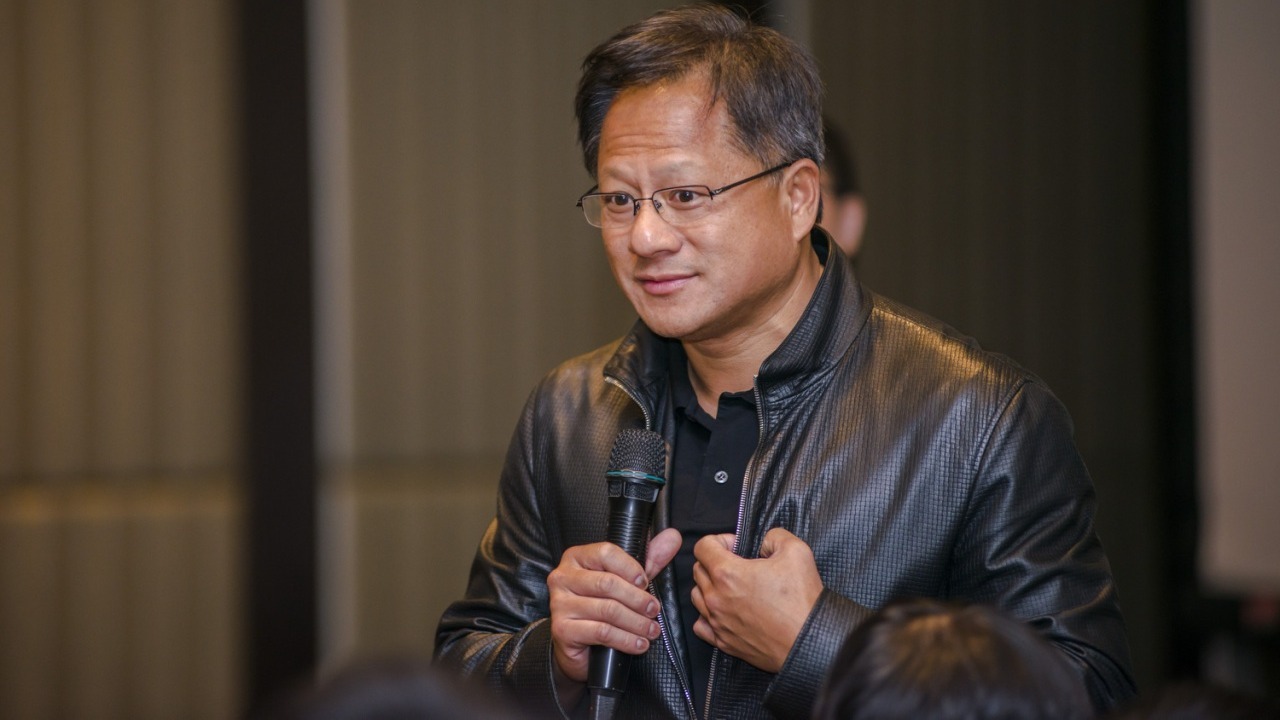
Against that backdrop, Nvidia chief executive Jensen Huang has become an unlikely poster child for the pro‑tax side, even though he never set out to be a political figure. Analysts estimate that if the initiative passes, his personal bill could reach about 8 billion dollars, a staggering sum even for someone whose net worth has been pegged at 163.2 billion dollars. Yet Huang has said he is “perfectly fine” with the idea, explaining that he and his family chose to live in Silicon Valley and that “whatever taxes that we have to pay, we pay,” a stance that directly addresses California’s proposed billionaire tax and the fact that affected residents would have five years to pay what they owe on their net worth of 163.2 billion.
Huang’s comments go further than a casual aside. He has aligned himself with the idea that those who have benefited most from California’s innovation economy should help fund its safety net, even if that means writing checks that would dwarf most corporate tax bills. In doing so, he breaks with other tech CEOs and some political allies who have warned that the ballot initiative, which was proposed by a healthcare workers’ union and championed by lawmakers including a Rep in Washington, could drive capital out of the state even as it promises new money for school and food assistance.
Other billionaires are not laughing
Huang’s relaxed posture is the exception, not the rule. Some of his peers are already making what one report described as “strategic moves” to get ahead of the potential levy, including relocating primary residences and shifting assets out of the state. While the initiative has not yet qualified for the November 2026 ballot, the proposal is backed by the Service Employees union, and the Legislative Analyst’s Office has warned that the tax could prompt a wave of departures among the very people it is designed to reach, a risk that has already led some billionaires to quietly explore moves out of California.
Others are not being quiet at all. Bill Ackman, the billionaire CEO of Pershing Square, has blasted the California wealth tax plan as an “expropriation” of private property and predicted that it will drive jobs and money out of the state. He has argued that the policy would not only hit the ultra‑rich but also ripple through the broader economy, affecting Middle class families and small businesses that depend on investment and philanthropy from the wealthy, a warning he has repeated in public letters and interviews criticizing the California wealth tax.
A long, messy road to a wealth tax
California has tried to tax extreme wealth before, and the record is mixed at best. A previous effort, known as the California Wealth Tax (also called the “Billionaire Tax”), ran through the legislature as AB‑259 and became a flashpoint for business groups and high earners. That bill ultimately failed in committee, but the debate it sparked has not gone away, which is why tax advisers are still publishing detailed explainers with titles like California Wealth Tax (aka “Billionaire Tax”) Update 2025: Why AB‑259 Failed and What It Means for Business Owners, warning that even though AB‑259 died, the political and fiscal pressures that created it persist for business owners.
Earlier efforts also ran into resistance inside the Capitol. An Assembly tax committee blocked a separate wealth tax bill after Gov Gavin Newsom and business interests signaled concern about the economic fallout, a reminder that even in a deep blue state, there are limits to how far lawmakers will go in targeting the fortunes of a small group of residents. That history, which includes An Assembly panel voting down a proposal on a Wednesday despite pressure from progressive activists, helps explain why supporters have shifted to the ballot box and why opponents are betting that voters will be more skeptical than the rhetoric around taxing Gavin Newsom and the ultra‑rich might suggest.
The political and moral stakes of one CEO’s shrug
For supporters of the initiative, Huang’s stance is political gold. When the Nvidia boss says he is “perfectly fine” with a tax that could cost him about 8 billion dollars, it undercuts the argument that any levy on extreme wealth is inherently confiscatory. It also gives cover to Democrats like Rep Ro Khanna, who has warned that California’s proposed wealth tax has a dangerous downside if it is designed poorly but has also argued that tech billionaires like Google cofounder Larry Page and venture capitalist Peter Thiel should not be able to threaten to leave every time the state asks them to contribute more, a tension he laid out while discussing how Google, Larry Page and Peter Thiel are already weighing their options.
At the same time, business leaders are far from united behind Huang. A survey of reactions from executives and politicians found that some, like Bill Ackman, see the tax as a red line, while others are more ambivalent, saying they might accept higher levies if they are paired with strict rules on how the money is spent. One summary of those responses noted that Here is how several figures lined up, with Bill Ackman writing that he would support higher taxes if he trusted the state’s budgeting, but that he does not, a nuance that shows the debate is as much about faith in government as it is about raw numbers on a Bill Ackman tax bill.
Why Huang’s attitude matters beyond California
Huang’s nonchalance also matters because it challenges a familiar script in American politics. For years, the standard response from the ultra‑rich to any talk of wealth taxes has been to warn of capital flight, job losses and a collapse in innovation. When a figure as central to the global chip industry as Jensen Huang says he is comfortable paying more, and repeats that he chose California knowing its tax climate, it suggests that at least some billionaires see their fortunes as intertwined with the communities around them, not just as assets to be shielded. That is why his comments that Jensen Huang is “perfectly fine” with the California billionaire wealth tax and that he breaks with other tech CEOs have resonated far beyond the usual policy circles, turning a dry fiscal proposal into a broader argument about civic responsibility for Jensen Huang and California.
Whether voters ultimately side with Huang’s easy acceptance or with the dire warnings from his peers will shape not only California’s budget but also the national conversation about taxing wealth in an era of extreme inequality. If the initiative passes and survives legal challenges, it could become a template for other states that, like California, are home to clusters of billionaires and are looking for new revenue to fund social programs. If it fails, it will reinforce the message that even in a state dominated by Democrats, there are hard limits to how much the public is willing to tap the fortunes of the very richest, no matter how casually one billionaire CEO laughs off the bill.
More From The Daily Overview

Julian Harrow specializes in taxation, IRS rules, and compliance strategy. His work helps readers navigate complex tax codes, deadlines, and reporting requirements while identifying opportunities for efficiency and risk reduction. At The Daily Overview, Julian breaks down tax-related topics with precision and clarity, making a traditionally dense subject easier to understand.


