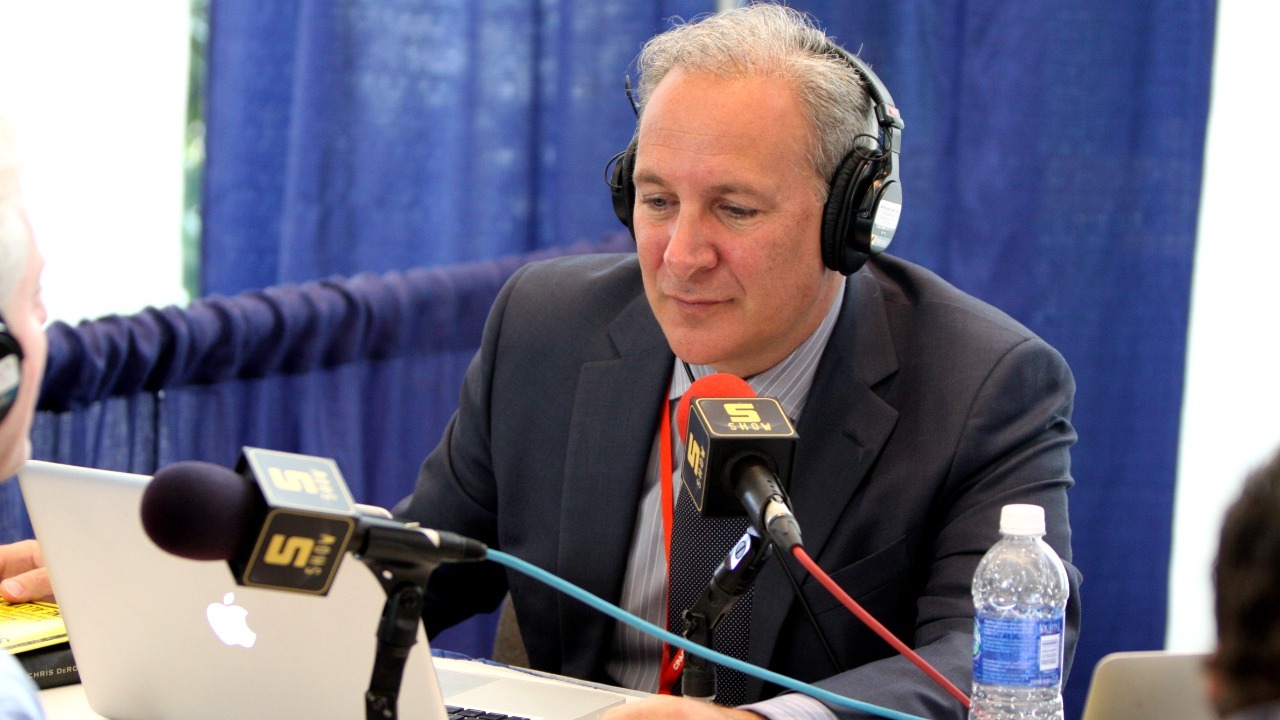
Financial commentator Peter Schiff is again warning that President Donald Trump’s mix of tariffs, debt-fueled spending and geopolitical brinkmanship is not just risky policy, but a potential trigger for a crisis in the dollar and the Treasury market. In his view, the United States is piling leverage on top of an already fragile global system, inviting a chain reaction that could hit everything from mortgage rates to 401(k) balances. I see his argument as less a prediction of imminent collapse than a stark reminder that Trump’s global gambits are colliding with structural vulnerabilities that markets can no longer ignore.
Schiff’s case: trade fights, deficits and a fragile dollar
Peter Schiff has built his reputation on spotting imbalances before they become front-page disasters, and he is now training that lens on Trump’s second-term economic agenda. In a recent warning, he argued that Trump’s focus on shrinking the trade deficit is “all wrong,” because it treats imports as a loss rather than a sign that the United States can still borrow and consume on favorable terms. Schiff, who is described as renowned for predicting the financial crisis of 2008, has been blunt that Trump’s approach to tariffs and trade could send prices “way up” for households while doing little to fix what he sees as the real problem, which is America’s dependence on foreign capital to finance its lifestyle and its government.
Schiff’s critique goes beyond trade flows and into the heart of the fiscal picture. He has already blasted Trump’s claim of a “booming economy,” calling that boom a “fiction” and pointing instead to “exploding deficits” as evidence that growth is being bought on credit rather than earned. In that analysis, he warns that rising federal borrowing is weakening the economic foundation and could contribute to a “breaking down of the monetary order,” a phrase that captures his fear of a loss of confidence in the dollar itself. When I connect those dots, I see Schiff arguing that Trump’s policies are not just cyclical mistakes, but accelerants for a long-building structural reckoning in U.S. finances.
Tariffs, investor flight and the risk to the dollar
Schiff’s alarm over Trump’s trade strategy is rooted in how tariffs interact with global capital flows. When President Donald Trump first unveiled global tariffs in his earlier term, foreign investors did not simply shrug; they responded by dumping U.S. debt and other dollar assets over the next 10 days, a concrete sign that protectionism can quickly morph into a referendum on the currency. That episode showed how fast sentiment can turn when investors start to question whether Washington still supports an open, predictable trading system that underpins the dollar’s reserve status. From Schiff’s perspective, repeating or expanding that playbook now, with debt levels far higher, risks provoking a more severe version of the same reaction.
The current tariff push is also more sweeping and legally aggressive. Jan “Key Findings” from one analysis note that President Trump has imposed tariffs under the International Emergency Economic Powers Act, or IEEPA, on U.S. trading partners, lifting the average U.S. tariff rate to its highest level since 1943. Using emergency powers to reshape trade policy signals to markets that the White House is willing to subordinate economic stability to geopolitical leverage, which can unsettle both exporters and bond buyers. I read Schiff’s concern as a warning that if investors again see tariffs as a sign that Washington is weaponizing access to its market, they may not wait around to see how the next 10 days play out before cutting exposure to Treasurys and the dollar.
Debt on track for $50 trillion and a potential bond shock
Even without trade shocks, the fiscal math is daunting, and Schiff is hardly alone in flagging it. Nov “Key Takeaways” from one major market analysis project that U.S. federal debt could reach more than $50 trillion by the middle of the next decade if there are no changes to existing policy, a trajectory that would test the patience of even the most loyal Treasury buyers. Schiff’s argument is that Trump’s tax and spending choices are pushing the country faster along that path, turning what might have been a slow grind into a potential tipping point. If investors begin to doubt Washington’s willingness to stabilize the debt, they will demand higher yields, which in turn would swell interest costs and deepen the very deficits that spooked them.
Schiff has framed this as a feedback loop that could culminate in a crisis worse than the one that hit in 2008. In a separate warning focused on “Investor Flight and Global Concerns,” he predicted that as inflationary pressures mount, there could be an accelerated retreat of foreign buyers from U.S. bonds, leading to disruptions in the bond market itself. He has argued that “we’re going to see” a scenario where rising rates and falling bond prices feed on each other, undermining both government finances and private portfolios. When I weigh that against the projected $50 trillion debt path, the risk is not just a slow erosion of fiscal space, but a sudden repricing that could hit everything from 30-year mortgage rates to the valuations of blue-chip stocks.
Trump’s global gambits: exits, energy deals and economic blowback
Trump’s foreign policy moves are amplifying these financial risks by reshaping how allies and investors view U.S. reliability. The White House has announced that Jan “The White House” is WITHDRAWING FROM INTERNATIONAL ORGANIZATIONS that are judged to be contrary to the interests of the United States, a policy that explicitly calls for pulling out of bodies that do not align with Trump’s priorities while redirecting funds only to missions he deems relevant. That kind of abrupt disengagement may play well with voters who see multilateral groups as costly or hostile, but it also signals to global institutions and foreign governments that U.S. commitments can be reversed quickly, which can erode trust in the rules-based order that supports demand for dollar assets.
At the same time, Trump is leaning into high-profile energy diplomacy as a tool of national security. On January 6, as summarized in an official fact sheet, he announced an energy deal framed as a way to strengthen America’s national security in the Western Hemisphere, including plans to handle approximately 30 to 50 million barrels of Venezuelan crude. The document notes that “On January” that agreement was presented as part of a broader effort by President Trump to restore prosperity, safety and security for both the United States and Venezuela. I see a tension here: while such deals can diversify supply and potentially lower energy costs, they also deepen the perception that Washington is using economic levers, from oil flows to sanctions, as geopolitical weapons, which can encourage other countries to seek alternatives to the dollar-based system that gives those tools their bite.
From “Trump recession” fears to Schiff’s meltdown scenario
Domestic warning signs are already emerging in sectors that were hit hard by Trump’s first-term trade fights. One prominent critic noted that “Trump” could end up owning the next downturn, saying that “if we head into a recession, it will be the Trump recession,” and pointing to farmers who still have not recovered market share lost during the earlier tariff battles. That perspective underscores how trade policy can leave lasting scars on real industries, even after headlines move on. When I factor in the renewed tariff push and the possibility of fresh retaliation from trading partners, it is not hard to imagine another round of pain for exporters, rural communities and manufacturers that rely on global supply chains.
Schiff is even more stark about where this could lead. In one interview, he warned of a “worse financial crisis than 2008” if current trends continue, tying that risk directly to what he sees as policy mistakes by the Federal Reserve and the Trump administration. He has argued that keeping rates too low for too long, while deficits balloon, will eventually force a painful adjustment when inflation and investor flight collide. In another analysis, labeled with the words Dec, Pivot, Unsustainable, Americans and Schiff, he urged policymakers to “Pivot now or get steamrolled,” stressing that unsustainable debt can have meaningful consequences for everyday Americans, from higher borrowing costs to weaker job growth. Taken together, those comments sketch a scenario in which Trump’s global gambits, from tariffs to institutional exits, act as the spark that ignites a debt and dollar conflagration that has been building for years.
How households and markets might brace for impact
For investors and households, the question is not whether to agree with every element of Schiff’s thesis, but how to interpret the signals coming from policy and markets. Jan “Peter Schiff” has already advised people worried about Trump’s trade deficit stance to think about how to protect themselves “ASAP,” warning that prices “would go way up” if tariffs and supply disruptions intensify. His basic message is that consumers should not assume low inflation and cheap imports are permanent features of the landscape, especially if trade fights escalate and foreign suppliers pass on higher costs. In practical terms, that could mean locking in fixed-rate mortgages, avoiding excessive variable-rate debt and being cautious about businesses that depend heavily on imported inputs.
From a portfolio perspective, Schiff’s skepticism about Trump’s “booming economy” narrative, as captured in the Dec commentary where Schiff and Trump are explicitly contrasted, translates into a preference for assets that can weather both inflation and financial stress. He has often highlighted real assets and sectors less exposed to dollar weakness or bond market turmoil, though the specific recommendations vary across his appearances. I would add that even investors who do not share his more apocalyptic outlook should pay attention to the underlying themes: rising debt, politicized trade, and a more fragmented global order. Those forces are already reshaping the risk calculus for everything from Treasury ETFs in retirement accounts to the financing costs of a 2025 Ford F-150 or a new data center for a cloud provider. Whether or not Schiff’s worst-case meltdown materializes, Trump’s global gambits are making it harder to assume that the dollar and U.S. debt will remain unquestioned safe havens forever.
More From The Daily Overview

Grant Mercer covers market dynamics, business trends, and the economic forces driving growth across industries. His analysis connects macro movements with real-world implications for investors, entrepreneurs, and professionals. Through his work at The Daily Overview, Grant helps readers understand how markets function and where opportunities may emerge.

