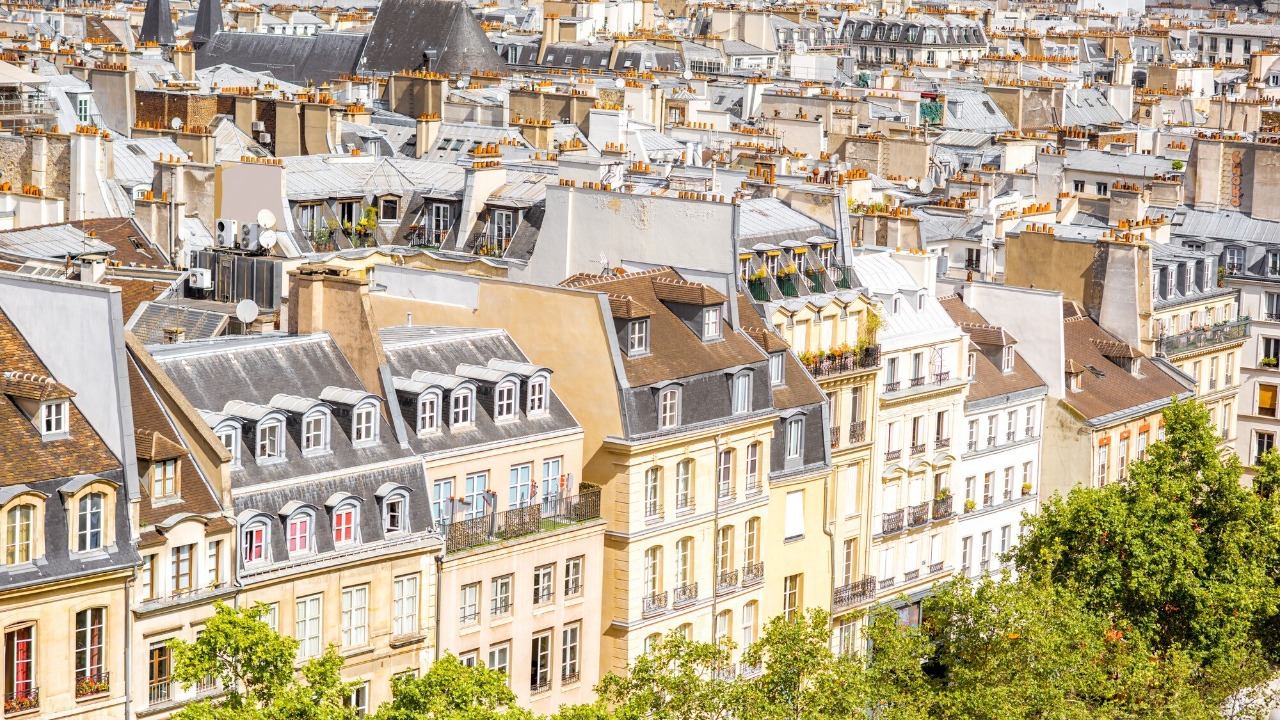
Property values around Paris are being quietly rewritten as once-overlooked suburbs turn into some of the hottest addresses in Europe. A vast transport overhaul, shifting lifestyle priorities and a new generation of buyers are combining to push demand far beyond the city’s historic core. What local officials describe as a “great revolution” in how people move and live is now showing up in bidding wars, construction cranes and record price tags.
The quiet forces behind a suburban surge
For years, the gravitational pull of central Paris kept buyers focused on Haussmann boulevards and postcard views, even as prices climbed out of reach for many households. I now see that logic breaking down. Families, investors and even affluent professionals are looking outward, drawn by larger homes, gardens and a sense that the best value in the metropolitan area lies just beyond the périphérique. Reporting on the current cycle describes how the suburbs of Paris are becoming more attractive as new infrastructure and changing tastes reshape the map of desirability.
The phrase “Great Revolution” has been used to capture the scale of this shift, with analysts arguing that it is not a short-lived spike but a structural rebalancing of where people want to live. In recent months, coverage of the Great Revolution in the Paris Suburbs has emphasized how demand is being fueled by buyers who still want access to the capital’s jobs and culture but insist on more space and amenities. That combination, rather than speculative frenzy alone, is what is driving the current boom.
How transport is redrawing the property map
The most powerful engine of this transformation is the transport network that now knits the region together in ways that would have been hard to imagine a generation ago. The Grand Paris Express project, described as a visionary effort that harnesses sustainable mobility to improve life in a large metropolis, is adding new metro lines and stations that dramatically cut travel times between outlying communes and key employment hubs. Planners have set a clear goal: put the vast majority of residents within a short distance of rapid transit so that car dependence becomes the exception rather than the rule.
That ambition is not abstract. The project is framed as a once-in-a-century overhaul that will create more than 200 kilometers of new lines and dozens of stations, with the explicit aim of ensuring that most people live less than two kilometers from a subway stop. The expectation is that this network will unlock development sites, support higher density around stations and make previously peripheral neighborhoods feel central. The description of the Grand Paris Express as a visionary project underlines why property professionals now treat proximity to future lines as a core part of their pricing models.
From abandoned factories to creative hotspot: Montreuil’s reinvention
Nowhere captures the social dimension of this shift better than Montreuil, just east of Paris. A generation ago, the area was associated with abandoned factories and derelict housing, the kind of landscape that symbolized deindustrialization on the edge of a global city. Today, the narrative is very different. Artists, young professionals and families priced out of central districts have been moving in, attracted by loft-style spaces and a more experimental urban culture that still sits within easy reach of central Paris.
Market data reflects that change. Reporting on a Changing Suburb notes how Montreuil has shifted from a symbol of decline into a case study in urban renewal, with the Greater Paris Chamber of Notaries tracking rising transaction volumes and prices. I see that evolution as a feedback loop: as more residents arrive with expectations for cafés, cultural venues and renovated housing, local services improve, which in turn makes the area even more attractive to the next wave of buyers.
Rueil-Malmaison and the pull of Napoleonic prestige
On the western side of the capital, the story is less about industrial reinvention and more about rediscovered prestige. Rueil-Malmaison, long known for its imposing château with Napoleonic connections, has emerged as an upscale suburb with some of the strongest growth in the region. The presence of historic architecture, leafy streets and established schools has always given the town a certain cachet, but improved transport links and a renewed appetite for suburban living have pushed it into a new league.
Recent reporting highlights how this Upscale Suburb with Strongest Growth Home to a Napoleonic era château is now seeing luxury listings that would once have been associated only with the city’s most exclusive arrondissements. Buyers are paying a premium for the combination of historical setting and modern connectivity, and I hear from agents that properties with direct views of the château or easy access to new transport nodes are commanding especially intense interest. The town’s experience shows how heritage, when paired with infrastructure, can become a powerful real-estate asset.
Boulogne-Billancourt and the race for prime suburban luxury
If Rueil-Malmaison illustrates the rise of historic prestige, Boulogne-Billancourt demonstrates how close-in suburbs can rival central Paris on pure price. Often described as the capital’s wealthiest suburb, it sits just across the Seine from the city limits and has long been home to corporate headquarters, media companies and high-income residents. In the current cycle, that profile has hardened into a clear market reality: square-meter prices in the most desirable pockets now approach those of the chicest central districts.
One recent analysis of Paris’s wealthiest suburb notes that top-tier properties in Boulogne-Billancourt can reach about $1,990 per square foot, a level that places them firmly in the global luxury bracket. I see this as a sign that the traditional hierarchy between “city” and “suburb” is breaking down. For certain buyers, especially those working in nearby business districts, the convenience of living just outside the city boundary, with easier car access and newer buildings, now outweighs the symbolic prestige of a Paris postal code.
Sucy-en-Brie and the search for space
Further from the center, the dynamics look different but are driven by the same underlying forces. Sucy-en-Brie, in the southeastern arc of the metropolitan area, has become a magnet for households who want a garden, more square meters and a quieter environment without cutting ties to the capital. The town’s identity is shaped by its mix of residential neighborhoods, green spaces and local services, which together offer a lifestyle that many apartment dwellers in central Paris now find increasingly appealing.
As the suburban market heats up, places like Sucy-en-Brie are seeing more interest from buyers who might previously have limited their search to the inner ring. I hear from agents that families are willing to accept a longer commute in exchange for detached houses, proximity to parks and access to schools that feel less pressured than those in the city. The Grand Paris Express and existing commuter lines help make that trade-off viable, reinforcing the idea that the real revolution is as much about quality of life as it is about transport engineering.
Montreuil, again: culture, prices and the new urban frontier
Montreuil deserves a second look because it encapsulates how culture and real estate now move in tandem on the edge of Paris. The town’s reputation as a creative hub has grown alongside its property market, with former industrial spaces converted into studios, galleries and co-working hubs. That cultural energy, combined with the relative affordability compared with central neighborhoods, has made it a favored destination for younger buyers and tenants who want an urban feel without central Paris prices.
Search data and local profiles of Montreuil underline how its image has shifted from marginal to mainstream. I see this reflected in the way developers now market new projects, emphasizing not just square meters and transport but also proximity to cultural venues and community spaces. The town’s trajectory suggests that in the Paris region’s new geography, the next frontier is not a distant exurb but a once-industrial suburb that has learned how to reinvent itself.
Rueil-Malmaison and Sucy-en-Brie: two faces of the same boom
Comparing Rueil-Malmaison and Sucy-en-Brie highlights how diverse this suburban boom really is. In Rueil-Malmaison, the story is one of high-end buyers chasing heritage, river views and proximity to western business districts, with prices reflecting that premium positioning. The town’s Napoleonic château and established bourgeois fabric give it a profile that feels almost like an extension of the most affluent Paris arrondissements, and the market behaves accordingly.
In Sucy-en-Brie, by contrast, the appeal lies in space and relative value. Buyers are less focused on historical prestige and more on the ability to secure a larger home, perhaps with a garden, while still benefiting from commuter links into the capital. Yet both places are shaped by the same underlying trend described in coverage of how the suburbs of Paris are becoming more attractive as transport expands and lifestyle expectations evolve. I read this as evidence that the “great revolution” is not confined to a single price bracket or social group.
What this means for Paris, buyers and the next decade
All of this raises a larger question: what does a booming ring of suburbs mean for the city at the center? One immediate implication is that price pressure may gradually ease in some central neighborhoods as a share of demand shifts outward, although the most iconic districts are likely to remain highly sought after. At the same time, the rise of places like Boulogne-Billancourt, Rueil-Malmaison, Montreuil and Sucy-en-Brie suggests that the functional “city” of Paris is expanding, with daily life, jobs and culture increasingly distributed across a wider territory.
For buyers, the new landscape demands a more nuanced strategy. Proximity to future metro stations, local school quality and neighborhood identity now matter as much as the old binary of “inside or outside the périphérique.” Profiles of Rueil-Malmaison and Boulogne-Billancourt show how quickly a suburb can move from “alternative” to “prime,” while the evolution of Montreuil illustrates the potential upside of betting on a changing neighborhood. I expect the next decade to be defined less by a single center and more by a constellation of suburban hubs, each shaped by its own mix of history, infrastructure and ambition.
More From TheDailyOverview

Elias Broderick specializes in residential and commercial real estate, with a focus on market cycles, property fundamentals, and investment strategy. His writing translates complex housing and development trends into clear insights for both new and experienced investors. At The Daily Overview, Elias explores how real estate fits into long-term wealth planning.

