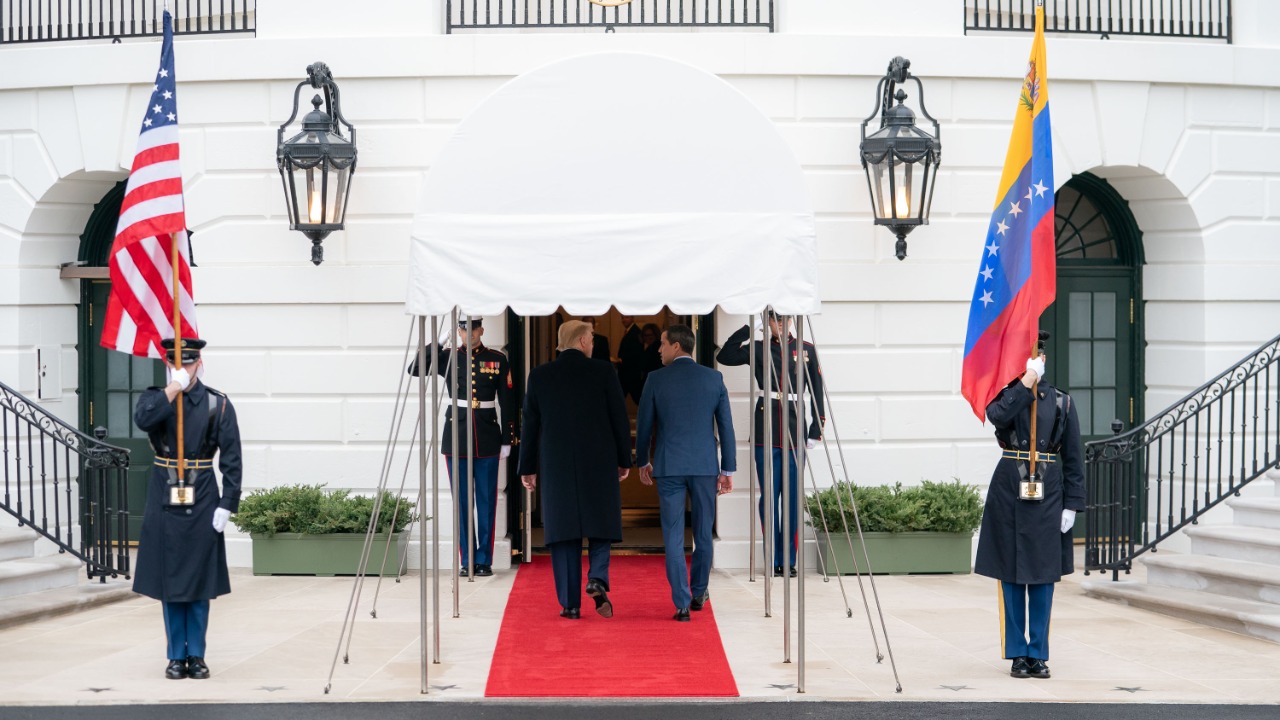
Any political opening in Venezuela is instantly read through the lens of oil markets, with traders imagining a wave of new barrels that could cool prices and ease pressure on consumers. The reality is more constrained: even a friendlier regime and looser sanctions would collide with years of underinvestment, decayed infrastructure and a transformed global landscape. I see a path to higher output, but not the kind of surge that rewrites the balance of power in crude.
Instead, a shift in Caracas would likely deliver a slow, uneven recovery that matters at the margin rather than a flood that resets the price of gasoline in Houston or Hamburg. The stakes are still high, because even modest gains from one of the world’s largest resource holders can sway expectations and bargaining power across the energy system.
Why a regime shift raises hopes for Venezuelan barrels
The basic bullish case is straightforward: a change of Regime in Venezuela could reopen the country to foreign capital and technology, giving long sidelined projects a second life. Investors have not forgotten that Venezuela still sits on vast reserves, and a government that signals respect for contracts and basic macro stability would immediately draw interest from major producers. In that scenario, the country could again become a significant source of incremental supply, with new volumes helping to cap price spikes that have weighed on the global economy.
Optimists also point to the way a more open Venezuela could diversify buyers and routes, reducing the leverage of other exporters that have benefited from its isolation. A more market-oriented leadership could invite back international oil companies, unwind some of the most restrictive joint venture terms and streamline approvals that have slowed even basic maintenance. Analysts who see a potential turning point argue that a friendlier policy mix could turn Venezuela into a large source of incremental petroleum supply, especially if sanctions relief is paired with credible reforms that reassure private partners, as highlighted in assessments of how a regime change in Venezuela might reopen the sector.
The hard limits imposed by a collapsed industry
Those hopes run into the hard arithmetic of an oil sector that has been hollowed out over decades. Research on the country’s production collapse traces the damage to a combination of mismanagement and a chronic funding squeeze, showing how an Abstract Lack of and delayed investment in a high capital intensive industry can push even a major producer into structural decline. Fields that once delivered steady output have suffered from deferred maintenance, corrosion and reservoir damage that cannot be reversed overnight. The state’s dependence on oil rents, without reinvesting enough in upstream capacity, has left a legacy of depleted equipment and lost technical expertise.
That history matters because it sets a ceiling on how fast production can rebound, even under ideal politics. Wells that have been shut in for years often require expensive workovers, new drilling or enhanced recovery techniques just to stabilize flows. Pipelines, storage tanks and export terminals have aged without proper upkeep, and some facilities would need to be rebuilt rather than repaired. The experience of other producers shows that once an oil based rentier economy lets its industry collapse, the climb back is measured in years and tens of billions of dollars, not in a few quarters of policy change.
Sanctions relief, returning barrels and the global price effect
Sanctions policy is the other key variable, and here the recent easing on Venezuelan crude exports offers a preview of what a political shift might unlock. As restrictions have softened, Venezuelan oil has begun to reappear in the United States, with tankers carrying heavy grades that Gulf Coast refiners know how to process. Yet the immediate effect on global benchmarks has been modest, because the ramp up in shipments is gradual and traders understand that the country’s production base cannot jump sharply in a short window.
Market commentary on this reopening has stressed that the first wave of returning barrels is too small to move prices dramatically, even if it signals a more permissive stance from Washington. Analysts note that the immediate effect on global oil prices is likely to be limited, since Venezuela’s production recovery will be slow and uneven, although traders are already factoring in potential future supply increases as Venezuelan crude returns to the United States market. A full regime change that leads to broader sanctions relief would amplify this trend, but the pattern would likely be the same: a slow drip of additional barrels that shapes expectations more than it crashes prices.
Infrastructure, refineries and the long rebuild
Even if politics and sanctions align, the physical system that moves oil from wellhead to pump will constrain how much Venezuela can add. Pipelines, storage and export terminals are critical infrastructure, and their reliability depends on design, materials and construction methods that have often been neglected. As engineering analyses of pipeline systems emphasize, Due to the critical infrastructure that pipelines provide to modern society, system reliability is of critical importance and hinges on the pipeline materials and construction methods used. In Venezuela, years of underinvestment and sanctions related bottlenecks have left many of these arteries vulnerable to leaks, outages and bottlenecks.
Downstream, the challenge is just as stark. Refineries that once supplied domestic fuel and exported products have suffered from outages, accidents and a lack of spare parts. The debate in other countries about keeping strategic refineries alive underscores what is at stake. In Bulgaria, for example, Vice President Iliana Yotova has argued that “at this stage and as of today, the most important thing is to preserve the refinery,” calling it structurally decisive for processing and production of petroleum products, a point captured in her plea to preserve the refinery. Venezuela faces a similar imperative: without a functioning refining system and export logistics, even rising crude output will not translate into reliable fuel supplies or export revenue.
A crowded geopolitical oil map
Any Venezuelan comeback would also unfold in a market already reshaped by other shocks, particularly sanctions on Russian producers. Measures targeting Russian companies such as Lukoil and Rosneft have forced crude flows to reroute, with discounted barrels heading to Asia and alternative suppliers stepping into Europe. This has created new trade patterns and pricing relationships that a returning Venezuela would have to navigate, rather than displace. Buyers that have grown comfortable with Russian, Middle Eastern or U.S. barrels will not automatically pivot just because Caracas is back in the game.
At the same time, the structural challenges facing other producers show that resource wealth alone does not guarantee a smooth expansion. Long term studies of the Russian sector, for instance, highlight a Lack of domestic technology for accessing offshore and unconventional resources and for providing efficient refining, which limits how quickly output can grow even when prices are favorable. Venezuela faces its own version of this constraint, with heavy crude that often requires specialized upgrading and blending. Without sustained investment in technology and human capital, any political opening will run into the same bottlenecks that have slowed other producers.
Political instability and investor caution
The final brake on expectations is political risk. Investors have learned that transitions in resource rich states are rarely linear, and that early optimism can give way to turbulence that delays projects and complicates contracts. International financial institutions have long warned that some political instability is to be expected after monumental changes, and that it will take time for new governments to respond to the miserable state of the economy, a dynamic captured in the observation that Some instability is almost baked into the early stages of reform. In Venezuela, where institutions have been weakened and social tensions are high, that warning is especially relevant.
For oil companies weighing multi decade bets, this means any regime change will be scrutinized not just for its rhetoric but for its ability to deliver legal certainty, security and macroeconomic discipline. I expect that even if a new leadership in Venez moves quickly to invite foreign partners, many will phase in commitments, tying capital to clear milestones on governance and policy. The result is a paradox: the more dramatic the political shift, the more cautious the money may be, which is one more reason why a Venezuela shift is likely to lift oil output, but not nearly as much, or as fast, as some in the market still hope.
More From TheDailyOverview

Grant Mercer covers market dynamics, business trends, and the economic forces driving growth across industries. His analysis connects macro movements with real-world implications for investors, entrepreneurs, and professionals. Through his work at The Daily Overview, Grant helps readers understand how markets function and where opportunities may emerge.

