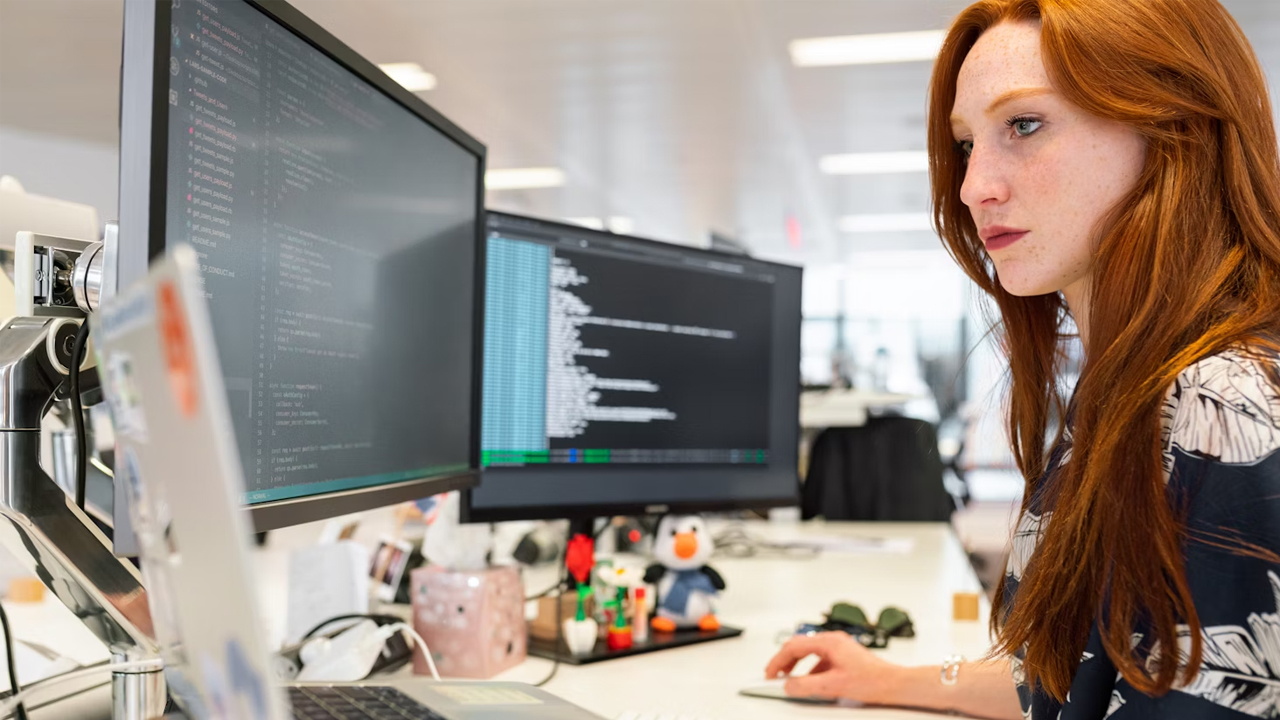
Artificial intelligence is quietly stripping away the most tedious parts of management, from status reports to scheduling, and in the process it is forcing companies to rethink what they actually expect from leaders. As routine coordination work shifts to software, the value of a manager is no longer measured by how much information they control but by how well they coach, decide and build trust. The reset is already under way in org charts, performance reviews and even burnout statistics, and the managers who adapt fastest will define what leadership looks like in the AI era.
Busywork is moving to AI, and the org chart is bending around it
The first visible change is that a growing share of classic middle management tasks is being handed to AI agents that behave like “universal teammates,” handling meeting notes, follow ups and basic project tracking so humans do not have to. In some companies, these systems are already drafting emails, summarizing Slack channels and preparing dashboards that used to eat hours of a manager’s week, a shift that Dec and Per describe as AI taking over the administrative work that is “actually undermining our productivity.” As these tools mature, they are not just speeding up existing workflows, they are starting to sit in the middle of them, routing information and nudging decisions in ways that used to require a human coordinator, which is why some executives now talk about AI as a new kind of colleague rather than a back office tool, a trend captured in reporting on AI agents functioning as “universal teammates”.
Once software can collect updates directly from frontline systems and workers, the traditional ladder between the C-suite and individual contributors starts to compress. Over the summer, large employers began experimenting with flatter structures in which executives can query AI for real time views of projects and sentiment, reducing their reliance on layers of managers as information relays and subtly shifting long held power dynamics. In some organizations this has already led to fewer rungs between senior leaders and teams, as AI driven reporting tools make it easier to manage broader spans of control and to redesign roles around judgment and coaching rather than gatekeeping, a pattern that is evident in the way AI is quietly changing the corporate org chart.
Middle management is being redefined, not erased
Despite the anxiety, the emerging consensus is that AI is reshaping middle management rather than wiping it out. The role is shifting from a focus on supervising tasks and compiling reports to one centered on orchestrating human and machine work, translating strategy and nurturing engagement, as Oct argues in an analysis of how automation is redefining the job. Instead of spending evenings in spreadsheets, effective managers are expected to interpret AI generated insights, challenge flawed recommendations and turn them into clear priorities for their teams, which is why some experts describe the new role as part product owner, part coach and part ethicist, a blend that is captured in the view that AI automation will redefine middle management.
That redefinition is especially visible in organizations that are experimenting with so called agentic AI, where software agents can plan, execute and refine multi step tasks with limited human input. In those settings, managers are being asked to design workflows that pair humans with agents, set guardrails and develop new skills such as “assurance leads” and “agent coaches” who monitor quality and ethics rather than micromanaging every step. Nov and Rethink describe this as putting the “M” back in management, with leaders focusing on talent, accountability and outcomes while Seizing the potential of AI to handle surface level work, a shift that is detailed in guidance on how to rethink management and talent for agentic AI.
Burnout, exposure and the new bar for “good” managers
The human stakes of this transition are high, especially for managers who were already stretched thin. A 2024 study from The Well, Being Project found that over 50% of managers worldwide experience burnout, a figure that reflects the cumulative weight of constant context switching, emotional labor and administrative overload. When AI takes on routine tasks like drafting performance review summaries or flagging anomalies in engagement data, it can free up time and cognitive bandwidth for higher value conversations, but it also removes the excuse that managers are too busy to coach, recognize or develop their people, which means the spotlight on their human skills only gets brighter.
As automation erases busywork, it also strips away the camouflage that once hid weak leadership behind a flurry of activity. Analyses of AI in the workplace argue that when software handles tracking and reporting, “task tracking” managers who act as process police are exposed, while those who invest in trust, clarity and growth thrive, a dynamic summarized in the Key points that AI will expose bad managers. I see this playing out in performance expectations that now emphasize coaching conversations, psychological safety and cross functional collaboration, with AI dashboards serving as a mirror that makes it harder to hide disengaged teams or chronic bottlenecks behind polished slide decks.
AI as co-pilot: from data driven decisions to “human first” zones
For managers who embrace it, AI is becoming a powerful co-pilot that raises the ceiling on what a small team can accomplish. Decision support tools can crunch vast datasets, identify patterns and simulate scenarios far faster than any individual, improving the precision of strategic initiatives and making it easier to test ideas before committing scarce resources, a capability highlighted in reporting on the impact of artificial intelligence in management. I have seen managers use these systems to refine sales territories, rebalance workloads and even redesign customer support scripts, relying on the machine to surface options while they apply context and judgment to choose a path.
The same pattern is visible in performance and goal management platforms that embed AI into everyday leadership routines. Tools that promise How Will AI Help Good Managers Be Great are already Enabling Data, Driven Management by automatically analyzing OKR progress, surfacing at risk initiatives and suggesting where a manager’s attention will have the most impact, which makes it easier to run one on ones that are grounded in facts rather than gut feel. Compared with manual spreadsheet reviews, these systems can highlight outliers and trends in seconds, turning raw data into prompts for better conversations, a shift described in detail in guidance on How Will AI Help Good Managers Be Great.
At the same time, experts are drawing sharper lines around what should remain firmly human. Frameworks like The Human, First Zone, High Error, Tacit Knowledge argue that organizations should Leave high stakes, judgment intensive tasks such as negotiation, coaching and complex conflict resolution to people, while steering automation toward lower risk, repeatable work. That distinction is not just philosophical, it is a design principle for org structures and workflows that treat AI as a force multiplier rather than a replacement for empathy and cultural nuance, a point underscored in analysis of why the The Human First Zone demands organisational redesign.
Strategy, HR and the politics of an AI enabled reset
None of this transformation happens by accident, and the organizations that are getting the most from AI are treating it as a strategic reallocation of work rather than a side project. Some leaders are explicitly adopting a Strategic Reallocation mindset, choosing to Delegate low value, low risk activities to AI, such as transcribing meetings or drafting routine emails, so that scarce human attention can move toward tasks that require judgment, cultural sensitivity and emotional intelligence. That approach aligns with guidance that a clear AI strategy should ensure the technology handles repetitive tasks while humans focus on work that truly requires empathy and nuance, a principle spelled out in advice on how This strategy ensures that AI handles all those repetitive tasks.
Human resources leaders are emerging as critical brokers in this reset, especially when it comes to middle management. Analyses of AI and middle management argue that HR’s role is to build a “symbiotic” relationship between managers and technology, helping leaders understand how AI can take over repetitive reporting so they can focus on coaching, feedback and culture, a responsibility that Anthony Onesto, VP at 15Five, frames as helping managers lead teams with greater human focus. I see progressive HR teams rewriting competency models, updating training and redesigning performance metrics so that managers are rewarded for how they use AI to elevate their people, a shift reflected in guidance on AI and middle management as a symbiotic relationship.
At the enterprise level, leadership experts are urging executives to treat AI as a catalyst for bolder organizational change rather than a narrow efficiency play. Analyses of how AI will impact organizations and the role of leaders argue that Automation can take over tasks that were previously done by humans, but that the real opportunity lies in using that freed capacity to pursue innovation and growth, not just cost cutting. That perspective dovetails with arguments that AI is Streamlining Execution and Enhancing Dec while also demanding new forms of courage and clarity from leaders, themes that run through guidance on How Will AI Impact Organizations and the Role of Leaders and in analyses that begin with Jan and Here are three key ways AI is reshaping leadership, including how Streamlining Execution and Enhancing Dec is changing expectations.
The quiet reset of expectations for every manager
As AI moves deeper into workflows, the expectations placed on managers are being rewritten in real time. Future of work reporting notes that As AI automates administrative tasks for managers, companies are being forced to reset what they look for in leaders and to question whether their current pace of change is fast enough, a tension that is especially acute in organizations where legacy processes still dominate. I see a widening gap between teams where AI is treated as a shared teammate and those where it is an optional add on, with the former already experimenting with new norms around transparency, autonomy and accountability, a shift captured in coverage of how As AI is already taking over managers’ busywork.
For middle managers in particular, the reset is both structural and cultural. Apr and Amsterdam highlight that as AI takes over repetitive tasks, middle managers become the key to AI driven transformation, because they are the ones who translate strategy into daily practice and model how to use new tools to reshape leadership, not replace it. At the same time, analyses of how AI is changing job descriptions point out that Some companies are cutting layers entirely while Others are quietly shifting responsibilities without saying much about it, leaving managers to navigate a moving target of expectations about what should be automated and what stays human, a reality described in reporting that middle managers are the key to AI driven transformation and in analysis that AI is not killing middle management but changing the job description.
For managers willing to lean in, the path forward is becoming clearer. Thoughtful leaders are pairing AI with clear norms about when to involve humans, using frameworks like Strategic Reallocation to decide what to Delegate and where to double down on human connection, as outlined in guidance on Strategic Reallocation and Delegate low value work. The result is a quieter but profound shift in what it means to be a “good” manager: less time spent chasing updates, more time spent making sense of them, and a new expectation that every leader can work fluently with AI while still showing up as the most human person in the room.
More From TheDailyOverview

Grant Mercer covers market dynamics, business trends, and the economic forces driving growth across industries. His analysis connects macro movements with real-world implications for investors, entrepreneurs, and professionals. Through his work at The Daily Overview, Grant helps readers understand how markets function and where opportunities may emerge.

