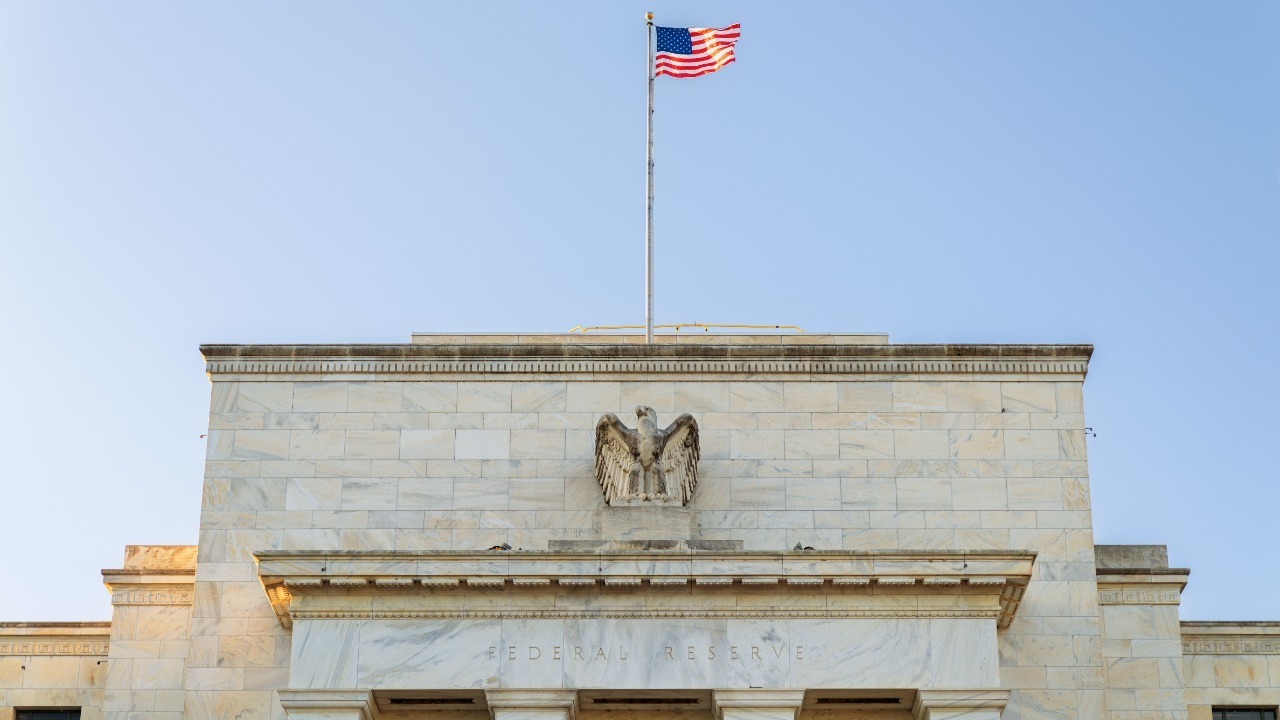
The Federal Reserve has already cut interest rates three times this year, but the loudest warning from one top economist is not about what has happened. It is about what another round of cuts would say about where the economy is heading. If policymakers feel compelled to ease further, the signal would be less about comfort and more about mounting danger.
Investors who have cheered every move lower in borrowing costs may be misreading the message. I see a growing gap between the market’s desire for cheaper money and the Fed’s insistence that more cuts would only come if growth, jobs, or inflation took a darker turn.
The Fed’s third cut and a higher bar from here
The starting point for this debate is the Federal Reserve’s decision to deliver a third straight rate cut, a move that underscored both its concern about the outlook and its reluctance to go much further. Officials opted to lower their key rate again, but they also stressed that the hurdle for additional reductions is now significantly higher, a stance that reflects a divided committee and a desire to see how the economy absorbs the easing already in place. A divided Federal Reserve cut rates Wednesday for a third consecutive time this year, while signaling that future moves will depend heavily on how the economy evolves from here.
That message was reinforced when policymakers trimmed the benchmark again but paired the move with explicit guidance that they would need clearer signs of strain before acting further. The central bank has indicated that it is not on autopilot toward ever-lower rates, but instead is trying to calibrate policy to an economy that is slowing without yet collapsing. In its latest decision, the Federal Reserve cut its key rate while making clear that the bar for future reductions is higher than it was earlier in the year.
Why a top economist says more cuts would be a bad omen
Against that backdrop, the starkest warning has come from a top economist who argues that investors should be careful what they wish for. In this view, another rate cut after the latest move would not be a friendly gesture to markets, but a sign that something in the economy has gone seriously wrong, whether in the labor market, credit conditions, or corporate earnings. As one top economist has warned, any additional interest rate cuts after today would signal that the economy is in danger rather than simply in need of fine-tuning.
The logic is straightforward: if growth were on a stable path and inflation were comfortably under control, the Fed would have little reason to keep cutting. Instead, the case for more easing would likely rest on evidence that the expansion is faltering or that financial stress is spreading, conditions that would justify emergency-style support. That is why I read the economist’s caution less as a criticism of the latest move and more as a red flag about what it would mean if the central bank feels forced to go further in the months ahead.
Stubborn inflation, rising unemployment, and the risk of stagflation
The economic data behind these warnings are not reassuring. Core inflation remains stuck at 2.8%, higher than the Fed’s preferred rate of 2%, even as unemployment is rising, a combination that points to a more complicated trade-off between price stability and jobs. When inflation refuses to fall all the way back to target while the labor market softens, the risk is that the Fed ends up with too little growth and still-uncomfortable price pressures, a mix that economists have long labeled stagflation.
In that scenario, cutting rates too aggressively could backfire. If the Fed eases in the face of sticky inflation, it risks embedding higher price expectations into the economy, which would make it even harder to restore credibility later. The Fed is already confronting the uncomfortable reality that inflation has not fully returned to its goal, and further cuts in that environment could be read as a sign that policymakers are prioritizing short-term growth over long-term stability.
Labor market warning signs and the Fed’s own caution
Labor market dynamics are central to this debate, and here too the signals are mixed. The jobless rate has begun to edge higher, but not yet to levels that would normally trigger a full-blown panic inside the central bank. That is why some Fed watchers argue that officials will wait for a more “noticeable” deterioration before they consider another cut, even if markets are already pricing in more easing. Ryan Sweet, global chief economist at Oxford Economics, captured this stance by saying that policymakers believe the labor market will have to weaken more clearly to justify another move soon, a view reflected in Ryan Sweet’s assessment of the Fed’s latest decision.
Fed Chair Jerome Powell has also been explicit about the dangers of moving too fast. He has warned that if the Fed cuts interest rates “too aggressively,” it might not succeed in achieving its inflation goals and the labor market could be “unnecessarily weak,” a reminder that the central bank is trying to avoid both overheating and a policy-induced slump. Those comments, reported in the context of a political spat in which President Donald Trump mocked the chair with an AI-generated image, underscore that Powell, identified as Jerome Powell, is trying to steer between pressure from the White House and the Fed’s own mandate.
Wall Street’s appetite for cuts versus the real-economy signal
Financial markets, and particularly Wall Street, have a very different lens. Lower rates tend to be good news for stock valuations, corporate borrowing, and speculative activity, which is why traders often cheer any hint of easier policy. As one analysis notes, Wall Street typically welcomes rate cuts because they can stimulate the economy, lift corporate profits, and push major indexes toward record highs on expectations of further easing.
Yet the very enthusiasm that drives markets higher can obscure the darker message embedded in another round of cuts. If the Fed is forced to ease again after already delivering three reductions, it would likely be responding to a clear deterioration in growth or employment, not simply indulging investors’ desire for cheaper money. That is why I see the top economist’s warning as a call for Wall Street and Main Street alike to pay closer attention to the “why” behind any future move. A fourth cut might deliver a short-term sugar high for asset prices, but it would also be a flashing sign that the economy is in more trouble than the latest rally suggests.
More From TheDailyOverview

Grant Mercer covers market dynamics, business trends, and the economic forces driving growth across industries. His analysis connects macro movements with real-world implications for investors, entrepreneurs, and professionals. Through his work at The Daily Overview, Grant helps readers understand how markets function and where opportunities may emerge.

