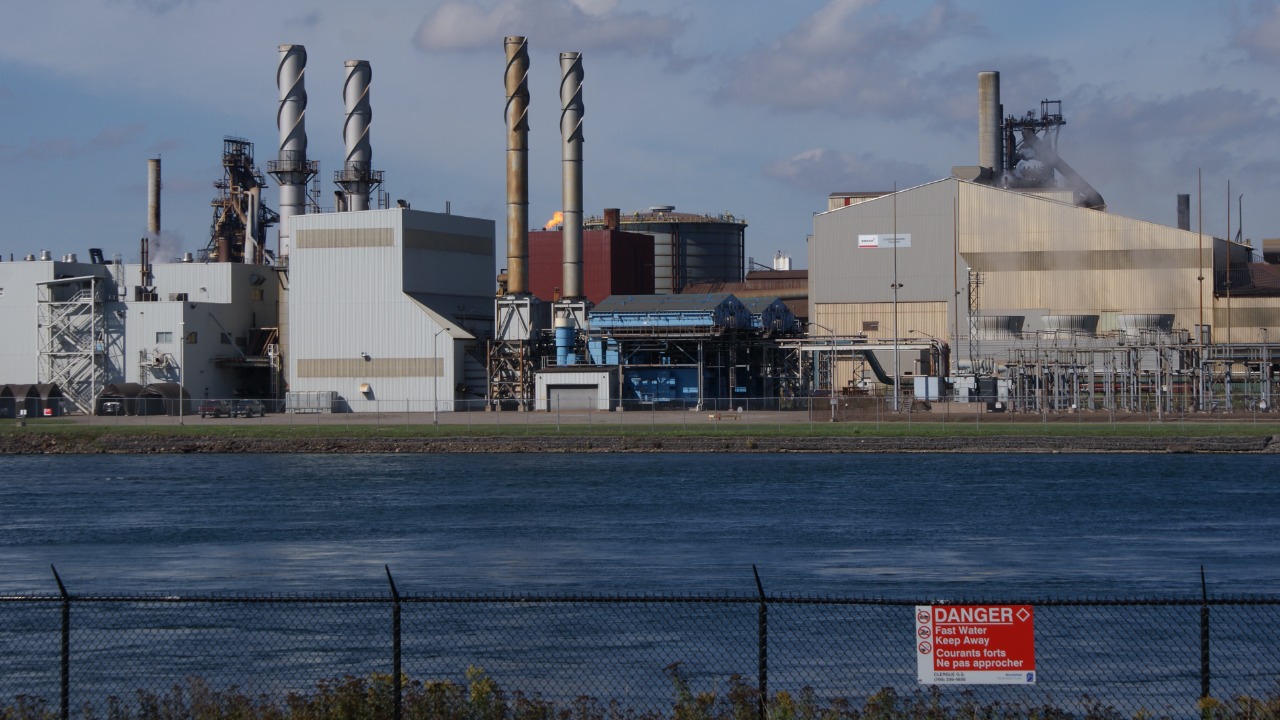
Algoma Steel, one of Canada’s largest steelmakers, has seen its stock price surge as bipartisan momentum in the U.S. House to roll back tariffs on Canadian imports collides with an aggressive White House trade posture that has doubled Section 232 duties. The result is a rare market dynamic: a Canadian producer gaining ground precisely because the policy meant to protect American mills is now under political attack from within Congress. This tension between executive tariff escalation and legislative pushback is shaping expectations across the North American steel sector, and the market is pricing in a future where Canadian steel regains access to the U.S. at lower cost.
Section 232 Tariffs Jump to 50%
The foundation of this story is a pair of White House proclamations that reshaped the cost structure for every ton of imported steel entering the United States. Earlier this year, a presidential proclamation established the 2025 Section 232 tariff framework, citing national security concerns, declining domestic capacity utilization, and shifting import trends as justification. The document also referenced OECD excess capacity projections and recent export volumes to argue that foreign steel continued to threaten American production, and this initial move defined the 2025 stance on steel imports while signaling a willingness to ratchet up pressure if conditions warranted.
That willingness quickly translated into action. A subsequent proclamation raised Section 232 tariff rates on both steel and aluminum from 25% to 50%, with the escalated duties taking effect on June 4, 2025. The same order tightened the rules around how steel and aluminum content in derivative goods is treated, closing a loophole that had allowed some importers to dilute their effective duty rate by embedding metals in finished products. For U.S. domestic steelmakers, this was intended to be a windfall: a 50% tariff barrier should, in theory, make imported steel prohibitively expensive and hand market share to American producers. Yet theory and practice diverged as markets began to consider how different trading partners, especially Canada, might ultimately be treated.
Congress Breaks Ranks on Canada Tariffs
The political consensus behind these tariffs fractured faster than many observers expected. The U.S. House voted to end tariffs on Canada in what has been described as a rare bipartisan rebuke of the administration’s trade policy, with lawmakers invoking both economic integration and diplomatic considerations. This vote represents a concrete rollback effort against the Canada tariff regime and carried enough Republican defections to move it well beyond the realm of symbolic protest. Reporting on the House challenge underscores that this was a carefully organized effort, with members from border states and manufacturing districts stressing the costs of treating Canadian steel like that of strategic rivals.
For Algoma Steel and other Canadian producers, this congressional rebellion changes the calculus entirely. Even if the Senate has not yet acted and the White House could veto any final legislation, the signal from the House is clear: there is substantial political appetite in Washington to differentiate Canadian steel from Chinese or other foreign supply. Canada is an integrated trading partner whose mills feed the same automotive, construction, and energy supply chains that American producers serve, rather than an adversary to be contained. The House vote reflects that economic reality, and markets are responding by assigning a higher probability to a future in which cross-border trade in Canadian steel faces fewer obstacles.
Why Canadian Steel Gains While U.S. Rivals Stumble
The core tension that explains Algoma’s rally lies in how a blunt tariff instrument interacts with the possibility of selective relief. The 50% duty treats all imported steel the same, whether it originates in a state-owned mill in Asia or in Sault Ste. Marie, Ontario, destined for fabricators in the U.S. Midwest. When Congress signals it may carve out Canada from that blanket duty, it creates the prospect of an asymmetric advantage. Canadian producers like Algoma could soon face a lower effective tariff rate than competitors in other exporting nations while still enjoying short shipping distances and established customer relationships across the border. That combination would amount to a structural edge rather than a transient trading bounce.
Meanwhile, U.S. steelmakers that had priced in the protection of a durable 50% tariff wall now face a more ambiguous outlook. If Canadian steel re-enters the market at reduced or zero tariffs, domestic producers lose some of the pricing power they expected to wield in negotiations with automakers, equipment manufacturers, and construction firms. Their cost structures, already higher than many international competitors, become harder to sustain in a market where one major foreign supplier is partially exempt from the tariff shock. Equity markets are forward-looking, and investors are already discounting the possibility that the tariff regime will not remain uniformly strict, reallocating capital toward the likely winners of a more nuanced policy.
Supply Chain Logic Favors Integration
Beyond the immediate trading implications, there is a deeper structural argument for why Canada is emerging as a special case. North American steel supply chains have been integrated for decades, with semi-finished slab, plate, and coil routinely crossing the border for further processing. Canadian mills supply inputs to U.S. automotive and appliance manufacturers, while American scrap and specialized products move north to support Canadian production. The Section 232 tariffs, by treating Canada identically to countries with very different economic and security relationships to the United States, disrupted these patterns and forced buyers to reconfigure sourcing in ways that added cost but not value.
If the rollback effort on Canadian tariffs gains traction, it could accelerate a return to cross-border efficiency that benefits producers and end users on both sides. For Algoma specifically, operating one of Canada’s few integrated steelmaking complexes while investing heavily in an electric arc furnace transition, reduced tariff exposure to the U.S. market would make that capital program more attractive by expanding its potential customer base. Lower trade barriers translate into higher achievable utilization rates, and higher utilization tends to support better margins and more stable cash flows. Markets appear to be anticipating that Algoma will be positioned as a preferred supplier to U.S. buyers seeking reliable, tariff-light steel from a politically friendly jurisdiction.
Political Risk Has Not Disappeared
None of this means the trade around Algoma or Canadian steel more broadly is risk-free. The White House has demonstrated both a willingness and a legal framework to adjust Section 232 measures quickly, and future proclamations could tighten or relax tariffs in response to shifts in domestic politics, global overcapacity, or diplomatic negotiations. The administration could, for example, seek to offset any congressional carve-out for Canada by further increasing pressure on other exporters, or by imposing new quota arrangements that limit the volume of duty-free Canadian steel. Such moves would alter relative advantages again, reminding investors that trade policy is inherently contingent.
There is also the unresolved question of how the Senate and the executive branch will ultimately respond to House pressure. A Senate that declines to take up the House measure, or a presidential veto that survives override attempts, would leave the formal tariff structure intact even as markets had partially priced in relief. In that scenario, Algoma’s recent gains could moderate as investors reassess the probability of lasting change. Yet the broader lesson would remain: once a bipartisan coalition has formed around easing tariffs on a close ally, the durability of a one-size-fits-all 50% duty regime is in doubt. For now, that uncertainty is tilting in favor of Canadian producers, and unless the political narrative shifts decisively back toward uniform protection, companies like Algoma will continue to be viewed as relative winners in a fragmented North American steel landscape.
More From The Daily Overview
*This article was researched with the help of AI, with human editors creating the final content.

Grant Mercer covers market dynamics, business trends, and the economic forces driving growth across industries. His analysis connects macro movements with real-world implications for investors, entrepreneurs, and professionals. Through his work at The Daily Overview, Grant helps readers understand how markets function and where opportunities may emerge.

