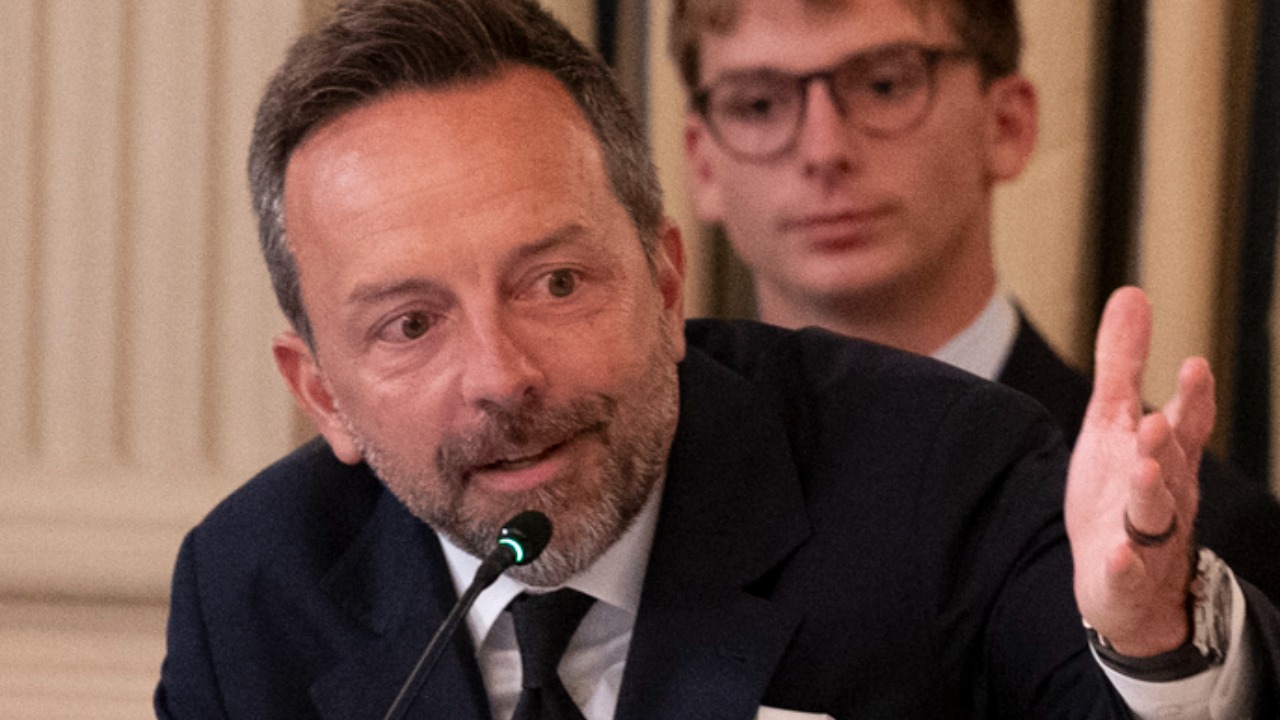
Altimeter Capital’s chief executive has become an unlikely face of a new culture-war flashpoint on Wall Street, after a massive pledge to fund “Trump Accounts” for American children set off a frenzy of calls and messages from across the financial and political worlds. The reaction to the donation, which pairs billionaire philanthropy with a signature savings program backed by President Trump, reveals how fraught even ostensibly bipartisan ideas about opportunity and wealth-building have become.
At the center of the storm is the partnership between Altimeter Capital CEO Brad Gerstner and Dell Technologies founder Michael Dell, whose decision to pour billions into the Trump Accounts initiative has drawn praise, alarm and a rush of questions about what this experiment in state-backed investing will mean for families and markets alike.
The phone-blowing moment that turned a policy idea into a flashpoint
When the Altimeter Capital CEO described his and Michael Dell’s phones as “blowing up,” he was not talking about a minor PR ripple but a full-on surge of attention that followed the announcement of the Trump Accounts donation. The phrase captured how quickly a policy concept that had lived mostly in think-tank circles and campaign white papers suddenly collided with the realities of capital markets, partisan politics and billionaire branding once real money was on the table. For Brad Gerstner, the reaction underscored that any move tying Wall Street fortunes to a Trump-branded program would be read as both a financial bet and a political signal.
According to reporting on the rollout, the Altimeter Capital CEO and Michael Dell were inundated with calls after the Trump Accounts pledge became public, a sign that investors, policymakers and peers immediately grasped the scale and symbolism of the move. A separate account of the same moment notes that Brad and Michael Dell were fielding intense outreach once the Dells’ commitment was unveiled, reinforcing how the donation vaulted Trump Accounts from policy architecture into a live test of whether elite capital will embrace or resist the president’s economic agenda.
Inside Michael and Susan Dell’s $6.25 billion Trump Accounts bet
The core of the uproar is simple and staggering: Michael and Susan Dell have committed $6.25 billion to fund Trump Accounts for 25 million U.S. kids, a sum that instantly ranks among the largest single philanthropic pledges tied to a federal program. The couple’s decision to align such a vast pool of capital with a Trump-branded initiative signals both confidence in the underlying idea of universal investment accounts and a willingness to weather the political blowback that comes with it. For families, the headline number translates into a promise that millions of children will start life with a tangible financial asset, not just a slogan about opportunity.
Reporting on the pledge makes clear that Michael and Susan Dell intend their $6.25 billion commitment to reach millions of American children through Trump Accounts, framing the effort as a way to widen access to the kind of compounding investment gains that helped build their own fortune. Another detailed breakdown notes that Michael and Susan Dell are structuring the donation so that parents will be able to add their own funds to the accounts, turning the initial seed money into a platform for long-term saving rather than a one-off windfall.
Brad Gerstner’s role: from policy architect to lightning rod
Long before the phones started buzzing, Brad Gerstner had been working to turn the Trump Accounts concept into a concrete policy. As CEO of Altimeter Capital, he is better known for backing high-growth tech companies than for designing social programs, yet he has emerged as a central architect of this effort to give every child a stake in the markets. His involvement reflects a broader shift among some investors who see wealth inequality not just as a moral problem but as a structural risk to long-term growth, and who are willing to attach their names to controversial fixes.
One detailed account credits Brad Gerstner, the CEO of Altimeter Capital, with originating the idea for accessible investment accounts that would be available to children until each child turns 18 years old, a design meant to lock in long-term compounding rather than short-term consumption. Another report notes that Gerstner, CEO of Altimeter Capital, later founded Invest America to advocate for the Trump Accounts program to be included in the policy agenda, underscoring how he moved from investor to activist in order to push the idea into federal law.
How Trump Accounts are designed to work for American families
Strip away the politics and Trump Accounts are, at their core, a mechanism to give children a foothold in the financial system from birth. The program is structured so that each eligible child receives an investment account seeded with public and philanthropic funds, which then grows over time in the markets and becomes accessible when the child reaches adulthood. The aim is to turn what is now a privilege of affluent households, early exposure to compounding returns, into a baseline feature of American life.
According to program details, under the Trump Accounts program each child’s account is intended to grow until adulthood, with private philanthropy like the Dell pledge serving as a critical part of the mission to reach tens of millions of beneficiaries. Additional reporting on the Dells’ commitment explains that parents will be able to add their own funds to the Trump Accounts, effectively turning the initial public and philanthropic seed into a hybrid between a 529 college plan and a long-term brokerage account that can support education, homeownership or entrepreneurship once the child turns 18.
Why Michael Dell’s fortune and biography matter to this gamble
Michael Dell’s decision to tie a slice of his wealth to Trump Accounts carries extra weight because of how he built that fortune in the first place. His journey from a college dorm room tinkerer to a technology magnate with a net worth in the hundreds of billions has long been held up as a case study in American upward mobility. By backing a program that hands every child a small but real stake in the markets, he is effectively trying to institutionalize a piece of that story, turning individual hustle plus capital access into a policy blueprint rather than a one-off narrative.
A profile of his rise notes that Michael Dell’s journey to a $148 billion fortune began with a small computer business and eventually led to the creation of Dell Technologies, a trajectory that helps explain why he sees investment access as central to opportunity. That same reporting links his latest move to the Trump Accounts donation, highlighting how the Altimeter Capital CEO and Michael Dell are now collaborating on a program that aims to give millions of American kids a financial starting line that looks a little more like the one that helped launch his own career.
More From TheDailyOverview
- Tennessee loses $2.6B megafactory and faces major layoffs
- Retired But Want To Work? Try These 18 Jobs for Seniors That Pay Weekly
- What to do with your pennies after the U.S. stops minting them
- Home Depot CEO warns of a troubling customer trend in stores

Grant Mercer covers market dynamics, business trends, and the economic forces driving growth across industries. His analysis connects macro movements with real-world implications for investors, entrepreneurs, and professionals. Through his work at The Daily Overview, Grant helps readers understand how markets function and where opportunities may emerge.

