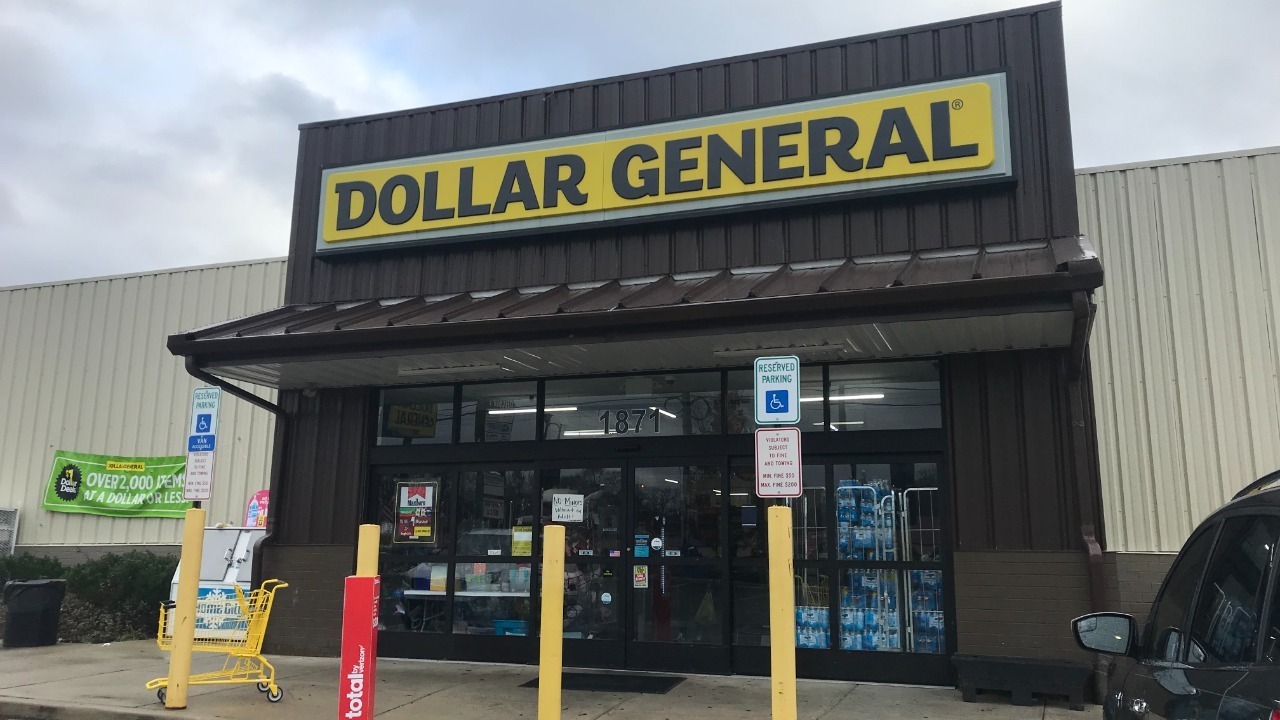
Dollar General is positioning itself as one of the most aggressive buyers of secondhand retail space, mapping thousands of potential locations in the wake of rivals’ closures while still trimming parts of its own fleet. The chain is slowing its once breakneck pace of new builds, but it is not backing away from growth, instead shifting toward larger formats, remodel-heavy investment and a long runway of vacant sites it believes could support future stores.
The company has identified a vast pool of empty storefronts across the country that it views as candidates for expansion, a strategy that aligns with a broader retail trend of moving into existing buildings rather than constructing from scratch. That approach is reshaping how Dollar General thinks about store size, layout and geography, and it is already influencing its plans for 2025 and 2026.
How Dollar General’s growth machine is changing gears
For years, Dollar General expanded by blanketing small towns with compact boxes, but the company is now recalibrating that model as it looks at a landscape filled with vacant retail. Executives have signaled that the chain will Open Fewer locations in the near term while leaning into Larger Stores that can support a broader mix of products and services. That shift reflects both rising construction costs and the opportunity to step into secondhand spaces that already have parking, utilities and community familiarity.
The company’s official guidance underscores this pivot from pure unit count to quality and productivity. In its fiscal 2025 plans, Dollar General has outlined a more selective pipeline that still adds hundreds of new sites but does not chase growth as aggressively as in previous years, instead emphasizing formats that can drive higher sales per store. The retailer’s own materials, including its Dollar General corporate site, frame this as a strategy to balance expansion with returns, using a mix of new builds, relocations and remodels to refresh the fleet while keeping capital discipline.
From rapid rollout to targeted expansion in 2025
The next phase of Dollar General’s brick and mortar buildout is defined by a smaller but still sizable slate of openings. The company has said it plans to add approximately 575 new stores in the United States in its upcoming fiscal year, a figure that marks a step down from its most aggressive years but still represents one of the largest growth programs in retail. That same plan includes hundreds of remodels and a set of relocations, signaling that management is just as focused on upgrading existing boxes as it is on planting new flags.
Internally, Dollar General has framed this as part of a broader capital plan that also leans heavily on store refreshes. One detailed breakdown of its pipeline notes that the company is preparing for 575 New Stores alongside 4,250 Remodels, while it also Tests Same Day Delivery in selected markets to deepen convenience for existing shoppers. That combination of new units, heavy reinvestment and last mile experimentation shows how the chain is trying to squeeze more productivity out of every square foot, whether it is a fresh build or a reclaimed shell from a departed rival.
The 11,000-site opportunity and the 2026 slowdown
Dollar General’s most eye catching number is not how many stores it will open next year, but how many potential locations it thinks are still out there. Company leaders have told investors they see roughly 11,000 empty retail sites across the country that could support one of its discount stores, a long term opportunity that stretches well beyond the current construction cycle. That estimate is rooted in a detailed mapping of vacant boxes left behind as other chains have shuttered, and it frames the current wave of closures as a pipeline rather than a warning sign, according to reporting that describes how Dollar General sees 11,000 empty stores it could open in the future.
Even with that vast runway, the company is signaling a more measured pace in 2026. Management has indicated that in 2026, Dollar General plans to open 450 new stores, a figure that is explicitly lower than its 2025 target and reflects a deliberate slowdown in unit growth. That 450 store plan, laid out on a Thursday call with investors, suggests the chain will lean even more heavily on relocations, remodels and opportunistic backfilling of secondhand sites rather than simply replicating the 575 store cadence year after year, as detailed in the same 450 store forecast.
Remodels, larger formats and the Non Consumables Initiative
The company’s appetite for empty sites is closely tied to how it is rethinking what happens inside its stores. Dollar General has been rolling out a Non Consumables Initiative, often shortened to NCI, that expands the home and discretionary sections in many locations and pushes the brand further into categories like décor and seasonal goods. Executives have described this Non Consumables Initiative (NCI) as a way to lift margins and basket sizes, and it is easier to execute in larger footprints that can accommodate more aisles and endcaps.
That is one reason the chain is gravitating toward bigger boxes and more extensive remodels rather than simply cloning its smallest rural prototypes. In its 2025 project list, the Goodlettsville based retailer has highlighted that it will open fewer but bigger stores, a plan that includes a mix of new construction and conversions of existing buildings, as outlined in a detailed look at how The Goodlettsville, Tennessee company is reshaping its fleet. Larger formats also give Dollar General more flexibility to test services like expanded coolers, health and beauty assortments and even limited same day delivery staging, all of which benefit from the extra backroom and sales floor space that many secondhand sites provide.
Riding a broader wave of secondhand retail and selective closures
Dollar General’s strategy sits within a wider shift in the retail real estate market, where chains are once again absorbing more space than they give up. Across the sector, Retailers absorbed 5.5 m more square feet than they vacated in a recent quarter, a reversal from earlier in the year that points to positive demand again by 2026 as companies move into empty buildings left by bankruptcies and downsizing. That trend, detailed in an analysis of how Retailers are moving into empty buildings again, helps explain why Dollar General sees so much runway in those 11,000 potential sites and why landlords are increasingly eager to work with discounters that can backfill large boxes quickly.
At the same time, Dollar General is not immune to the pressures that have pushed other chains to close stores. Earlier this year, the company said it is closing nearly 100 locations nationwide, a relatively small slice of its total fleet but a reminder that not every box can be saved or successfully repositioned. In a detailed report on those closures, the company is described as shutting nearly 100 stores even as it continues to open hundreds more, a dual track approach that prunes underperforming locations while freeing up capital for higher potential sites, including those secondhand spaces vacated by competitors.
More From TheDailyOverview
- Tennessee loses $2.6B megafactory and faces major layoffs
- Retired But Want To Work? Try These 18 Jobs for Seniors That Pay Weekly
- What to do with your pennies after the U.S. stops minting them
- Home Depot CEO warns of a troubling customer trend in stores

Elias Broderick specializes in residential and commercial real estate, with a focus on market cycles, property fundamentals, and investment strategy. His writing translates complex housing and development trends into clear insights for both new and experienced investors. At The Daily Overview, Elias explores how real estate fits into long-term wealth planning.

