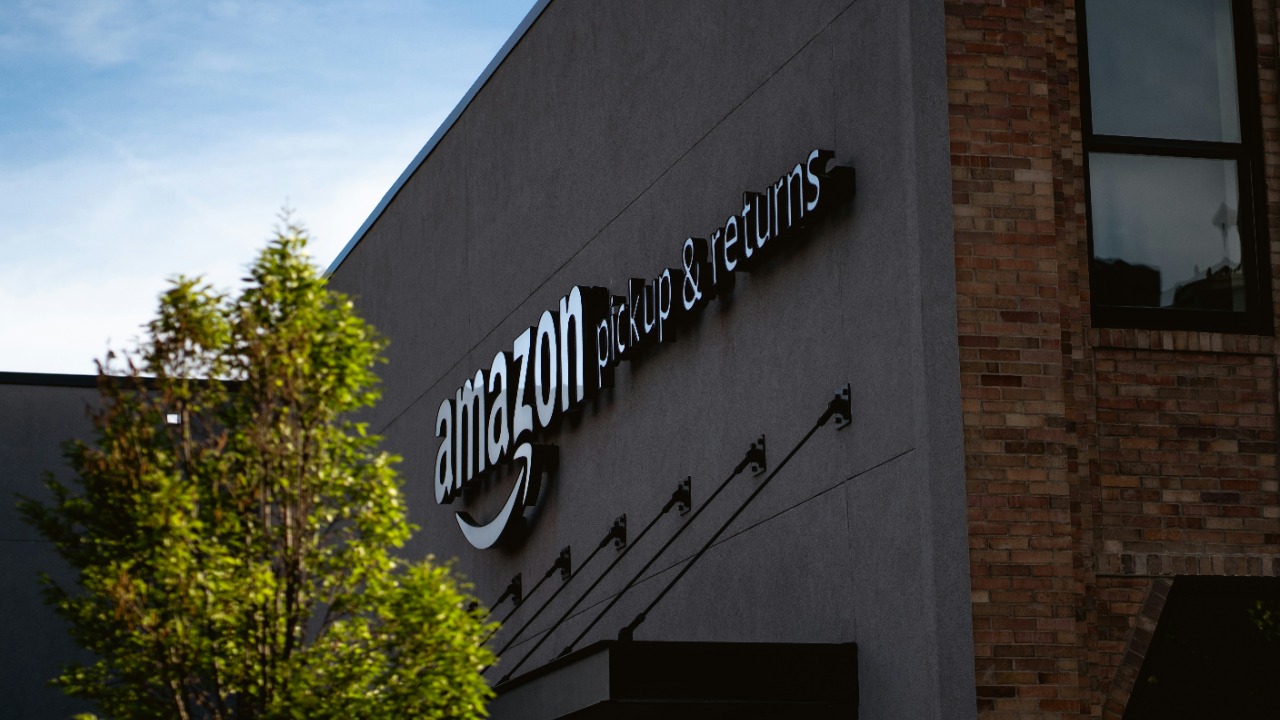
Amazon has agreed to pay $309.5 million to settle a lawsuit over return refunds that shoppers say never arrived or arrived short, and the shoppers who must file to share in it have until Tuesday, December 1.
The settlement splits customers into two groups. One group is paid automatically. The other gets nothing unless a claim form, with documentation, reaches the settlement administrator by that date.
What Amazon is accused of doing with returns
The case, In re: Amazon Return Policy Litigation in federal court in Seattle, centers on allegations that certain Amazon return policies and practices violated Washington consumer protection law and other laws. According to the official settlement website, Amazon denies the allegations and any wrongdoing, and the court has not found the company liable.
The class covers people who started a return or refund request on Amazon.com for a physical product purchased and received in the United States between September 5, 2017 and February 12, 2026, and who either did not receive a correct or timely refund or were later charged again for the item they sent back. That window runs more than eight years, which means many customers will need to look back through old order history to know whether they fit.
The court-approved notice says the $309.5 million goes into a common fund that does not revert to Amazon. Separately, the settlement agreement says Amazon will make reasonable efforts to finish paying roughly $34 million in refunds that were still unpaid as of December 1, 2025, outside the fund.
The group that has to prove it: Amazon shoppers in the claim-required group need an order number, a rejection reason and proof the item went back, and an incomplete form can be denied. The step-by-step filing walkthrough lays out how to assemble a claim like this one, in The Settlement & Refund Recovery System.
Subclass A is paid automatically, Subclass B must file
The settlement website says members of Subclass A receive a payment without filing. The settlement agreement defines that group by transactions identified in the settlement documents, and it places every one of the roughly $34 million in still-unpaid refunds in Subclass A. Those members will be asked to choose a payment method after the court grants final approval.
Everyone else in the class falls into Subclass B, and that group must act. The notice says Subclass B members are paid only if they submit an eligible claim form with supporting documentation, online or postmarked by December 1, 2026.
The money is not split evenly between the two groups. After administrative costs, attorneys’ fees and service awards come out, the notice says 92.7 percent of what remains goes to Subclass A and 7.3 percent goes to Subclass B. Within each group, payments are proportional to the unpaid amount on each transaction plus a share of potential interest. Class counsel may ask the court for up to $100 million in fees and $1 million in costs, and the court can award less.
What the claim form asks for
The claim form asks for each rejected or short-changed return to be listed separately, with the order number, a product description, the date the refund was requested, the refund amount requested and the rejection reason if it is known. It suggests a screenshot from the Amazon account showing those details, and points to old Amazon emails about the return when the order history no longer shows them.
For most rejection reasons, the form requires what it calls “proof of tender.” For a refund that failed at the payment stage, it asks for a bank statement, credit card statement or payment-app record showing the charge posted and was never reversed. Each reason also carries a sworn statement, such as confirming the item was returned in the same condition it was received.
Payments can be chosen as an Amazon gift card, a paper check, PayPal, Venmo, Zelle or a virtual prepaid card. The certification is signed under penalty of perjury, and the form warns that a claim will be denied if the administrator asks for more information and gets no answer.
The dates that matter after December 1
December 1 is also the deadline to opt out or to object. Opting out preserves the right to sue Amazon separately over the same claims but forfeits any payment from this fund. An objector stays in the class and asks the court to change or reject the deal.
The final approval hearing is set for March 16, 2027, at 10 a.m. Pacific time at the federal courthouse at 700 Stewart Street in Seattle, and the notice warns that date can move. No payments go out before the court approves the settlement and any appeals are resolved.
How to reach the real administrator
The settlement’s FAQ page lists the administrator’s mailing address in Philadelphia, and the notice gives a toll-free number, 1-888-553-4246, and the email address info@ReturnSettlement.com. The claim form is filed through the official website itself.
Large consumer settlements tend to draw imitators. When fake claim sites appeared around an earlier Equifax settlement, the Federal Trade Commission warned that look-alike pages copy the official site and reminded consumers they would never have to pay to file a claim. Typing the official Amazon settlement address directly, rather than clicking a link in an unexpected text or email, is the safest way to reach the claim form.
A claim that runs on old order records
The Amazon claim reaches back to returns started as early as 2017, and each one needs its own order number, rejection reason and proof the item went back. Gathering that record is the real work, and the payment itself will not be scheduled until after the March hearing.
The Settlement & Refund Recovery System pairs the four-date rule for reading a settlement notice with a step-by-step filing walkthrough and a claim log and payment tracker, so each Amazon transaction and its later payment status sit in one record.
Open the filing walkthrough in The Settlement & Refund Recovery System.
This article was created with AI assistance and reviewed for accuracy against the official Amazon return settlement website, its notice, claim form and settlement agreement.

Silas Redmond writes about the structure of modern banking, financial regulations, and the rules that govern money movement. His work examines how institutions, policies, and compliance frameworks affect individuals and businesses alike. At The Daily Overview, Silas aims to help readers better understand the systems operating behind everyday financial decisions. He also covers scams, fraud cases and the audits that expose them.