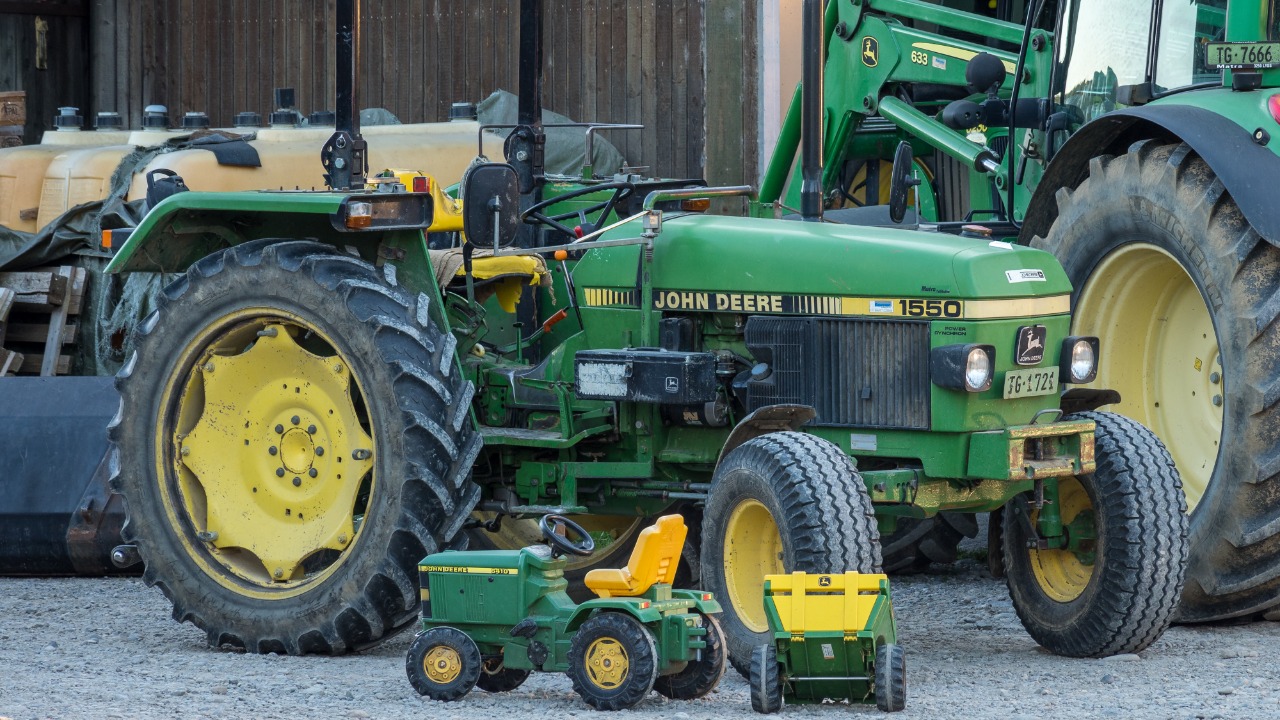
Farmers and businesses that paid John Deere or its dealers to repair large farm equipment over the past eight years can file for a share of a $99 million antitrust settlement through Thursday, December 31.
Payments are tied to how many hours of repair labor a claimant paid for, not a flat amount. The deal also requires Deere to open its digital repair tools to equipment owners and independent mechanics, with the court keeping the power to enforce that promise for ten years.
What the right-to-repair lawsuit accused Deere of doing
The case, In re Deere & Company Repair Services Antitrust Litigation, is in federal court in Rockford, Illinois. According to the court-approved notice, the plaintiffs allege Deere ran an anticompetitive scheme to withhold certain repair tools from customers and independent repair shops, which they say left customers paying more for repairs.
The official settlement website says John Deere denies any wrongdoing and the court has not decided who is right. The $99 million comes with interest that has been accruing since January 15, 2026.
When the dealer data falls short: Deere repair claimants whose service visits are missing from the company’s records must supply their own documentation for those repairs to count. The step-by-step filing walkthrough explains how to assemble a documented claim, in The Settlement & Refund Recovery System.
Which machines and repairs count
The class covers every person and business that bought repair services for Deere large agricultural equipment from John Deere or an authorized dealer in the United States between January 10, 2018 and May 18, 2026. It is not limited to dealer customers; repairs bought directly from Deere count too.
The notice defines large agricultural equipment as Deere machines that rely partly on electronic control units. That includes all 6000, 7000, 8000 and 9000 Series tractors, plus combines, cotton pickers, cotton strippers, sugarcane harvesters, tillage and seeding equipment including planters, and application equipment and sprayers. There is no horsepower threshold.
Repairs done under an extended warranty are eligible. Repairs covered by Deere’s own factory warranty are not, since the owner did not pay for that labor.
How the $99 million is divided
After fees and costs come out, the net fund is split pro rata by the total labor hours spent on qualifying repairs during the class period. The notice gives the plain version: a claimant whose repairs account for 1 percent of all the labor hours claimed gets 1 percent of the net fund. A farm that ran a combine and two 8000 Series tractors through dealer shops for years will weigh far more than an owner with a single service visit.
Class counsel will not seek more than $45 million in fees, and no more than one-third of the combined value of the cash and the repair-access terms. Litigation costs are capped at $6 million, and each of the seven named plaintiffs may receive a $25,000 service award, all subject to the judge’s approval.
The repair-tool access that comes with the money
The non-cash terms may matter more to many owners than the check. Deere must give customers and independent repair providers access, on fair and reasonable terms, to the digital tools needed to maintain, diagnose and repair covered equipment, including new tools once they reach more than half of authorized dealers. The court keeps jurisdiction to enforce those terms for ten years.
The plaintiffs’ expert values that relief at $293.9 million to $648 million, putting the settlement’s estimated total value at $392.9 million to $747 million. The settlement website notes a separate settlement Deere reached with the Federal Trade Commission and five state attorneys general covers repair access only, with no money, and says the repair resources in both deals are interpreted the same way. No claim form is needed to benefit from the repair-access terms.
Records, deadlines and the January hearing
Deere’s own data will capture many repairs, but not all. The notice says claimants whose repairs are missing from that data, or only partly captured, will need to provide records of the repair services they want counted, along with extended-warranty purchase information. Repairs the administrator asks about and cannot verify may be deducted. That is the step most likely to shrink a claim: an independent invoice file is worth assembling before filing, not after.
Claims must be submitted on or before December 31, 2026. Requests to opt out must be postmarked by December 4, 2026, and mailed to Deere Repair Services Antitrust Litigation, Attn: Exclusions, P.O. Box 58220, Philadelphia, PA 19102; objections are due the same day. The fairness hearing is set for January 19, 2027, at 10 a.m. Central before U.S. District Judge Iain D. Johnston in Courtroom 5200 at 327 South Church Street in Rockford. The administrator can be reached at 1-844-644-4294 or info@DeereRepairSettlement.com.
Eight years of repair invoices
The Deere claim runs on labor hours, and any repair missing from Deere’s own data has to be backed by the owner’s paperwork. For an operation that used more than one dealer across a claim period that starts in January 2018, rebuilding that service history is most of the work.
The Settlement & Refund Recovery System includes a step-by-step filing walkthrough and a claim log and payment tracker for keeping each repair record, claim submission and later payment in one file.
Open the filing walkthrough in The Settlement & Refund Recovery System.
This article was created with AI assistance and reviewed for accuracy against the official Deere repair settlement website and its court-approved notice.

Grant Mercer covers market dynamics, business trends, and the economic forces driving growth across industries. His analysis connects macro movements with real-world implications for investors, entrepreneurs, and professionals. Through his work at The Daily Overview, Grant helps readers understand how markets function and where opportunities may emerge.