Amazon is dismantling its physical grocery experiment, shutting every Amazon Fresh and Amazon Go store and cutting thousands of jobs while spelling out what kind of severance checks workers can expect. The move marks a sharp retreat from the company’s yearslong push into bricks and mortar, and a reset that shifts attention back to Whole Foods, delivery and the core online marketplace. For employees from Southern California to Seattle and Philadelphia, the strategy pivot is not an abstract business story but a sudden question of paychecks, health insurance and whether to stay or go.
Amazon’s grocery retreat and the scale of the cuts
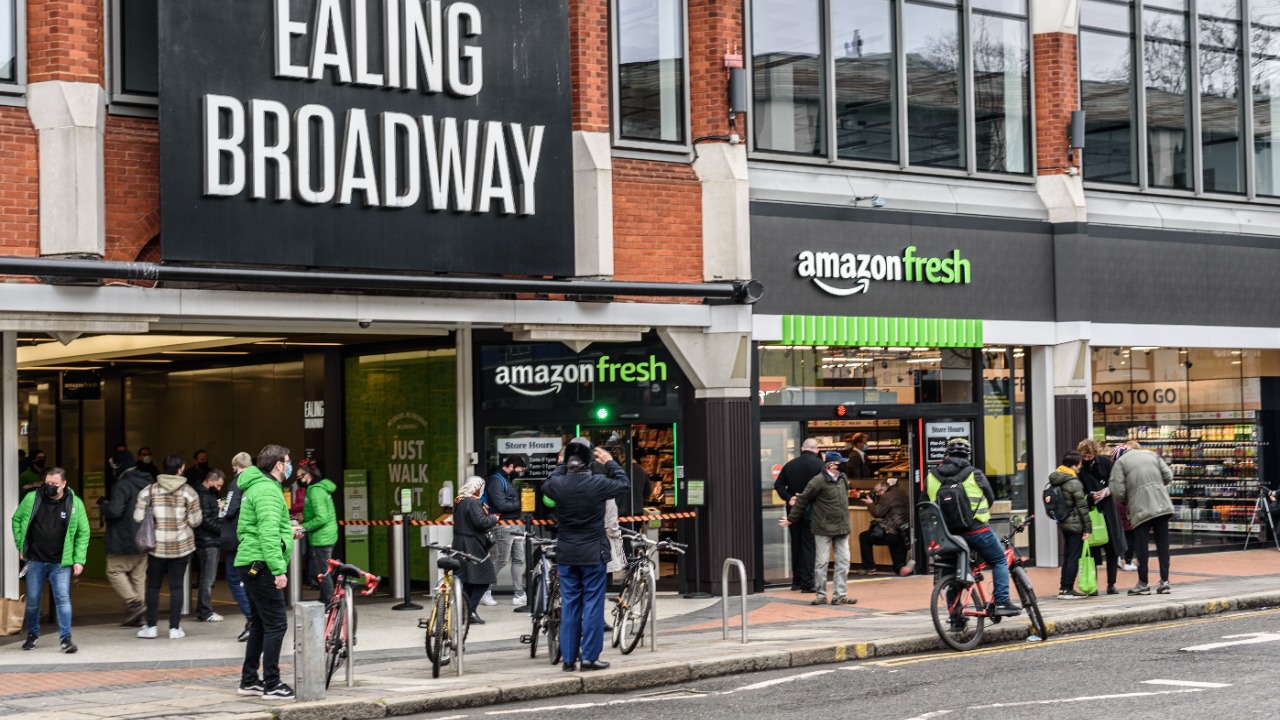
The company is effectively pulling the plug on its stand-alone grocery chains, closing all of its Amazon Fresh supermarkets and cashierless Amazon Go convenience stores as part of a sweeping overhaul of its retail footprint. Earlier this year, Jan executives confirmed that the company would wind down the Amazon Fresh and Go formats and instead concentrate on Whole Foods and online grocery delivery, a shift that underscores how hard it has been to turn futuristic in-store tech into a profitable business. The decision affects a network of locations that had become familiar fixtures in some neighborhoods, from suburban shopping centers to urban corners that once showcased the promise of checkout-free shopping.
In total, the company is shutting 72 locations, including 57 branded as Amazon Fresh and the remaining Amazon Go stores, a figure that captures how fully it is abandoning the experiment rather than trimming around the edges. One detailed breakdown noted that All 57 Amazon Fresh and 15 remaining Amazon Go stores are slated to close, with only a limited number of Amazon Fresh sites expected to eventually reopen in some other form, which signals that this is not a temporary pause but a structural reset of the grocery strategy. The closures are being paired with a broader corporate downsizing, with Jan leadership also tying the grocery shakeup to a plan to cut 16,000 employees, bringing total reductions to 30,000 since October as the company retools its workforce every few months.
Where the layoffs are landing
The human impact of the grocery pullback is concentrated in store aisles and regional hubs, where thousands of workers are now facing job loss notices. According to WARN (Worker Adjustment and Retraining Notification) filings cited in labor disclosures, more than 4,000 employees tied to the grocery business are expected to lose their roles, a tally that includes retail associates, managers and support staff. Those figures sit on top of corporate cuts, including Nearly 2,200 Seattle-area jobs that have been swept up in the latest round of Amazon layoffs, illustrating how the restructuring is rippling from headquarters to front-line positions.
Some regions are being hit particularly hard as entire clusters of stores vanish at once. In the Philadelphia area, Amazon plans to lay off nearly 1,000 Amazon Fresh workers as it shutters all of its grocery locations in that market, a move that will erase a local presence that the company had spent years building. On the West Coast, reporting by Paris Barraza for a USA TODAY Network outlet has detailed how Following Amazon’s decision to close Amazon Fresh stores, thousands of Southern California workers are bracing for layoffs and scrambling to understand their options. The geographic spread of the cuts, from Seattle to Philadelphia and Southern California, shows that this is not a targeted retrenchment in one underperforming city but a nationwide rollback of a once-ambitious retail bet.
Severance checks and the choice facing workers
For affected employees, the most immediate question is what kind of financial cushion they will receive and whether it makes sense to stay and hunt for another role inside the company. As Amazon has begun shutting down the Fresh stores, internal communications have outlined two primary paths for workers: they can Get severance pay and exit, or they can try to transfer into other positions if they can secure an offer before their store closes. That choice is not purely theoretical, because Most U.S.-based employees in the broader layoffs have been given 90 days to search for new roles within Amazon, after which those who do not land a position will receive severance, so the clock is already ticking for many.
The structure of those payouts is becoming clearer as more details surface. According to one breakdown of the Impact on workers, severance pay for those without a new role includes a lump sum based on tenure, continued benefits for a limited period and access to job placement resources, with instructions routed through the company’s internal A to Z portal. Another report on Over 4,000 grocery workers losing jobs notes that the company is pairing cash payments with extended health coverage and support services, a package designed to soften the blow but not one that will fully replace a steady paycheck for long. For front-line staff who joined the company for stable retail work rather than a tech career, the decision to accept severance or gamble on an internal transfer is a high-stakes calculation that will shape their financial lives for months.
From Fresh and Go to Whole Foods and delivery
Behind the closures is a strategic bet that Amazon can do better by leaning into formats that already have traction instead of trying to reinvent the grocery store from scratch. Company leaders have signaled that they want to focus on Whole Foods and grocery delivery, effectively using the established organic chain and the existing Prime infrastructure as the backbone of their food business. The company’s own retail site, which still promotes Amazon Fresh delivery and pickup options, suggests that the future of its grocery ambitions will be tightly integrated with the main Amazon marketplace rather than scattered across experimental storefronts.
That pivot also reflects the enduring value of the Whole Foods brand, which Amazon acquired for $13.7 billion and now appears to see as its primary physical grocery vehicle. Local coverage of the shutdowns has emphasized that Amazon is shuttering all of its Amazon Go and Amazon Fresh locations while doubling down on Whole Foods and delivery, a message that aligns with the company’s decision to keep investing in the Whole Foods footprint even as it retreats elsewhere. In some neighborhoods, the change will be visible on the ground, as Amazon Fresh signs come down and shoppers are nudged toward nearby Whole Foods stores or online ordering instead of the high-tech, sensor-laden aisles that once symbolized the company’s retail ambitions.
Communities, corporate hubs and what comes next
The fallout from the closures is not limited to individual workers, because entire communities are losing employers and, in some cases, neighborhood amenities. In Southern California, for example, Paris Barraza has chronicled how the shutdown of Amazon Fresh locations is affecting thousands of SoCal workers and raising questions about vacant storefronts in shopping centers that had banked on steady grocery traffic. In the Philadelphia region, local officials are watching as nearly 1,000 Amazon Fresh jobs disappear, worried about the knock-on effects for nearby small businesses that relied on spillover customers from the grocery stores. Even in the Seattle area, where Amazon’s presence is deeply entrenched, the loss of Nearly 2,200 Seattle jobs is prompting concern about the broader tech labor market and the ability of other employers to absorb displaced staff.
More From The Daily Overview
*This article was researched with the help of AI, with human editors creating the final content.

Grant Mercer covers market dynamics, business trends, and the economic forces driving growth across industries. His analysis connects macro movements with real-world implications for investors, entrepreneurs, and professionals. Through his work at The Daily Overview, Grant helps readers understand how markets function and where opportunities may emerge.