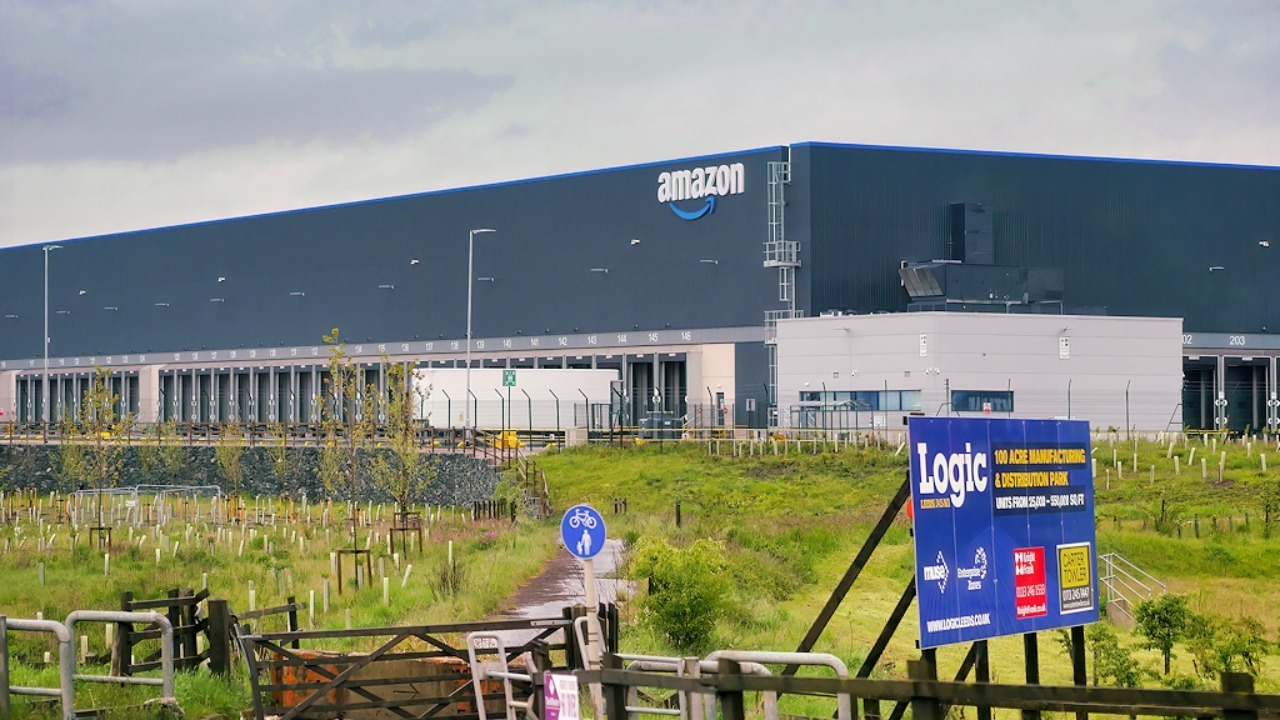
Amazon is cutting thousands of corporate roles in Washington state just as it commits an unprecedented sum to artificial intelligence, turning its home region into the front line of a global tech reset. The company is eliminating more than 2,400 jobs in and around Seattle while redirecting capital toward a $100 Billion AI buildout that executives frame as a once in a generation opportunity. I see a company that is still highly profitable, but is choosing to trade local headcount for long term dominance in cloud, data centers, and machine learning infrastructure.
The result is a stark contrast between gleaming new AI investments and the lived reality of workers in Seattle and Bellevue who are being told their roles no longer fit the future. For Washington’s tech economy, the question is not whether Amazon will keep growing, but who gets left behind as it evolves from e commerce giant into an AI first utility for the rest of the corporate world.
The Washington cuts behind the headline number
The headline figure that matters most in Washington is not global, it is local. According to state filings, Amazon will lay off 2,303 corporate employees in Washington, primarily in its Seattle and Bellevue offices. That number captures the core of the regional impact, even as the company stresses that the reductions are part of a broader restructuring that will continue into next year. For a city that has spent two decades reshaping itself around tech campuses and six figure software salaries, the loss of more than two thousand corporate roles is not a blip, it is a structural adjustment.
Those 2,303 departures sit inside a larger wave of corporate cuts. Earlier in the cycle, Amazon.com announced job cuts of 14,000 workers Tuesday, with people familiar with the matter warning that the total number of reductions had not been finalized. In that context, Washington’s 2,303 roles are a sizable share of a global downsizing that is being calibrated against what executives describe as the company’s current and future needs. I read that as code for a workforce being rebalanced away from legacy functions and toward AI heavy initiatives that demand different skills and cost structures.
Smaller waves that add up to 2,400 jobs
Behind the big filing, a series of smaller actions has been chipping away at Washington headcount. In one recent notice, Amazon cuts 84 jobs in Washington state, telling regulators that employees were notified starting in early November and received at least 89 days advance warning. The company emphasized that this particular reduction was unrelated to its broader layoff in company history, but for the people affected, the distinction between “related” and “unrelated” is academic. When I add those 84 positions to the 2,303 already on the books, the total climbs past 2,387, which is why local officials and workers talk about more than 2,400 Washington jobs disappearing.
Another filing shows how these cuts are distributed across the region’s core tech hubs. In Dec, Amazon lays off more Seattle, Bellevue employees amid corporate restructuring, extending the timeline for departures into early 2026. The pattern is clear: rather than a single shock, Washington is experiencing a rolling contraction, with notices landing in waves that make it harder for affected workers to coordinate their next steps. For a labor market that once treated Amazon badges as a guarantee of stability, the new reality is a slow drip of uncertainty.
Engineers and HR in the crosshairs
One of the most striking details in the filings is who is being let go. According to state data, Amazon’s mass layoffs announced last month hit engineers the hardest, with nearly 40% of the roles eliminated coming from technical positions. That is a sharp break from the usual pattern in tech downturns, where support and operations staff often bear the brunt. When a company that is loudly pivoting to AI is cutting thousands of engineers, it signals a targeted reshaping of what kinds of engineering it values, not a retreat from technology itself.
The human resources function is facing an even more dramatic reset. Internal expectations point to 15% of HR team expected to be cut as the AI push accelerates, even as the company continues to invest in its cloud and AI data centers. I see that as a classic automation story: as more of recruiting, performance management, and workforce planning is mediated by software, the need for large HR headcounts shrinks. The irony is that the very tools being built to make Amazon more efficient are helping to justify the elimination of the people who once managed those processes manually.
From e‑commerce dominance to AI infrastructure
To understand why these layoffs are happening now, it helps to look at how Amazon is redefining its core business. The company has signaled that it is no longer content to be known primarily for online shopping and delivery. As one analysis put it, As the company streamlines and reallocates resources, Amazon is shifting from e commerce dominance toward becoming a leaner, AI powered enterprise. That language is not window dressing. It reflects a strategic choice to treat artificial intelligence as the organizing principle for everything from logistics optimization to cloud services and advertising.
Financially, Amazon has the room to make that bet. The company generated more than $35 billion in profit in the first half of 2025, yet it is behaving less like a mature utility and more like what one observer described as the world’s largest startup. I interpret that mindset as a license to disrupt its own workforce in pursuit of the next growth curve. When executives talk about running Amazon with a founder’s urgency, what they often mean in practice is a willingness to close or shrink profitable lines of business if the capital can be redeployed into higher conviction bets like AI.
The $100 Billion AI war chest
The scale of those bets is staggering. In Feb, the company framed its next phase under the banner Amazon Bets Big, unveiling a Billion Investment Plan that would see Amazon, trading under the ticker AMZN, commit $100 Billion to AI related initiatives. That figure is not a marketing slogan, it is a capital allocation decision on par with the largest infrastructure projects in corporate history. When I weigh that $100 Billion against the cost savings from cutting a few thousand corporate roles, the layoffs look less like a desperate move and more like a way to free up operating margin for a long, expensive race.
Another analysis framed the same commitment as Amazon to Invest $100 Billion in AI in 2025, Seizing a ‘Once-in-a-Lifetime’ Opportunity, underscoring how executives see this as a narrow window to lock in leadership in artificial intelligence investments. The phrasing around Invest, Billion, Seizing, Once, and Lifetime is revealing. It suggests that, inside Amazon, AI is not just another product line, it is the lens through which every other decision is being evaluated. In that environment, any team or role that does not clearly support the AI thesis is vulnerable, no matter how long it has been part of the company’s story.
Andy Jassy’s AI doctrine
Amazon’s chief executive has been unusually explicit about this shift. In Apr, Jassy urged companies to invest heavily in AI, arguing that those who hesitate will find themselves permanently behind. His comments came after Amazon disclosed during its fourth quarter earnings call that it planned to spend more than $100 Billion on AI and related infrastructure. When the person setting the budget tells the rest of the corporate world to move fast or be left behind, I read that as both a sales pitch for Amazon’s cloud services and a mission statement for internal teams.
Jassy’s doctrine is that AI is not optional, it is foundational. That stance helps explain why the layoffs come as the company continues to pour money into Amazon cloud and AI data centers. In his framing, trimming back-office staff and even some engineering roles is not a contradiction, it is a prerequisite for funding the hardware, energy contracts, and research talent needed to compete with other hyperscalers. I see a leader who is willing to accept local political blowback in Washington if it means securing global AI market share that could define Amazon’s next decade.
Seattle and Bellevue feel the shock
On the ground, the impact is being felt most acutely in the neighborhoods that grew up around Amazon’s campuses. In Dec, Amazon layoffs loom in Seattle, with 84 employees in the city already notified and a broader expectation that 15% of the HR team will be cut as the AI push accelerates. The company has described these as business decisions designed to help it move more quickly for customers, but for the individuals involved, they are life altering events that will ripple through housing markets, local schools, and small businesses that depend on tech worker spending.
Even the company’s most iconic local landmarks are now backdrops for layoff news. A report headlined Weeks after huge layoff, Amazon makes new, smaller cut to WA workforce described additional reductions framed by The Sphere’s with the company acknowledging that the latest notices were part of a larger companywide action. I find that juxtaposition telling. The glass domes that once symbolized tech’s limitless optimism now serve as a reminder that even the most lavish headquarters cannot insulate a workforce from strategic pivots dictated by distant spreadsheets.
Why this is not a classic downturn
It is tempting to read these cuts as another chapter in the familiar boom and bust cycle of tech hiring, but the evidence points in a different direction. One analysis of the broader trend argued that these layoffs were not triggered by an economic downturn or collapsing demand, but by a strategic technological shift. In other words, Amazon is not cutting because customers have vanished, it is cutting because AI has changed what kinds of work it believes are worth funding. That distinction matters for policymakers and workers trying to predict what comes next. If this were a simple recession story, the jobs might come back when growth resumes. In an automation story, many of them will not.
At the same time, the company is still hiring aggressively in areas that align with its AI thesis. The same filings that document thousands of departures also reference ongoing investments in Amazon cloud and AI data centers, as well as new roles in machine learning, chip design, and data center operations. I see a bifurcated labor market emerging inside a single employer: on one side, legacy corporate functions facing attrition; on the other, specialized technical and infrastructure roles that are in such high demand that Amazon is willing to outbid rivals to secure them. For Washington, the challenge will be helping displaced workers bridge that gap, or risk watching the benefits of the AI boom accrue to a narrower, more specialized slice of the population.
What the AI pivot means for workers and investors
For employees, the message is blunt. If your work does not clearly advance Amazon’s AI and cloud priorities, your job security is weaker than the company’s profit margins might suggest. The combination of 2,303 local layoffs, another 84 jobs cut in a separate action, and the expectation that 15% of HR will be eliminated sends a clear signal about which skills are considered non negotiable in the AI era. I expect that to accelerate a re skilling scramble in Seattle and Bellevue, with coding bootcamps, AI certificate programs, and cloud training providers positioning themselves as lifelines for displaced staff.
For investors, the calculus is different. The same reports that document job losses also highlight that Amazon is prepared to spend $100 Billion on AI, backed by more than $35 billion in recent profit. From that vantage point, trimming 14,000 corporate workers globally and more than 2,400 in Washington looks like a rational, if ruthless, way to fund a generational technology shift. I see a tension that will define the next phase of the tech economy: markets rewarding companies that move fastest into AI, even as local communities absorb the social cost of that speed. For Washington state, the story of Amazon’s $100 Billion AI push will be written not only in data center blueprints and earnings calls, but in the careers it disrupts along the way.
More From TheDailyOverview

Grant Mercer covers market dynamics, business trends, and the economic forces driving growth across industries. His analysis connects macro movements with real-world implications for investors, entrepreneurs, and professionals. Through his work at The Daily Overview, Grant helps readers understand how markets function and where opportunities may emerge.