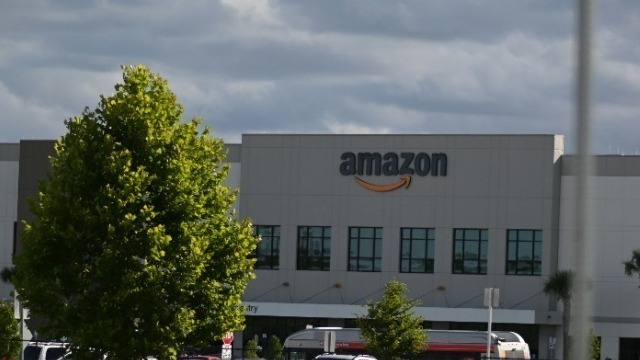
Amazon is committing $12 billion to build AI-optimized data centers in northeast Louisiana, a bet that would rank among the largest single infrastructure investments in the state’s history. The project places Louisiana at the center of a fierce national competition for AI computing capacity, where cheap electricity and open land have become prized assets. But the deal also raises hard questions about whether rural communities can absorb the strain on power grids and water systems that these facilities demand.
Big Tech’s Louisiana Land Rush
The Amazon announcement does not exist in isolation. Northeast Louisiana has rapidly become a magnet for hyperscale data center projects, with multiple tech giants staking claims in the region within months of each other. Meta separately selected the same part of the state for a $10 billion data center that the company said would be its largest in the world. That two of the world’s biggest technology companies chose the same corner of Louisiana within a short window signals something beyond coincidence: the region offers a combination of low energy costs, available acreage, and state-level incentives that few competitors can match.
The clustering effect matters because data centers of this scale require enormous amounts of electricity, often hundreds of megawatts per facility. Louisiana’s access to natural gas generation and its relatively low industrial power rates make it attractive compared to states like Virginia, where grid congestion has already delayed new projects. For Amazon, the choice appears to reflect a strategic calculation that building in a less saturated market reduces the risk of power bottlenecks that have slowed expansion elsewhere. At the same time, the presence of multiple hyperscale operators in one geography can, over time, erase the very advantages that drew them there if infrastructure investment fails to keep pace with demand.
What $12 Billion Actually Buys
A project of this size typically involves multiple buildings spread across thousands of acres, each housing rows of specialized servers designed to train and run AI models. Amazon Web Services, the company’s cloud division, has been racing to expand capacity as demand for generative AI workloads has surged from enterprise customers. The $12 billion figure would cover land acquisition, construction, electrical infrastructure, cooling systems, and the networking backbone needed to connect the campus to AWS’s global network. For context, the combined investment between Amazon’s planned campus and Meta’s $10 billion facility nearby would represent more than $22 billion flowing into a single rural region of Louisiana, an amount that would have been difficult to imagine in the area just a decade ago.
That level of spending dwarfs most traditional economic development projects in the state. Louisiana has historically relied on petrochemical plants and refinery expansions as its largest private investments, with those projects often concentrated along the Mississippi River industrial corridor rather than in the northeastern parishes. A pair of AI data center campuses at this scale would rewrite the economic profile of communities that have long struggled with population loss and limited job growth. The construction phase alone would generate thousands of temporary positions, while the permanent workforce, though smaller, would consist of higher-wage technical roles in facility management, network engineering, and security. Local officials are already framing the buildout as a once-in-a-generation opportunity to reverse decades of economic stagnation.
Energy Costs and Grid Pressures
The appeal of northeast Louisiana for data center operators rests heavily on energy economics, but that advantage comes with risks that neither Amazon nor state officials have fully addressed in public. Data centers of this magnitude can consume as much electricity as a small city. When multiple facilities cluster in one area, they can strain transmission lines and force utilities to build new generation capacity, costs that often get passed along to residential ratepayers. Virginia’s experience offers a cautionary example: Loudoun County hosts the densest concentration of data centers in the world, and local utilities have struggled to keep pace with demand, leading to construction delays and rising electricity costs for nearby households. Those pressures have, in turn, sparked debates over whether communities are receiving enough direct benefit from the industry to justify the infrastructure burden.
Louisiana’s grid currently has more spare capacity than Northern Virginia’s, which is part of why tech companies are looking south. But spare capacity is not infinite. If Amazon’s campus and Meta’s facility both reach full operation, the combined power draw could require significant new generation or transmission investment. Without transparent planning from utilities and regulators, local residents could end up subsidizing infrastructure upgrades that primarily benefit out-of-state corporations. State leaders have so far emphasized job creation and tax revenue, but the long-term energy math deserves equal scrutiny. How regulators structure long-term power contracts, and whether they insist on efficiency and renewable components, will help determine whether the projects deepen or mitigate Louisiana’s dependence on fossil-fuel-heavy generation.
Rural Economies and the Southern Tech Corridor
The broader pattern here extends beyond Louisiana. Across the South, states including Mississippi, Georgia, and Texas have aggressively courted data center developers with tax abatements, expedited permitting, and discounted utility rates. The pitch is straightforward: land is cheap, regulations are lighter, and power is abundant. For regions that have watched manufacturing jobs disappear over decades, a $12 billion investment sounds like salvation. And in many ways, it can be. Construction spending circulates through local economies, permanent employees spend wages at local businesses, and property tax revenue funds schools and roads. Local colleges and technical schools also see an opening to create training pipelines that align with data center operations and related IT work.
But the track record of large-scale tech facilities in rural areas is mixed. Data centers employ far fewer people per dollar invested than factories or distribution centers. A $12 billion campus might ultimately support a few hundred permanent jobs, a ratio that looks less impressive when measured against the scale of public incentives often required to land these projects. The real economic value depends on whether the investment triggers secondary growth, such as housing development, supplier businesses, and workforce training programs, or whether it remains an isolated campus behind a security fence. Northeast Louisiana’s ability to capture spillover benefits will depend on local planning and infrastructure investment that has not yet been detailed publicly. If local leaders can align broadband expansion, transportation improvements, and education initiatives with the data center buildout, the region has a better chance of turning a single mega-project into a broader tech corridor rather than a one-off win.
What the AI Arms Race Means for Louisiana
Amazon’s decision to pour $12 billion into Louisiana reflects a simple reality: the AI industry’s appetite for computing power is growing faster than existing infrastructure can supply it. Every major cloud provider is locked in a race to secure land, power, and permits before competitors claim them. Louisiana has positioned itself as a willing partner in that race, and the financial rewards could be substantial. Tax revenue from these campuses, even at reduced incentive rates, would represent a meaningful new income stream for parishes that have few other growth engines. The projects also give state officials a narrative of technological progress that contrasts with long-standing perceptions of the region as economically left behind.
The risk is that the state optimizes for speed over sustainability. Locking in long-term tax abatements, fast-tracking environmental reviews, and deferring grid upgrade costs to ratepayers might win the deal today but create liabilities that outlast the political cycle. Meta’s decision to build what it described as its largest data center in the world in the same region only raises the stakes. If both projects proceed as planned, northeast Louisiana will host one of the densest concentrations of AI computing infrastructure in the country, tying its fortunes more tightly to the boom-and-bust cycles of a fast-moving tech sector. Whether that gamble pays off will depend on choices being made now about energy planning, community benefits, and how much leverage the state is willing to exercise with some of the most powerful companies in the world.
More From The Daily Overview
*This article was researched with the help of AI, with human editors creating the final content.

Grant Mercer covers market dynamics, business trends, and the economic forces driving growth across industries. His analysis connects macro movements with real-world implications for investors, entrepreneurs, and professionals. Through his work at The Daily Overview, Grant helps readers understand how markets function and where opportunities may emerge.

